


Can a Landlord Lock a Room in Your Rental Home Legally?
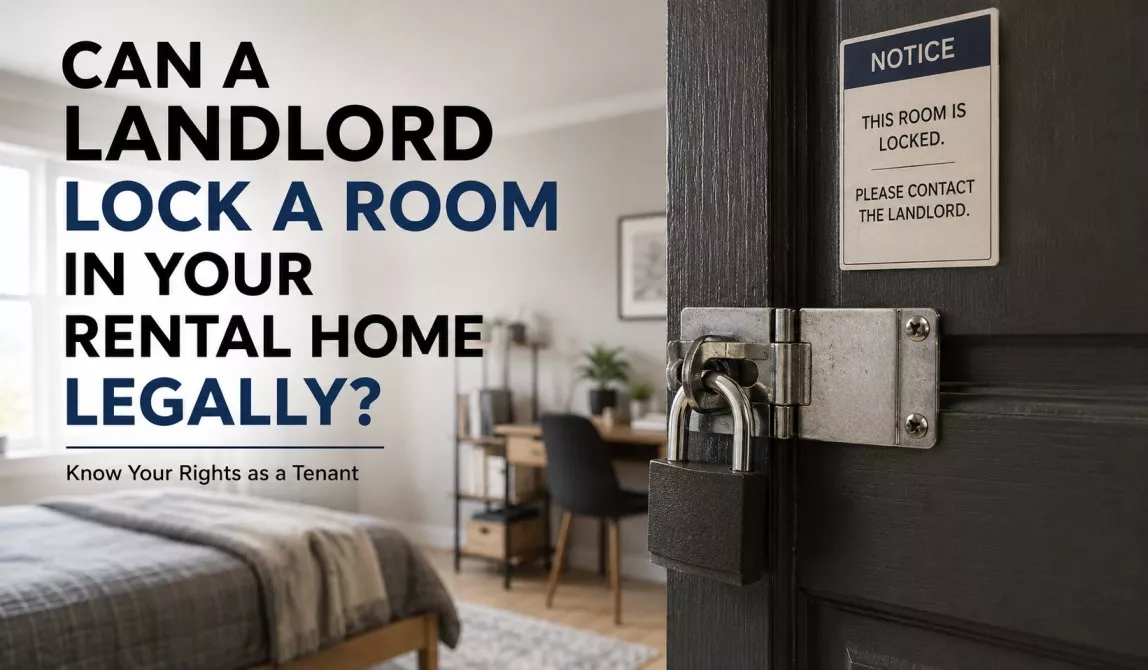
I’ve worked with renters for years, and I can tell you: discovering a locked door in a home you thought you were renting in full is one of the most frustrating surprises a tenant can face. You sign the lease, you get the keys, you walk through the door—and then you notice the bedroom door is locked or chained. Or worse, you discover it weeks after moving in.
So here’s the question everyone asks: Is that even legal?
The short answer is yes, sometimes. But the real answer depends entirely on what your lease says, what the landlord promised, and where you live. In my experience, this issue comes down to one principle: transparency. When a landlord is upfront about a locked room, things usually go smoothly. When they’re not, that’s when tenants have legitimate complaints.
Let me walk you through everything you need to know.
Quick Answer: Can a Landlord Lock a Room?
If you’re short on time, here’s what matters most:
Yes, a landlord can legally lock a room in your rental home IF:
- The lease agreement explicitly states that the room is locked or excluded from your use
- The restriction was clearly disclosed before you signed the lease
- You agreed to it in writing
No, it’s probably not legal IF:
- You rented the entire property and the landlord didn’t mention the locked room
- The listing showed you the room as part of the rental
- The locked room reduces the usable space you paid for without any rent adjustment
The bottom line: Lease terms and local laws decide whether this is okay. Always review your lease carefully and document everything.
What Determines Whether It’s Legal? The Key Factors
I’ve learned that four main factors determine whether a landlord can legally lock a room:
1. What Does Your Lease Agreement Say?
Your lease is the foundation of everything. If your lease clearly states something like “the master bedroom is reserved for the landlord’s occasional use” or “the storage closet is locked and not included in the rental,” then the landlord is within legal rights (in most jurisdictions).
The problem? I’ve seen countless leases that don’t mention locked rooms at all. If your lease says you’re renting “the entire house” and doesn’t mention excluded areas, then a locked door is a breach of what you agreed to.
What I’d do: Read your lease word-for-word. Look for language about “exclusive possession,” “included spaces,” or any mention of locked or reserved areas.
2. What Was Advertised?
If the listing on Zillow, Craigslist, or the landlord’s website showed you the room as part of the rental, that creates an expectation. I call this the “fairness test”—if you were shown a 3-bedroom house and promised access to all three bedrooms, you can’t come home to find one locked.
Courts and tenant protection agencies take this seriously. Misrepresentation in advertising is a real legal issue.
3. Did You Have “Exclusive Possession”?
This is a legal term that matters. When you rent a property, you get the right to exclusive possession of the spaces you rented. This means the landlord can’t just barge in, and you get to use every room you paid for.
If you rented the entire house, you should have exclusive possession of the entire house. A locked room challenges that principle.
4. What Does Local Law Say?
Here’s where it gets tricky: landlord-tenant laws vary dramatically by state, province, and even city. Some places have strict laws protecting tenants from misrepresentation. Others are more landlord-friendly.
Important disclaimer: I can share general principles, but you need to check your local laws. A lawyer or tenant advocacy organization in your area can tell you what’s allowed where you live.
When a Landlord CAN Legally Lock a Room (The Legitimate Reasons)
In my experience, landlords sometimes lock rooms for real, practical reasons. Here are the situations where I think it’s fair—as long as it’s disclosed:
1. Personal Storage
Some landlords own a home but need to store personal belongings they’re not actively using. If they’re clear about it (“I’m renting you the house except for the left bedroom, which I’ll use for seasonal storage”), that’s transparent. You agreed to a smaller space at a fair price—nothing wrong with that.
2. Owner’s Occasional Use
I’ve seen landlords who rent out a house but want to keep one room for themselves when they visit. If this is disclosed and your rent is adjusted accordingly, it can work. The key word is disclosed.
3. Utility or Maintenance Rooms
Basements with furnaces, attics with electrical panels, or closets housing water heaters—these are different. These are utilities, not living space. A landlord locking a furnace room makes sense for safety and insurance reasons. You’re not renting that space anyway.
4. Insurance or Safety Requirements
Some insurance policies require that certain areas remain locked or inaccessible to tenants. This is rare but real. If the property has a code violation that requires locking off a room, that’s a legitimate reason (though it might also justify lower rent).
5. Partial Rental Agreements
If you rented only part of a house—say, you’re renting one bedroom in a home where the landlord or other tenants live—then obviously other rooms will be locked or off-limits. That’s the nature of shared housing.
When It’s Probably Illegal or Unfair
Now let me flip this around. Here’s when I think a locked room is genuinely problematic:
1. You Rented the “Entire House” (But It’s Not Entirely Yours)
If the lease says “you are renting the entire property” and the landlord then locks a bedroom, that’s a contradiction. You didn’t get what you paid for.
2. The Restriction Was Never Mentioned Until Move-In
I’ve heard this story too many times: you see the house, love it, sign the lease, move in—and then the landlord says, “Oh, by the way, this room is locked.” That’s a betrayal of trust and often a legal violation.
3. The Locked Room Wasn’t Reflected in the Rent
If you’re paying for a 3-bedroom house but you can only use 2 bedrooms, that’s unfair. Your rent should be reduced to reflect what you’re actually getting.
4. It Interferes with Your “Quiet Enjoyment”
Tenant law includes something called the “quiet enjoyment” clause. It means you have the right to peacefully use and enjoy your home. Constantly wondering about or being blocked from part of your rental? That’s an interference with your rights.
5. The Landlord Misrepresented the Property
If the landlord showed you photos of an empty, available bedroom during your tour and then locked it after you moved in, that’s misrepresentation. That’s a real legal problem.
My Personal Perspective: Why This Matters
If I were renting a house, I would want complete transparency from day one. Here’s why this isn’t just a legal issue—it’s a trust issue.
When a landlord is upfront about a locked room, I respect that. It tells me they’re honest and the terms are fair. I can make an informed decision: “I’m renting a 3-bedroom house, but the landlord is keeping one for storage. My rent is $1,500 instead of $1,800. That works for me.”
What I can’t respect is landlords who hide restrictions. If I rent what I think is a full house and later discover a locked room, I feel deceived. I’d be wondering: What else didn’t they tell me? Is this place safe? Can I trust anything they’ve said?
Transparency matters because it builds trust. And when there’s trust, fewer disputes happen.
I also understand that landlords have legitimate needs—storage, occasional visits, insurance requirements. But those needs don’t justify hiding the truth.
Real-World Examples
Let me give you four situations I’ve either seen or heard about. See if any resonate with your situation:
Example 1: Disclosed and Fair
Maria rents a 3-bedroom house for $1,600 a month. Her lease clearly states: “Tenant rents two bedrooms and full kitchen access. The third bedroom is reserved for landlord’s storage and occasional visits.” The lease was clear, and Maria got a fair price. When the landlord occasionally enters the storage room (with 24 hours’ notice), Maria isn’t bothered. She knew what she was signing up for.
Example 2: Hidden Restriction (The Problem)
James finds a beautiful 4-bedroom house on Zillow. The listing shows all four bedrooms. He tours the house, sees all four bedrooms, and signs the lease. Two weeks after moving in, his landlord says, “I’m locking the master suite—that’s for my use.” James never agreed to this. His lease doesn’t mention it. The listing didn’t exclude it. He has a legitimate complaint.
Example 3: Legitimate Utility Restriction
Tanya rents a house with a basement. Her lease includes a note: “Basement furnace room is locked for safety and insurance reasons. Tenant does not have access.” This is reasonable. Furnace rooms are dangerous. Tanya wasn’t expecting basement access anyway, and her rent reflected a house without a usable basement. No issue here.
Example 4: The Surprise Access Issue
Kevin rents a house with a locked garage. His lease says it’s locked “for security.” But his rent was quoted as a “3-bedroom with garage.” After six months, his landlord starts entering the garage without notice to store seasonal items. Kevin feels like his privacy is being violated. His lease should have specified: Is the garage included or not? Can the landlord enter? This ambiguity creates problems.
Tenant Rights You Should Understand
I want to make sure you know what rights are actually yours when you rent a home. These rights exist in most places (though they vary by location):
Right to Exclusive Use of Leased Areas
If you rented it, it’s yours. The landlord can’t just come in whenever they want or use parts of it for their own purposes without clear agreement.
Right to Accurate Disclosure
Landlords must disclose material facts about the property. A locked room is material. You have the right to know before you sign.
Right to Quiet Enjoyment
You get to peacefully use your rental without interference. Worrying about accessing part of your home interferes with that.
Right to a Habitable Space
Your rental must be safe and functional. If a locked room creates a safety issue (like blocking an emergency exit), that’s a habitability problem.
Right to Rent Reduction or Remedies
If you’re paying for space you can’t use, you might have the right to lower rent or other compensation, depending on your location.
Right to Documentation
Everything should be in writing. Verbal promises don’t hold up. Handshake agreements mean nothing in a dispute.
What to Do If Your Landlord Locks a Room: Step by Step
If you’re facing this situation right now, here’s what I’d do, in order:
Step 1: Review Your Lease Carefully
Read the entire document. Look for any mention of locked rooms, reserved areas, or restricted access. Also look for what it says about “exclusive possession” or “entire property.” Write down exactly what it says.
Step 2: Compare With the Listing and Communications
Did the listing show that room? Go back to the Zillow listing, Craigslist post, or emails from when you first inquired. Compile screenshots or saved documents. If the listing showed you the room as available, that’s important evidence.
Step 3: Ask for Written Clarification From Your Landlord
Send an email (not a text, not a phone call) asking something like: “Hi, I wanted to confirm: Is the [room name] included in my rental, or is it off-limits? Please confirm in writing so we’re both clear.” Document their response.
Step 4: Request a Rent Reduction If Appropriate
If you’re genuinely paying for more space than you have access to, propose an adjustment. Say something like: “I understand the bedroom is locked. Since I don’t have access to the full square footage I’m paying for, would you be willing to reduce the rent by X dollars?”
Step 5: Document Everything
Save every email, text, photo, and note. If you have a conversation, follow up with an email summarizing what was discussed. Create a timeline of when you discovered the locked room and what was said about it.
Step 6: Contact Local Tenant Advocacy Organizations
Before you panic or hire a lawyer, call a local tenant rights organization. They often provide free advice and know your local laws better than anyone. They can tell you whether you have a legitimate complaint.
Step 7: Seek Legal Advice If Necessary
If the situation doesn’t resolve and you believe your rights have been violated, consult a lawyer who specializes in tenant law. Many offer free initial consultations.
Can You Ask for Lower Rent?
Absolutely. Here’s my thinking: If you’re paying for a resource you can’t use, the rent should be lower.
If you’re renting a 3-bedroom house but can only use 2 bedrooms, the fair market rent should be closer to what a 2-bedroom costs in your area. The difference might be significant.
How much lower? That depends on local real estate values. If 3-bedroom rentals in your area are typically $1,800 and 2-bedroom rentals are $1,400, that’s a $400 gap. You might reasonably ask for a $200-400 rent reduction.
Here’s how to approach it:
- Research comparable rents in your area for the appropriate square footage
- Present this research to your landlord calmly
- Suggest an adjusted rent that’s fair to both of you
- Put it in writing: “Based on the reduced usable square footage, we propose adjusting rent to $[amount] effective [date].”
Many landlords will negotiate rather than deal with a dispute. But if they refuse, you’re back to the documentation and legal route.
Questions to Ask Before Signing a Lease
If you’re still looking for a place or you’re about to renew your lease, ask these questions upfront. Get the answers in writing:
- Is every room in the property included in the rental, or are any rooms off-limits?
- Are there any locked doors or restricted areas I should know about?
- Will the landlord need access to any rooms I’ll be occupying? If so, when and how often?
- Is the square footage I’m paying for the full property, or is some space excluded?
- If some space is excluded, is that reflected in the rent price?
- What does “exclusive possession” mean in this lease?
Get written answers to every one of these. Include them as an addendum to your lease if necessary.
Frequently Asked Questions
Is It Legal for a Landlord to Keep One Bedroom Locked?
It depends entirely on your lease and local law. If your lease explicitly states the bedroom is locked or excluded, yes. If your lease says you’re renting the entire house and doesn’t mention restrictions, then no, it’s probably not legal. The key is whether the restriction was disclosed and agreed to before you signed.
Can a Landlord Store Belongings in a House I Rent?
They can if it’s disclosed and reflected in your lease and rent. If they do it without permission or without mentioning it upfront, that’s a violation of your exclusive possession rights. Any shared storage should be spelled out in writing.
What If the Locked Room Was Never Mentioned?
Document it and contact your landlord in writing asking for clarification. If they confirm the room is locked but it was never disclosed in the lease or listing, you likely have a complaint. Gather evidence (screenshots of the listing, emails, photos of the property tour) and consider contacting a tenant rights organization.
Can I Break My Lease Over This Issue?
This depends entirely on your location. Some jurisdictions allow lease termination if the landlord has breached the rental agreement or misrepresented the property. Others require you to pursue a rent reduction first. Consult a local tenant rights organization or lawyer to know your options.
Should My Rent Be Reduced If Part of the House Is Excluded?
Almost certainly yes, if the exclusion reduces your square footage or the number of bedrooms. The rent should reflect what you actually have access to. What’s fair? Research comparable rentals in your area that actually match the space you’re renting.
What If the Locked Room Is a Safety Hazard?
This is serious. If a locked room is blocking an emergency exit, creating a fire hazard, or otherwise making your home unsafe, that’s a habitability violation. Document it with photos and report it to your landlord in writing. If it’s not fixed, contact your local housing authority.
Can My Landlord Lock Me Out of My Own Bedroom?
No. If you rented a bedroom and your lease says it’s yours, your landlord cannot lock it. That would be illegal interference with exclusive possession. If this is happening, treat it as a serious violation and seek legal help immediately.
Final Verdict: My Bottom Line
Here’s what I believe after years of seeing these situations play out:
A landlord can legally lock a room only when:
- The lease clearly states the room is locked or excluded
- You agreed to this in writing before you signed
- The restriction was disclosed honestly in the listing or initial communications
- Your rent is fair for the space you actually have access to
A locked room is probably unfair or illegal when:
- Your lease says you’re renting the entire property
- You were shown the room as available during your tour
- The restriction wasn’t mentioned until after you moved in
- Your rent wasn’t adjusted to reflect the reduced space
- The landlord is using the locked room in ways that violate your quiet enjoyment
The real principle here is simple: transparency and fairness. Landlords have the right to protect their interests, and tenants have the right to know exactly what they’re renting.
If you’re facing this issue, don’t panic. Start with documentation, ask for clarity in writing, and reach out to local tenant resources. Most disputes get resolved when both sides are honest and reasonable.
And if you’re a landlord reading this: I understand you might have legitimate reasons to lock a room. Just be upfront about it from the start. Transparency builds trust, and trust makes everything easier.
Take Action Now
- Review your lease. Does it mention locked or excluded rooms?
- Save your listing. Take screenshots of how the property was advertised.
- Document the locked room. Take photos and note the date you discovered it.
- Ask for clarification in writing. Send an email to your landlord asking about access.
- Look up local tenant rights. Search for your state/city’s tenant rights organization.
- Don’t wait. The sooner you address this, the sooner you can resolve it.
If you’ve faced this situation, I’d love to hear about it in the comments. What happened? How did you handle it? Your experience might help another renter facing the same issue.
Remember: you have rights as a tenant, and transparency is a right you deserve.


