


How Ralph Wiggum Became AI’s Most Unexpected Star
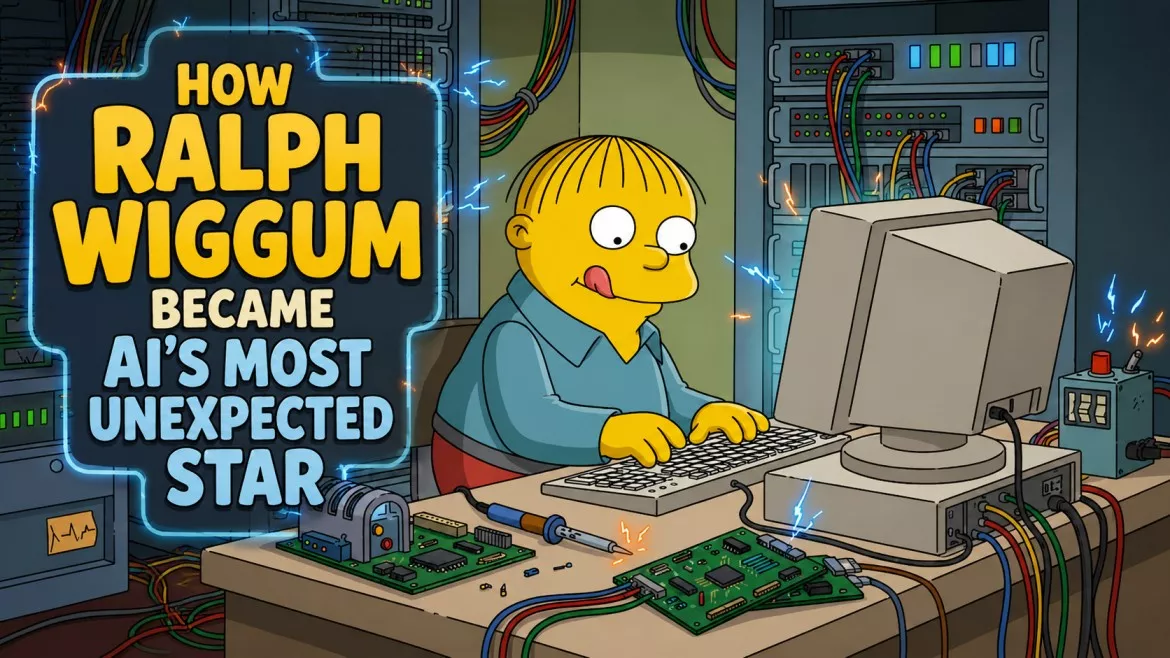
For over three decades, The Simpsons has served as an animated mirror to modern civilization. The show famously predicted everything from political upsets to technological breakthroughs. Yet, as society stands on the precipice of the generative artificial intelligence revolution, its most profound contribution isn’t a prophetic storyline. Instead, it is a single character: a seven-year-old boy with a penchant for eating paste, talking to boots, and uttering some of the most surreal non-sequiturs in television history.
Ralph Wiggum, the beautifully eccentric son of Springfield’s Police Chief, has quietly become the patron saint of Ralph Wiggum AI content and contemporary internet culture.
Currently, algorithmic feeds on platforms like TikTok, YouTube, Reddit, and X are flooded with AI-generated Simpsons content. These projects range from hyper-realistic deepfakes of Springfield citizens to entirely AI-scripted episodes. While main characters like Homer or Mr. Burns require highly structured narrative contexts to be funny, Ralph Wiggum thrives in total chaos. Consequently, he has transitioned seamlessly from a linear television sidekick into a sprawling, multi-platform digital celebrity.
This transformation points to a fascinating cultural intersection where human nostalgia meets algorithmic output. Ralph’s unexpected ascent reveals a deeper truth about generative tools. Crucially, large language models (LLMs) do not think like rational adults. Instead, they associate ideas through probabilistic leaps that frequently mirror the bizarre, innocent, and surreal logic of Ralph Wiggum himself. This is the story of how a fictional child who once proclaimed, “I’m a computer!” became the ultimate icon of generative AI entertainment.
Who Is Ralph Wiggum?
To understand Ralph’s digital renaissance, we must first dismantle his role within the traditional architecture of The Simpsons. Introduced early in the series as a background student at Springfield Elementary, Ralph gradually evolved under the pens of legendary writers like Conan O’Brien and John Swartzwelder into a singular comedic engine.
Physically, he is defined by his perfectly round head and sparse, combed-over hair. His core personality trait combines a total lack of malice with a radically skewed perception of reality. While other characters react to the cynicism and decay of Springfield with anger, greed, or anxiety, Ralph exists in a permanent state of wonder. Therefore, he serves as the ultimate innocent outsider.
   [ Traditional Springfield ]             [ Ralph's World ]
   Cynicism, Greed, Anxiety       -->       Pure Wonder & Innocence
   (Homer, Bart, Mr. Burns)                (The Gentle Outsider)
Decades of broadcast history have cemented his cultural impact through dozens of unforgettable milestones. For example, he is the boy who “choo-choo-chooses” Lisa Simpson on Valentine’s Day. He is also the child who tastes a purple berry and notes that “it tastes like burning.“ In another classic scene, he looks out a bus window, watches a bird fly away, and simply says, “I’m a troll under a bridge.”
Unlike Bart’s calculated rebelliousness or Lisa’s intellectual alienation, Ralph’s comedic utility relies entirely on unpredictability. He rarely participates in the plot. Instead, he disrupts it with a single line of dialogue that leaves both the characters on screen and the audience at home reassessing the boundaries of sanity. This structural unpredictability makes him a perfect match for the computational quirks of artificial intelligence.
The Internet Loved Ralph Before AI Arrived
Long before neural networks began synthesizing human speech and imagery, Ralph Wiggum memes were already a structural pillar of early web culture. As internet forums migrated toward visual shorthand in the 2000s and 2010s, Ralph became a premier vehicle for communicating human vulnerability and social awkwardness.
On platforms like Tumblr and Reddit, reaction GIFs of Ralph quickly became shorthand for personal failure or naive confusion.
- The “I’m in Danger” Meme: Derived from a crossover episode with Family Guy, an image of Ralph sitting cheerfully on a school bus realizing his imminent peril became the universal internet emblem for being wildly out of one’s depth.
- The Window Smear: A looping GIF of Ralph pressed against a glass window, licking it with vacant satisfaction, served as the ultimate response to bureaucratic absurdity or intellectual defeat.
- GIF Culture Mainstay: Whether rolling down a hill, running away from his own shadow, or proudly holding up an empty plate, Ralph always delivered. Internet users decoupled these moments from their original episodes and recast them as universal emotional symbols.
Through this relentless digital recycling, Ralph developed a recognizable internet personality completely independent of The Simpsons’ broadcast schedule. He effectively became a modular piece of cultural code. Web users learned that if you wanted to express a state of joyful ignorance or impending, self-inflicted doom, Ralph Wiggum was your visual language. Early internet culture laid the groundwork; generative AI merely supplied the fuel.
Why Ralph Wiggum Is Perfect for Generative AI
When an individual interacts with a modern large language model, they encounter a system that predicts the next most likely word based on billions of parameters. However, when users push these models past their comfort zones, the software often “hallucinates.” It generates bizarre, confidently delivered assertions that lack real-world logic.
In the world of comedy, an AI hallucination isn’t a bug; it’s a feature. Furthermore, no cartoon character embodies the spirit of a creative AI hallucination quite like Ralph Wiggum. There is a profound architectural symmetry between the way an LLM constructs a sentence and the way Ralph navigates a conversation.
Childlike Logic and Random Observations
Generative AI often strings together grammatically flawless sentences that make absolutely no conceptual sense. Ralph operates on the exact same wavelength. For instance, when an AI image generator attempts to render a human hand and accidentally creates seven fingers, it feels surreal yet confident. This mirrors Ralph looking at a pack of crayons and deciding they taste like pointiness.
Surreal Humor and Non-Sequitur Dialogue
Human comedy typically relies on the subversion of expectation. Because AI models operate on probability rather than lived human experience, their attempts at humor are naturally surreal. Consider a standard AI text output trying to simulate a conversation at a grocery store. It might randomly insert a comment about the emotional state of a turnip. If you assign that exact script to Homer Simpson, the joke falls flat because Homer represents recognizable human gluttony and frustration. If you assign it to Ralph, however, it becomes comic genius. Ralph’s established character design perfectly accommodates the structural errors of machine learning.
Emotional Innocence vs. Unexpected Wisdom
The most compelling AI content pairs machine computation with raw human vulnerability. Ralph’s character balances absolute emotional innocence with flashes of accidental existential brilliance. He represents the “uncanny valley” of human childhood—a space where thoughts form without the filtering systems of social conditioning. When AI tools generate text that feels hauntingly poetic yet utterly detached from reality, it naturally aligns with the archetype of the accidental prophet that Ralph has inhabited for thirty years.
How AI Creators Turned Ralph Into a Digital Celebrity
Armed with text generators, voice-cloning software, and advanced video engines, digital creators have turned Ralph Wiggum into a laboratory for generative AI creativity. He is no longer just a passive subject of memes; he is an active participant in an automated entertainment ecosystem.
[ AI Voice Synthesis ] + [ LLM Scripting ] + [ Diffusion Models ]
                         │
                         ▼
        [ The Simulated Ralph Wiggum ]
     (Infinite, Autonomous, Hyper-Surreal)
AI Voice Cloning Experiments
Using sophisticated voice-cloning platforms, creators have trained neural networks on decades of audio clips featuring Nancy Cartwright’s brilliant performance as Ralph. The result is a flawless digital instrument. Today, fans use these synthetic voices to make Ralph read things he would never say in a family-friendly broadcast. He regularly recites gritty monologues from True Detective, complex philosophical treatises by Friedrich Nietzsche, or modern rap lyrics. Ultimately, the comedy emerges from the stark contrast between the innocent, lisping voice of an eight-year-old and the dense, dark text he delivers.
Chatbot Roleplay and Automated Imagery
On platforms like Character.ai, users spend hours engaging in open-ended conversations with simulated versions of Ralph. These chatbots maintain his specific psychological profile with surprising accuracy. For example, when asked about complex global economics, the Ralph AI might respond with an essay about how pennies smell like pockets.
Simultaneously, image diffusion platforms transplant Ralph into historical events or alternate cinematic universes. Creators generate high-fidelity images of Ralph commanding a starship, sitting at the Yalta Conference, or wandering through a dystopian Blade Runner cityscape. Through it all, he always maintains his signature vacant smile.
The Rise of AI-Generated Simpsons Content
To fully appreciate Ralph’s individual stardom, we must look at the broader Simpsons AI trend. The Simpsons has become the definitive canvas for fan-created AI storytelling for a simple reason: its visual and narrative vocabulary is universally understood.
┌───────────────────────────────────────────────────────────┐
│              THE GENERATIVE SIMPSONS ECOSYSTEM             │
├───────────────────────────────────────────────────────────┤
│                                                           │
│  [Dark Simpsons Subculture]      [Infinite Stream Formats]│
│  Traumatic, uncanny AI videos     24/7 automated sit-coms  │
│  exploring Springfield's edge.    running on neural logic. │
│                                                           │
└─────────────────────────────┬─────────────────────────────┘
                              │
                              ▼
                [ RALPH WIGGUM'S CORNERSTONE ROLE ]
             The chaotic element that makes machine-
             generated absurdity feel completely authentic.
The AI animation community has birthed entire subgenres. For instance, the popular “Dark Simpsons” movement uses AI video tools to generate unsettling, dream-like versions of the show that feel like late-night fever dreams. Additionally, live-streamed, 24/7 Twitch channels broadcast completely automated, AI-written sitcom iterations where characters speak in synthesized loops based on chat room prompts.
Within this macro-ecosystem, Ralph serves an invaluable purpose. In an AI-scripted narrative, characters often lose their train of thought or exhibit strange behavioral loops due to algorithmic drift. Ralph functions as an anchor during these moments. When an AI-generated Homer begins speaking in broken, surreal sentences, it breaks the viewer’s immersion because it violates Homer’s characterization. But when the script engine glitches and produces a line like, “The television is crying because the outlet is hungry,” creators simply route that line to Ralph. He normalizes the limitations of the technology, turning computational errors into narrative triumphs.
Why Audiences Connect With AI Ralph
The viral success of Ralph’s AI persona isn’t merely an accident of technology. Rather, it satisfies specific psychological needs within the modern internet consumer through a potent cocktail of nostalgia, comfort, and internet irony.
- The Comfort of Nostalgia: The Simpsons represents a shared cultural foundation for multiple generations. By using Ralph, AI creators leverage deep-seated childhood memories. This makes the content feel safe and familiar, which lowers the audience’s natural skepticism toward machine-generated art.
- The Aesthetic of Absurdity: Modern internet humor is deeply rooted in neo-dadaism and abstract irony. Because the classic setup-and-punchline format of traditional network television has given way to atmospheric, weird, and context-free humor, AI Ralph satisfies this appetite perfectly.
- The Mirror of Human Vulnerability: There is genuine comfort in seeing an AI character mess up. Watching a machine try to construct a human narrative and land on a Ralph Wiggum-esque non-sequitur reminds us of our own cognitive quirks. Consequently, it takes the terrifying, monolithic concept of “Artificial Intelligence” and reduces it to something gentle, broken, and profoundly endearing.
The Ethical Questions Behind AI Character Recreation
As the Simpsons AI trend continues to expand, it inevitably collides with complex legal and ethical realities. The transformation of Ralph Wiggum from corporate intellectual property to open-source meme star highlights a brewing battleground in the entertainment industry.
| Issue | Fan / Creator Perspective | Studio / Rightsholder Perspective |
| Copyright & IP | Fair use, transformative fan art, community engagement. | Unauthorized derivative works, dilution of brand value. |
| Voice Cloning | Comedic experimentation, non-commercial parody. | Misappropriation of voice actor identity, loss of labor control. |
| Monetization | Content driving algorithmic traffic on YouTube/TikTok. | Loss of potential digital licensing and streaming revenue. |
While current fan creations largely exist within a gray market of non-commercial parody, copyright law is rapidly evolving to address these trends. Studios face a delicate balancing act. Aggressively shutting down fan-created AI content risks alienating their most passionate digital community. Yet, completely ignoring the trend allows third-party creators to define the characters’ cultural identities for a new generation.
Furthermore, voice cloning raises pressing questions regarding the rights of voice actors like Nancy Cartwright. When an AI can perfectly replicate the unique vocal fry and emotional cadence of a legendary performer, it challenges our traditional definitions of artistic ownership and creative labor.
How Ralph Wiggum Reflects the Future of AI Entertainment
The phenomenon of Ralph Wiggum as an AI star offers a prescriptive glimpse into the future of interactive media. We are rapidly transitioning away from an era of passive content consumption and moving toward an age of dynamic, personalized entertainment ecosystems.
[ Static Era: Broadcast TV ] ──> [ Interactive Era: AI Companions ]
  Watch Ralph on Sunday night       Chat with Ralph 24/7 on an LLM
  Simpsons rerun loop               Dynamic, unscripted storytelling
In the coming years, fictional characters will no longer be trapped within the boundaries of their original episodes. Instead, they will exist as persistent, interactive digital companions. Imagine loading an officially licensed Simpsons application where you can co-write an episode with Lisa, get financial advice from Mr. Burns, or simply wander around a virtual Springfield conversing with an autonomous Ralph Wiggum whose dialogue is generated in real-time by a localized AI engine.
Ralph represents the ideal pilot program for this future. Because his character demands no rigorous narrative consistency, engineers can easily deploy him in an interactive setting. He doesn’t need to remember what happened five minutes ago to be compelling. In fact, his comedy improves if he completely forgets.
Expert Take: Why Ralph Works Better Than Most Characters
To understand Ralph’s unique dominance in generative AI entertainment, consider how poorly other iconic characters perform when subjected to the same tools. If you attempt to run a highly complex, verbally dexterous character like Niles Crane (Frasier) or Stewie Griffin (Family Guy) through an AI script generator, the output usually feels flat. These characters rely on precise wit, sophisticated vocabulary, and intentional sarcasm. Those linguistic tools require an intimate understanding of human social dynamics that algorithms currently struggle to simulate authentically.
Ralph, conversely, is built on a foundation of structural simplicity and raw emotional relatability. His speech patterns are defined by brief, declarative sentences, simple vocabulary, and a total lack of subtext. He says exactly what pops into his head, free from social anxiety or hidden motives.
This simplicity makes his character incredibly resilient to algorithmic degradation. When an AI model processes Ralph, it doesn’t have to calculate layers of irony or subtext. It only needs to tap into a stream of pure, unadulterated whimsy. Therefore, he remains universally adaptable across text, voice, and video formats because his core appeal is structural, not situational. He is the ultimate blank slate for machine creativity.
Frequently Asked Questions
Why is Ralph Wiggum popular in AI memes?
Ralph’s popularity stems from the natural overlap between his character’s famous non-sequiturs and the surreal errors made by generative AI models. When an AI hallucinates or produces a bizarre sentence, it naturally sounds exactly like something Ralph would say. This quirk makes him the perfect visual and vocal fit for automated jokes.
What makes Ralph Wiggum ideal for generative AI content?
His simple character design, short speech patterns, and lack of conversational filter make him incredibly easy for machine learning models to replicate. Unlike characters who rely on complex sarcasm or intellectual wit, Ralph’s humor is based on pure, unexpected absurdity, which aligns beautifully with computational outputs.
Are AI-generated Simpsons videos legal?
Currently, most AI-generated fan content exists in a legal gray area under parody and fair use provisions, provided it remains non-commercial. However, voice cloning and direct use of copyrighted character designs without permission technically constitute copyright infringement, and rights holders reserve the right to issue takedown notices.
Why do internet users relate to Ralph Wiggum?
Internet culture frequently celebrates themes of social awkwardness, confusion, and joyful vulnerability. Ralph encapsulates the universal human feeling of being completely out of one’s depth in a fast-moving, complex world. As a result, he has become an incredibly relatable mascot for the digital age.
How has AI changed fan-created cartoon content?
Generative AI has completely democratized the production of fan fiction and animation. Previously, creating an original cartoon short required significant animation skills and resources. Today, fans use AI text, voice, and video tools to generate entirely new narratives, alternate timelines, and crossovers in a matter of hours.
What role does nostalgia play in AI entertainment?
Nostalgia acts as an emotional bridge. Audiences are inherently more receptive to new, experimental technologies like generative AI when the output features familiar, beloved childhood characters like The Simpsons. It provides an immediate sense of comfort and cultural context.
Can AI recreate fictional personalities accurately?
AI replicates the surface-level traits of a character—such as their voice tone, catchphrases, and basic personality settings—with incredible precision. However, it still struggles to copy the deeper emotional nuances, structural setups, and intentional storytelling choices designed by human writers.
Will AI-generated character content become more common?
Yes, absolutely. As generative tools become more accessible, real-time, and cost-effective, we will likely see a massive rise in interactive fan entertainment. This future includes personalized chatbots, automated web series, and dynamic virtual worlds populated by AI-driven fictional characters.
Conclusion
The evolution of Ralph Wiggum from a quirky, paste-eating side character on a 1990s broadcast television show to a central figure in 2026’s AI entertainment ecosystem is a brilliant testament to the unpredictable nature of internet culture. He has become a living bridge between generations of media. He seamlessly connects the gold standard of legacy network television with the untamed frontier of synthetic creativity.
Ultimately, Ralph’s AI stardom is born from a perfect cultural match. His beautifully fragmented, innocent, and surreal logic is the ultimate human analogue to the fascinatingly flawed outputs of neural networks. When an AI model stumbles, breaks format, and generates a piece of text that is completely detached from our logical reality but strangely poetic, it isn’t failing. It is simply channeling its inner child.
As we move deeper into an era dominated by automation and algorithmic storytelling, Ralph Wiggum serves as an endearing reminder of what makes human characters so resilient. Long after the current generation of AI models has been upgraded and replaced, we will still look to characters like Ralph to help us laugh at our own confusion, celebrate our innocence, and look at a complex, terrifying world with a smile, declaring to the digital void: “I’m helping!”


