


Local Grocers Acquire Rite Aid Stores: Retail Shift Begins
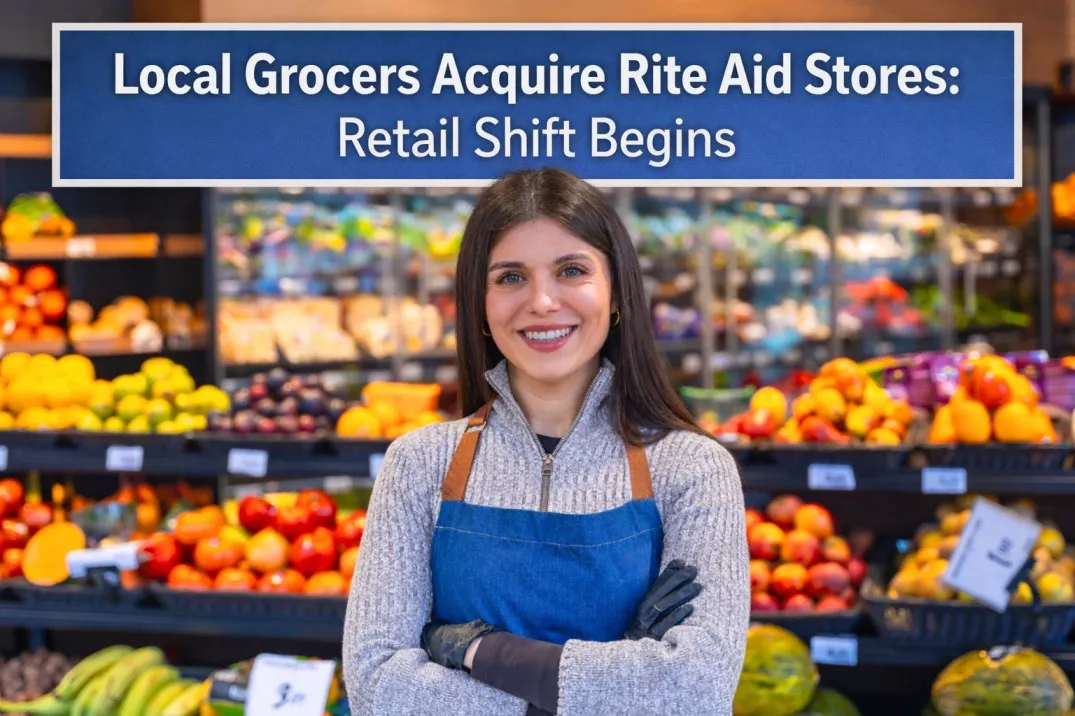
Local and regional grocery operators across the United States are actively acquiring and converting former Rite Aid pharmacy locations into neighborhood supermarkets — marking one of the most significant community-level retail shifts in recent American history. Following Rite Aid’s complete collapse through two back-to-back Chapter 11 bankruptcy filings in 2023 and 2025, more than 2,000 prime retail locations became available nationwide. Independent grocers, ethnic supermarket chains, and regional food retailers have seized this rare opportunity to expand into well-positioned, mid-size storefronts that already benefit from established foot traffic, existing parking, and neighborhood familiarity. This trend is reshaping how communities access fresh food, reducing food deserts, revitalizing local economies, and fundamentally rewriting the future of neighborhood retail in America.
The Fall of Rite Aid: A Timeline of Collapse
To understand the opportunity local grocers are now capitalizing on, it is essential to understand just how dramatic Rite Aid’s downfall was.
| Year | Milestone |
|---|---|
| 2008 | Rite Aid reaches peak with 5,059 stores and 112,800 employees |
| 2023 | First Chapter 11 bankruptcy filed in October; debt topped $4 billion |
| 2024 | Emerged from first bankruptcy in September, slashing $2 billion in debt; ~500 locations closed |
| May 2025 | Second Chapter 11 bankruptcy filed; 1,277 pharmacies still in operation |
| June 2025 | Over 800 locations closed since October 2023 |
| July 2025 | Total closures surpassed 1,000; only 56 stores still operational |
| October 2025 | All remaining 89 stores officially closed; Rite Aid ceases to exist |
Rite Aid’s downfall was driven by a toxic combination of factors. The company had accumulated more than $4 billion in debt — largely from expensive legal battles over alleged unlawful opioid prescription filling — while simultaneously facing fierce competition from CVS, Walgreens, and large-format retailers like Walmart and Target that offered in-store pharmacies. Inflation, shifting consumer habits toward online prescription services, and years of unprofitable store operations sealed the chain’s fate.
As its second bankruptcy was announced, Rite Aid had 1,277 pharmacies in operation at the time of filing, and more than 1,000 locations were marked for closure in the months that followed. By October 2025, all remaining 89 stores had officially shuttered, with the company’s website stripped of services and left only for customers to request pharmaceutical records or locate another pharmacy.
Why Local Grocers Are Stepping In
The vacuum left by Rite Aid is extraordinary — and local grocery operators were quick to recognize it.
1. Prime Real Estate at Accessible Prices
Former Rite Aid locations offer a rare combination of attributes that are nearly impossible to replicate in new construction: established visibility, pre-existing infrastructure (shelving, storage, loading docks), accessible parking, and lease pricing that reflects vacancy rather than premium demand.
After Rite Aid’s second bankruptcy, the pharmacy chain offloaded nearly 1,200 leases, including 20 in California’s Central Valley alone, opening up 375,000 square feet of retail space. Demand for these former locations has been strong, reflected in multiple sales, escrows, and new uses rapidly being finalized.
2. Addressing Food Deserts Head-On
Many former Rite Aid locations were positioned in urban and suburban corridors that now lack adequate fresh food access — what the USDA defines as food deserts. Among states with the greatest share of residents living in low-income, low-food access areas, Mississippi ranks first with 30% of its population affected, followed by 29% in New Mexico and 26% in Arkansas. As Rite Aid locations close in these very communities, local grocers moving in offer a direct, community-serving solution.
3. Community-Centered Business Models
Unlike large national chains, local and independent grocers tailor their product offerings to the specific demographics and cultural preferences of the neighborhood. This creates a more engaged customer base and directly serves communities that often feel ignored by corporate retailers.
Many former Rite Aid locations are in areas lacking access to fresh groceries, and converting them into supermarkets helps solve this issue by offering community-focused inventory planning and products tailored to local demographics and preferences.
4. Existing Consumer Foot Traffic
The pharmacy-to-grocery conversion does not require building a new customer base from scratch. Former Rite Aid locations already attracted daily visits from neighborhood residents — a behavioral pattern that can be redirected naturally to grocery shopping without significant marketing spend.
Real-World Examples: Who Is Taking Over?
The trend is not theoretical — it is already underway across multiple states, driven by a diverse mix of independent operators and regional chains.
| Grocer | Location | Key Details |
|---|---|---|
| La Candelaria (Hispanic Grocery) | Painesville, Ohio | Expanding into 14,500 sq ft former Rite Aid with service meat counter and in-store bakery |
| Double Apple | Buffalo, New York | Acquired former Rite Aid for $1.75 million; second store in the city |
| Uwajimaya (Asian Supermarket) | Issaquah, Washington | Became the chain’s 4th Washington state location |
| Whole Foods Daily Shop | New York City, New York | Opened second Daily Shop location in former Rite Aid |
| Bristol Farms | Hollywood, California | Opened full-service grocery in former Rite Aid |
| Grocery Outlet | Citrus Heights, California | Converting former Rite Aid with new facade and ADA upgrades; opening spring 2026 |
| CTown Supermarket | Kingston, New York | Plans submitted for full-service supermarket at 485 Broadway |
| Giant Eagle | Pennsylvania & Ohio | Acquired prescription files from 78 locations; converted sites to Giant Eagle pharmacies |
| Natural Grocers by Vitamin Cottage | Multiple States | Opened multiple locations in former drugstore spaces |
Local grocers stepping into former Rite Aid spaces include a Hispanic grocery in Painesville, Ohio; Double Apple in Buffalo, which acquired a location for $1.75 million; and Uwajimaya in Washington state, which will make the Issaquah location their fourth store in the state.
The Conversion Process: How a Pharmacy Becomes a Grocery Store
Turning a pharmacy into a functioning supermarket is no small logistical feat. Here is how successful conversions typically unfold:
1st Phase: Acquisition or Lease
Independent operators acquire or lease the properties through bankruptcy auctions, direct real estate deals, or landlord negotiations. Lease costs are significantly lower than typical retail rates due to vacancy pressure and the need to fill large mid-size boxes quickly.
2nd Phase: Layout and Infrastructure Redesign
Pharmacy shelving is removed and replaced with grocery infrastructure — refrigeration units for dairy, produce, and meat; freezer aisles; fresh food display cases; and checkout configurations. Depending on local building codes, this phase can take 3–6 months.
3rd Phase: Supply Chain and Vendor Setup
Grocers must establish supplier relationships for fresh produce, packaged goods, meats, and specialty items. For ethnic and independent grocers, this often involves working with regional or culturally specific distributors to stock products that reflect the local community.
4th Phase: Community-Specific Inventory Planning
One of the most critical — and differentiating — steps is product selection. Unlike chain retailers with uniform national planograms, local grocers curate their inventory around local preferences, dietary habits, cultural food traditions, and seasonal demands.
5th Phase: Store Launch and Brand Identity
The location reopens under the new grocer’s brand. For many communities, this marks a visible, emotional shift — a formerly sterile pharmacy aisle replaced by fresh produce displays, a bakery counter, or a meat service window.
The Broader Pharmacy Retail Crisis: Rite Aid Was Not Alone
Rite Aid’s collapse exists within a broader pharmacy industry in freefall — and this context amplifies why the grocery conversion trend is likely to accelerate.
| Pharmacy Chain | Status / Closure Plans |
|---|---|
| Rite Aid | All stores closed as of October 2025 |
| Walgreens | Announced closure of ~1,200 locations over 3 years (from 2024); went private in 2025 |
| CVS Health | Closed 900 stores between 2022–2024; planned 270 more in 2025 |
| Omnicare (CVS subsidiary) | Filed Chapter 11 bankruptcy in September 2025 |
Walgreens announced it would close approximately 1,200 locations over the course of three years starting in 2024, and in August 2025, the company finalized a deal with private equity firm Sycamore Partners, concluding its time as a publicly traded company. CVS subsidiary Omnicare also filed for Chapter 11 bankruptcy in September 2025, and the chain has been closing stores since 2022.
This industry-wide contraction means the Rite Aid conversion is not a one-time event — it is the first wave of a much larger retail reuse movement that will continue as Walgreens and CVS locations also become available in the coming years.
Economic Impact: What This Means for Communities
The ripple effects of grocery stores replacing pharmacies extend far beyond simply where people buy their milk and eggs.
Job Creation and Employment Transition
While change can be challenging, the expansion of grocery operations often supports continued job availability within the same community, maintaining local employment levels. Grocery operations typically require a range of roles, from management to customer service and logistics, and some former pharmacy employees may transition into new positions within the acquiring company.
Revitalization of Vacant Storefronts
Empty retail spaces signal economic decline to surrounding neighborhoods, often triggering a cascade of further closures and reduced foot traffic. A new grocery store anchors a block, draws daily visits, and revitalizes adjacent businesses such as restaurants, dry cleaners, and coffee shops.
Increased Property Values
Mid-size retail anchors like grocery stores are proven drivers of commercial real estate value. Landlords and local governments alike benefit from the stabilization effect a grocery conversion creates — particularly in communities that previously had limited food retail options.
Supporting Local Food Producers
Independent local grocers are significantly more likely than national chains to source from regional farms, local bakers, and area producers. This creates a self-reinforcing local economic loop that benefits producers, workers, and consumers simultaneously.
Competitive Landscape: How Local Grocers Stack Up
| Factor | National Chains (CVS/Walgreens conversions) | Local Independent Grocers | Regional Supermarket Chains |
|---|---|---|---|
| Store Size | Retained pharmacy format | 8,000–20,000 sq ft grocery format | 15,000–40,000 sq ft full format |
| Product Range | Pharmacy-first, limited grocery | Curated, culturally relevant | Broad, including private label |
| Pricing | Moderate | Competitive to budget | Moderate to premium |
| Community Integration | Low | Very High | Medium |
| Speed of Conversion | Faster (similar layouts) | Moderate (3–6 months) | Moderate to slow |
| Food Desert Impact | Minimal | High | Moderate to High |
| Fresh Produce Availability | Limited | Often extensive | Extensive |
What Consumers Can Expect
For shoppers in communities where a local grocer takes over a former Rite Aid, the experience will be notably different from what they had with the pharmacy — and arguably much better for daily household needs.
More Fresh Options. Local grocers prioritize fresh produce, meats, and bakery items that pharmacy chains were never equipped to provide. For communities that previously had to drive significant distances for fresh food, this is a life-quality improvement.
Cultural Relevance. Ethnic and independent grocers often stock products that major chains do not carry — specialty cheeses, culturally specific spices, imported goods, fresh tortillas, halal meats, or Asian pantry staples — making them invaluable to diverse neighborhoods.
Smaller, Easier to Navigate Spaces. At 10,000–20,000 square feet, converted Rite Aid stores offer a compact grocery experience that is faster and less overwhelming than big-box supercenters — appealing to busy urban consumers who want efficiency.
Prescription Services May Not Transfer. Unlike the pharmacy experience, most grocery conversions will not offer in-store pharmacy services unless a pharmacy-focused operator (like Giant Eagle) is involved in the takeover. Former Rite Aid customers should transfer prescriptions to CVS, Walgreens, or another nearby option.
Key Statistics at a Glance
| Statistic | Figure | Source / Context |
|---|---|---|
| Rite Aid peak store count | 5,059 stores | 2008, with 112,800 employees |
| Rite Aid store count at first bankruptcy | ~2,000 locations | October 2023 |
| Rite Aid store count at second bankruptcy | ~1,277 pharmacies | May 2025 |
| Total closures by October 2025 | All stores closed | Second bankruptcy wind-down |
| CVS acquired Rite Aid locations | 63–64 stores | Pacific Northwest; completed October 2025 |
| Giant Eagle acquired prescription files | 78 Rite Aid locations | Pennsylvania and Ohio |
| Central Valley CA real estate freed | ~375,000 sq ft | ~20 locations |
| U.S. food desert population (Mississippi) | 30% of residents | USDA Food Access Research Atlas, 2025 |
| Walgreens planned closures | ~1,200 stores | Announced 2024; ongoing through 2027 |
The Future Outlook: A New Era of Neighborhood Retail
The takeover of Rite Aid stores by local grocers is not simply an opportunistic land grab — it is a structural realignment of American neighborhood retail. As the pharmacy industry continues to contract under the pressure of online prescription services, PBM consolidation, and changing consumer behavior, the physical footprint these chains once occupied will continue to open up.
Independent grocers and regional supermarket operators are uniquely positioned to meet this moment. They are nimble enough to move quickly on lease opportunities, community-focused enough to build loyal customer bases, and diverse enough to serve the specific cultural and economic needs of the neighborhoods they enter.
Local grocers typically prioritize fresh produce sourced from nearby farms or suppliers rather than relying on mass-produced items shipped from afar, which can lead not only to fresher options for consumers but potentially lower prices as well, since transportation costs may be reduced when sourcing locally.
The communities that stand to benefit the most are those that were simultaneously underserved by Rite Aid’s declining quality and product range, and now find themselves in the path of a motivated, community-invested new operator. For them, the Rite Aid closure — painful as it may have seemed — could prove to be the beginning of genuinely better local retail.
Frequently Asked Questions (FAQs)
Q: Will former Rite Aid stores still offer pharmacy services?
A: Most grocery conversions will not retain in-store pharmacy capabilities. However, chains like Giant Eagle, which have integrated pharmacy departments, are taking over select locations with full pharmaceutical services intact.
Q: How long does it take to convert a Rite Aid to a grocery store?
A: Depending on the scope of renovation, conversions typically take between 3 and 9 months, covering layout redesign, refrigeration installation, permitting, and inventory setup.
Q: Are all former Rite Aid stores being converted to grocery stores?
A: No. While grocery conversion is a dominant trend, other users include health clinics, federally qualified medical providers, fitness centers, and other retail operators. CVS directly took over 63–64 locations to continue operating as pharmacies.
Q: Is this trend specific to certain regions?
A: Conversions are happening nationwide, but are most active in the Northeast, Mid-Atlantic, Pacific Northwest, California, and the Midwest — regions where Rite Aid had the densest footprint.
Q: Who bought Rite Aid’s prescription files?
A: CVS Pharmacy was the largest acquirer, buying prescription files from 600 locations in 15 states. Walgreens, Albertsons, Kroger, and Giant Eagle also acquired prescription files from numerous locations.
Conclusion
The local grocer takeover of Rite Aid stores represents one of the most organically beneficial retail transitions in recent American history. Where a struggling pharmacy chain left behind thousands of vacant storefronts, community-rooted grocers are stepping in — bringing fresh food, cultural relevance, local employment, and neighborhood life back to spaces that had been underserving communities for years. As the broader pharmacy industry continues its contraction, this trend will only accelerate, reshaping American neighborhoods one converted storefront at a time.


