


What dramatically changes when starfish are removed? [Answered]
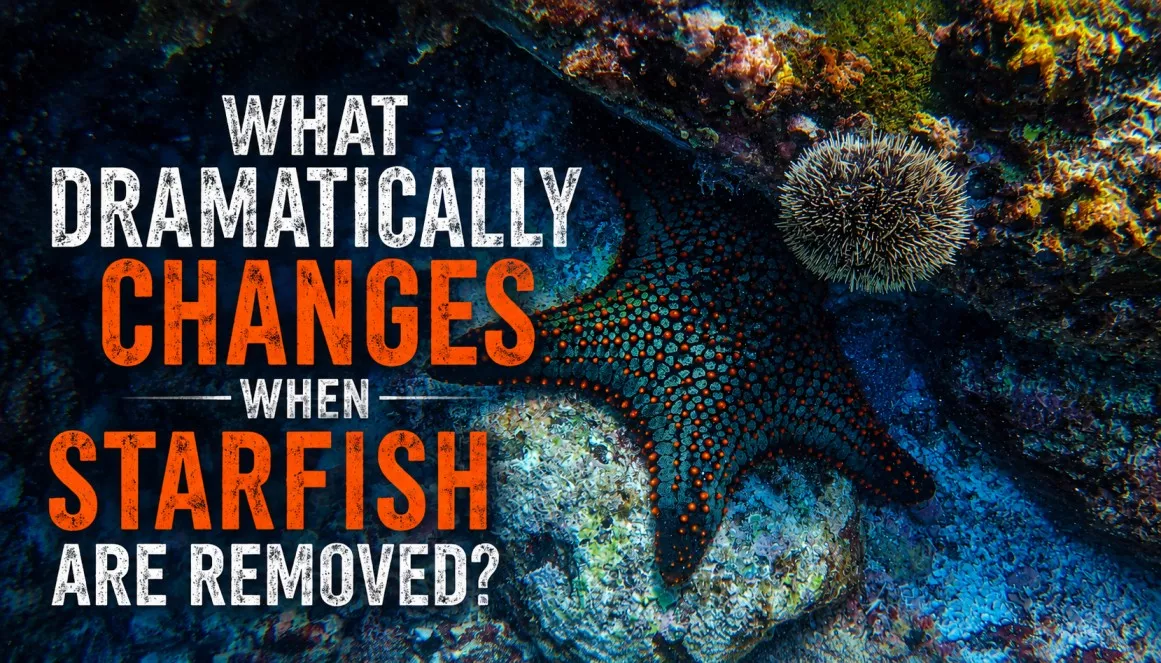
When starfish are removed, a vibrant marine ecosystem quickly collapses into a biological monopoly. Because starfish are apex predators in their habitats, their absence allows prey populations—like mussels or sea urchins—to explode unchecked. These unchecked species quickly crowd out all other marine life, monopolizing food and space, which drastically reduces overall biodiversity. In short, removing this seemingly simple creature can transform a thriving underwater community into a barren wasteland.
If you have ever walked along a rocky shoreline, you have likely seen starfish (more accurately called sea stars) clinging to the rocks. While they might look like slow-moving, passive decorations, they are actually ruthless predators and the ultimate managers of ocean real estate.
Here is exactly what happens when sea stars disappear, why they are considered a “keystone species,” and how their removal triggers an ecological domino effect.
What Happens When Starfish Are Removed?
When a starfish population is removed from a coastal habitat, the concept of ecological imbalance plays out in real-time.
In a healthy intertidal zone (the area of shore covered by water at high tide and exposed at low tide), starfish constantly patrol the rocks. Their favorite food? Mussels. Because starfish are slow, they rely on stationary or slow-moving prey. By constantly eating mussels, starfish free up space on the rocks.
Remove the starfish, and the predator-prey relationship breaks down. Without sea stars to eat them, the mussels multiply rapidly. Because space is the most valuable resource in a rocky coastal environment, the expanding mussel beds quickly overrun the rocks, pushing out algae, sponges, sea anemones, and other creatures. What was once a diverse community becomes a thick, uniform carpet of mussel shells.
Why Are Starfish Considered Keystone Species?
In the 1960s, scientists needed a way to describe an organism that held an entire ecosystem together. They borrowed a term from architecture: the keystone.
In a stone archway, the keystone is the single, wedge-shaped stone at the very top. It doesn’t look much different from the others, and it isn’t necessarily the biggest, but if you pull it out, the entire arch collapses.
Starfish are a classic keystone species. A keystone species is a plant or animal that plays a unique and crucial role in the way an ecosystem functions. Without them, the ecosystem would be dramatically different or cease to exist altogether. Starfish influence biodiversity not by their sheer numbers, but by their outsized impact on the food web. By simply showing up and eating the most competitive prey (mussels), they ensure no single species can dominate the environment, maintaining ecosystem balance.
The Famous Experiment That Changed Ecology
Our understanding of starfish removal doesn’t come from a computer model; it comes from one of the most famous field experiments in the history of biology.
In 1963, a marine ecologist named Robert Paine walked out into the tidal zones of Makah Bay, Washington. He wanted to see exactly how predators influenced biodiversity. Paine selected a stretch of rocky shoreline and systematically removed every single Pisaster ochraceus (the purple or ochre sea star) he could find, prying them off the rocks and throwing them deep into the ocean.
He left a neighboring stretch of shoreline alone as a control group. Then, he watched what happened over the next few years.
The results were shocking:
- Initial state: The rock face originally hosted 15 different species of algae, anemones, sponges, and mollusks.
- Within months: Acorn barnacles took over the newly freed space.
- Within a year: Mussels outcompeted the barnacles, completely dominating the rocks.
- Final state: The number of species plummeted from 15 down to just 8, and eventually, the area became almost entirely a mussel monoculture.
This experiment became foundational in ecology. It proved that predators don’t just eat prey—they actively shape the physical landscape and regulate marine biodiversity.
Major Ecological Changes After Starfish Removal
When sea star ecology is disrupted, the habitat undergoes four distinct phases of collapse.
Mussel Populations Explode
Mussels are filter feeders that attach themselves to rocks using strong, silky fibers called byssal threads. They are incredibly efficient at reproducing and taking up space. Without starfish acting as population control, mussel growth goes completely unchecked. They build up in thick layers, sometimes several feet deep, monopolizing the physical rock space that other organisms need to anchor themselves.
Biodiversity Declines
Space is life in the intertidal zone. When mussels take over, dominant species crowd out the vulnerable ones. Seaweeds and kelp cannot attach to the rocks. Without seaweed, the small snails and crabs that hide in it have nowhere to live. Barnacles are smothered. Ultimately, species loss cascades through the environment, transforming a colorful, complex reef into a monolithic mussel bed.
Food Webs Become Unstable
This chain reaction is called a trophic cascade—an ecological phenomenon triggered by the addition or removal of top predators, which causes dramatic changes in ecosystem structure. Because the starfish are gone, the creatures that rely on the secondary inhabitants of the rocks (like the birds or fish that eat the displaced snails and crabs) also lose their food source. The ripple effects through the ecosystem destabilize the entire local food web.
Habitat Structure Changes
The physical architecture of the shoreline fundamentally shifts. A diverse intertidal community offers varying heights, textures, and hiding spots (crevices between sponges, canopies of algae). A solid bed of mussels offers a very different, highly restricted type of shelter. Breeding grounds for small fish and invertebrates are wiped out.
Real-World Examples of Starfish Population Loss
We don’t just know about starfish removal from controlled experiments. Unfortunately, we are witnessing it on a massive scale right now.
Starting in 2013, a devastating marine pandemic known as Sea Star Wasting Disease (SSWD) swept along the Pacific Coast of North America, from Mexico to Alaska. The disease causes starfish to develop lesions, lose their limbs, and essentially dissolve into mush within a matter of days.
Millions of starfish died, leading to profound regional ecosystem impacts. The loss of the Sunflower sea star (Pycnopodia helianthoides) was particularly disastrous.
While intertidal starfish control mussels, the deep-water Sunflower sea star controls purple sea urchins. When the Sunflower sea stars died off, the purple sea urchin population exploded. Urchins are voracious eaters of kelp. The unchecked urchins quickly devoured entire kelp forests, creating underwater deserts known as “urchin barrens.” This deprived countless marine species of their primary habitat and food source, proving once again that removing a starfish triggers ecological collapse.
What Other Animals Are Affected?
The removal of sea stars impacts almost every resident of the coastal neighborhood:
- Shellfish: Mussels thrive and overpopulate, while barnacles are outcompeted and smothered.
- Crabs: Small crabs lose the complex algae and sponge habitats they use to hide from predators.
- Small Fish: Tidepool fish lose their breeding grounds and the diverse prey they rely on.
- Sea Anemones: Pushed off the rocks by the expanding mussel beds.
- Snails: Lose the grazing space and algae they depend on for food.
- Algae-related species: Kelp and seaweeds cannot find bare rock to anchor to, heavily impacting the marine herbivores that eat them.
Can Marine Ecosystems Recover?
Ecosystems have natural resilience, but recovery depends heavily on whether the starfish return and how long they have been gone.
If sea stars naturally migrate back into an area, or if populations recover from disease, they will immediately begin eating the dominant prey. Over a timeline of several years to a decade, the mussels or urchins will be cleared back, allowing algae and other species to recolonize.
However, if the starfish loss is permanent, the ecosystem damage becomes permanent. In areas affected by Sea Star Wasting Disease, conservation biologists are currently attempting to breed Sunflower sea stars in captivity to eventually reintroduce them to the wild, hoping to reverse the devastation of the kelp forests.
Why This Matters Beyond the Ocean
The story of the starfish is a cornerstone of conservation biology. It teaches us that nature is not just a random collection of animals; it is a highly sensitive, interconnected web.
When humans make decisions about environmental management—whether it’s overfishing a specific predator, destroying a habitat, or ignoring climate change (which likely exacerbated Sea Star Wasting Disease)—we risk accidentally pulling the keystone out of the arch. Understanding starfish ecology helps us predict how other ecosystems, from rainforests to grasslands, might collapse if their apex predators (like wolves, sharks, or tigers) are removed.
Common Misconceptions About Starfish
- Myth: Starfish are unimportant bottom-feeders.
- Reality: They are apex predators in their specific zones and the primary architects of marine biodiversity.
- Myth: Removing one species has little effect because others will fill the gap.
- Reality: While true for some redundant species, removing a keystone species causes catastrophic trophic cascades. No other animal in the intertidal zone can eat mussels fast enough to replace the starfish.
- Myth: Ecosystems automatically balance themselves no matter what.
- Reality: Ecosystems will find a new state, but that new state might be a dead, barren monoculture. “Balance” does not always mean “healthy” or “diverse.”
Frequently Asked Questions
What happens if all starfish disappear?
If all starfish disappeared, coastal and kelp forest ecosystems would collapse. Prey populations like mussels and sea urchins would grow uncontrollably, crowding out all other marine life and destroying habitats, leading to massive biodiversity loss.
Why are starfish called keystone species?
They are called keystone species because, like the keystone in an archway, they hold the entire ecosystem together. Their presence prevents any single prey species from dominating, which allows a diverse community of plants and animals to thrive.
What did Robert Paine discover?
Ecologist Robert Paine discovered that removing the ochre sea star from tidal zones caused mussel populations to explode, which reduced the local species diversity from 15 species down to just 8. This proved the keystone species concept.
How do starfish control mussel populations?
Starfish are slow predators that rely on stationary prey. They crawl over mussel beds, pry the shells open with their strong tube feet, and extrude their stomachs inside the shell to digest the mussel. This constant predation frees up space on the rocks.
Can ecosystems recover after starfish loss?
Yes, but only if the starfish return. If sea star populations recover, they can thin out the dominant mussels or urchins, allowing other species to recolonize over several years. Without starfish, the ecosystem remains degraded.
Are all starfish keystone species?
Not every single species of starfish is a keystone species, but several prominent ones are, most notably the Ochre sea star (Pisaster ochraceus) in intertidal zones and the Sunflower sea star (Pycnopodia helianthoides) in kelp forests.
What is a trophic cascade?
A trophic cascade is an ecological chain reaction that occurs when a top predator is added or removed from an ecosystem, causing sweeping changes to population sizes and habitat structures all the way down the food chain.
How does starfish loss affect biodiversity?
Starfish loss drastically lowers biodiversity. Without them, highly competitive prey species take over all available space and resources, leaving no room or food for algae, sponges, anemones, and other marine animals.
Conclusion
The dramatic changes that occur when starfish are removed serve as a powerful warning about the fragility of marine ecosystems. What begins with the disappearance of a single, slow-moving predator ends with explosive prey populations, the destruction of kelp forests, and the transformation of diverse tidal zones into barren mussel beds.
Starfish are far more than just beautiful beach discoveries; they are the vital regulators of ocean life. Their story reminds us that in nature, every species plays a role, and sometimes, the quietest creatures carry the weight of the entire ecosystem on their backs.


