


Which Side Hustles Pay the Most in 2026? Americans Share
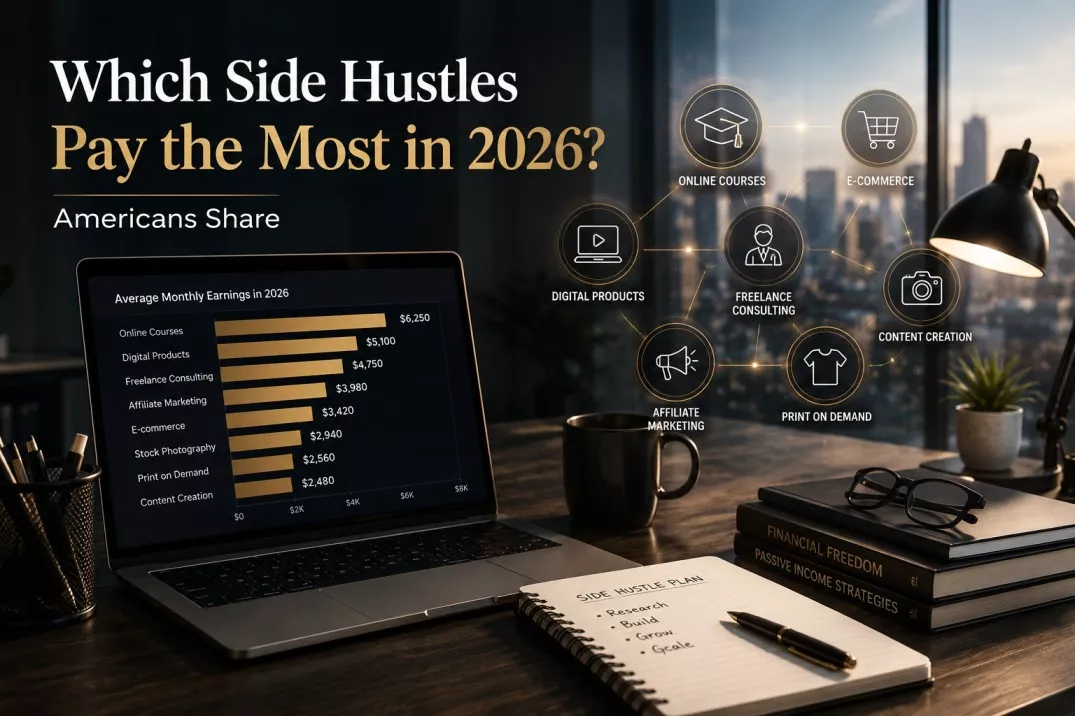
The landscape of supplementary income has shifted dramatically. If you find yourself asking, “Which side hustles pay the most in 2026?”, you are far from alone. Across the United States, an increasing number of Americans are leveraging their off-hours to build robust, secondary income streams that frequently rival their full-time salaries.
Why the sudden surge? The answer is a cocktail of economic reality and technological opportunity. Stubborn inflation, rising housing costs, and general cost-of-living pressures have transformed financial goals. What was once about securing “vacation money” is now about building a financial moat, aggressively paying down debt, or achieving financial independence ahead of schedule.
At the same time, the barriers to entry have never been lower. The growing creator economy, coupled with highly accessible AI-driven tools, has democratized entrepreneurship. You no longer need thousands of dollars in capital to launch a profitable venture from your living room. Today, high-income skills are being traded on global digital marketplaces, allowing freelancers, parents, students, and remote workers to tap into lucrative online side hustles.
In this comprehensive guide, we will explore exactly which side gigs are generating the highest returns this year, breaking down realistic earning ranges, skill requirements, and the trends shaping the modern side-hustle economy.
Why Side Hustles Are Bigger Than Ever in 2026
To understand the current boom, we have to look at the macroeconomic and cultural shifts driving Americans toward multiple income streams.
Economic Trends and Inflation
While wage growth has occurred, it has often struggled to outpace the real cost of living. Housing, groceries, and healthcare command a larger percentage of the average American paycheck than a decade ago. Side hustles have become the most accessible lever people can pull to immediately increase their household revenue and combat these economic pressures.
Flexible Work Culture and Remote Opportunities
The permanent shift toward hybrid and remote work has gifted millions of professionals something invaluable: commuting time. By reclaiming five to ten hours a week previously lost to traffic, remote workers are redirecting that energy into profitable side gigs. The geographical barrier is gone; a graphic designer in Ohio can seamlessly service a high-paying client in London.
Growth of AI-Powered Businesses
Artificial Intelligence has radically altered the gig economy. In 2026, AI is not replacing side hustlers; it is supercharging them. Solopreneurs are utilizing AI to automate workflows, generate code, write copy, and edit videos at speeds that were impossible three years ago. This allows individuals to output agency-level work on a part-time schedule.
The Multiple Income Stream Mindset
There is a cultural shift away from relying on a single employer. The modern worker views their career as a diversified portfolio. Cultivating a multiple income stream mindset provides a safety net against corporate layoffs and economic downturns, offering peace of mind that a 9-to-5 job alone can no longer guarantee.
The Highest-Paying Side Hustles Americans Are Doing in 2026

When looking for the best side hustles in America, the most lucrative opportunities require specialized skills, scalability, or leveraging modern technology. Here is a detailed breakdown of the highest paying side hustles in 2026.
AI Consulting and Automation Services
As small and medium-sized businesses scramble to adopt artificial intelligence, the demand for people who actually know how to implement it has skyrocketed. AI consultants help businesses automate their workflows, integrate chatbots, and optimize their operations using the latest tech.
- Average monthly earnings: $5,000
- Potential annual earnings: $24,000–$180,000+
- Skill level required: High (Deep understanding of AI tools, APIs, and business operations)
- Time commitment: 10–20 hours per week
- Pros: Extremely high hourly rates, massive market demand, recurring retainer potential.
- Cons: Requires continuous learning as AI evolves rapidly; finding the first few clients can be challenging.
- Realistic income expectations: Expect $2,000–$15,000+ per month once you have 2-3 solid corporate clients on retainer.
Freelance Software Development
Despite the rise of AI coding assistants, human oversight, system architecture, and custom application development remain incredibly lucrative. Freelance software developers build bespoke solutions, mobile apps, and SaaS platforms for startups and established businesses alike.
- Average monthly earnings: $6,000
- Potential annual earnings: $36,000–$240,000+
- Skill level required: Very High (Proficiency in modern programming languages like Python, JavaScript, Rust, etc.)
- Time commitment: 15–25 hours per week
- Pros: High-paying clients, remote work flexibility, endless global demand.
- Cons: Can be mentally exhausting on top of a full-time tech job; strict project deadlines.
- Realistic income expectations: Easily $3,000–$20,000+ per month depending on the complexity of the contracts and your tech stack.
Content Creation and Personal Branding
The creator economy continues to mature. Building a personal brand on platforms like TikTok, LinkedIn, or X allows you to monetize through brand sponsorships, affiliate marketing, and selling digital products.
- Average monthly earnings: $3,500
- Potential annual earnings: $6,000–$600,000+
- Skill level required: Medium (Charisma, video editing, understanding of algorithms, copywriting)
- Time commitment: 10–30 hours per week
- Pros: Uncapped earning potential, high creative freedom, builds long-term leverage.
- Cons: Income is highly unpredictable initially; algorithm changes can tank views overnight.
- Realistic income expectations: $500–$50,000+ per month. While top creators make millions, most consistent part-time creators settle into the $2k–$5k range.
High-Ticket Freelance Writing
Generic content writing has been heavily commoditized by AI. However, high-ticket freelance writing—which includes specialized B2B copywriting, white papers, technical writing, and conversion-optimized sales pages—remains one of the most profitable side gigs available.
- Average monthly earnings: $4,000
- Potential annual earnings: $12,000–$120,000+
- Skill level required: High (Persuasive writing, industry-specific expertise, SEO knowledge)
- Time commitment: 10–20 hours per week
- Pros: Low overhead, highly flexible schedule, easily scalable by raising rates.
- Cons: Requires aggressive pitching and portfolio building in the early stages.
- Realistic income expectations: $1,000–$10,000+ per month. Specialized technical or medical writers command the highest premiums.
Online Course Creation
The e-learning industry is booming. If you possess a specific skill—whether it is Excel mastery, dog training, or real estate investing—you can package that knowledge into a digital course and sell it repeatedly.
- Average monthly earnings: $2,500
- Potential annual earnings: $6,000–$360,000+
- Skill level required: Medium to High (Subject matter expertise, basic video production, digital marketing)
- Time commitment: High upfront (50+ hours), Low ongoing (2-5 hours/week)
- Pros: Incredible passive income opportunities, high profit margins, highly scalable.
- Cons: Heavy upfront time investment before seeing a single dollar; requires traffic/audience to sell.
- Realistic income expectations: $500–$30,000+ per month, heavily dependent on your marketing funnel and audience size.
YouTube Automation Channels
Also known as “faceless YouTube channels,” this model involves treating YouTube like a business. You hire scriptwriters, voiceover artists, and video editors to create highly optimized videos in profitable niches (like finance, tech, or psychology) and collect ad revenue.
- Average monthly earnings: $3,000
- Potential annual earnings: $6,000–$300,000+
- Skill level required: Medium (Project management, SEO, trend analysis, outsourcing)
- Time commitment: 10–15 hours per week
- Pros: Can be fully outsourced, highly passive once established, significant scale potential.
- Cons: Requires upfront capital to pay freelancers; takes months to get monetized by YouTube.
- Realistic income expectations: $500–$25,000+ per month. Success requires treating it as a media machine, not a hobby.
E-commerce and Print-on-Demand
E-commerce remains a stalwart for extra income ideas in 2026. Print-on-demand (POD) allows you to sell custom-designed apparel, mugs, and accessories without holding any physical inventory. When a customer orders, the POD company prints and ships the item directly.
- Average monthly earnings: $2,000
- Potential annual earnings: $6,000–$240,000+
- Skill level required: Low to Medium (Basic design skills, trend spotting, Facebook/TikTok ads)
- Time commitment: 10–20 hours per week
- Pros: Zero inventory costs, global reach, easy to test new ideas quickly.
- Cons: Low profit margins per item; highly competitive market.
- Realistic income expectations: $500–$20,000+ per month. Scaling beyond a few thousand dollars usually requires mastering paid advertising.
Social Media Management
Small local businesses and large corporations alike struggle to maintain a consistent, engaging presence across TikTok, Instagram, and LinkedIn. Social media managers step in to create content calendars, reply to comments, and drive digital engagement.
- Average monthly earnings: $2,500
- Potential annual earnings: $12,000–$96,000+
- Skill level required: Medium (Understanding of current trends, basic graphic design, community management)
- Time commitment: 15–20 hours per week
- Pros: Reliable monthly retainer income, can use AI scheduling tools to save time.
- Cons: Being constantly “plugged in” can lead to screen fatigue; clients often expect immediate responses.
- Realistic income expectations: $1,000–$8,000+ per month. Managing 3-4 clients at $1,000 a month is a common sweet spot.
Virtual Assistant Services
Entrepreneurs and executives are increasingly outsourcing their administrative tasks. Virtual assistants (VAs) handle inbox management, travel booking, basic bookkeeping, and customer service from anywhere in the world.
- Average monthly earnings: $1,500
- Potential annual earnings: $6,000–$60,000+
- Skill level required: Low to Medium (High organization, communication skills, proficiency in Google Workspace/Office)
- Time commitment: 10–30 hours per week
- Pros: Very easy to get started, low barrier to entry, highly flexible hours.
- Cons: Lower hourly rate compared to specialized consulting; can feel like just another desk job.
- Realistic income expectations: $500–$5,000+ per month. Specialized VAs (like those who master specific CRM software) earn at the higher end of the spectrum.
Real Estate Lead Generation
Real estate agents are always looking for their next client. This side hustle involves running targeted local ads (on Google or Facebook) or building localized SEO websites to capture contact information from people looking to buy or sell homes, and then selling those leads to local realtors.
- Average monthly earnings: $4,000
- Potential annual earnings: $12,000–$180,000+
- Skill level required: High (Digital advertising, landing page optimization, local SEO)
- Time commitment: 10–15 hours per week
- Pros: High margins, easily scalable across different cities, passive once the ads are optimized.
- Cons: Requires marketing budget to run ads; real estate market fluctuations can affect lead value.
- Realistic income expectations: $1,000–$15,000+ per month.
Side Hustles Americans Say Are Growing the Fastest
While the heavy hitters mentioned above are established money-makers, the landscape of freelance side jobs is constantly evolving. In 2026, Americans are rushing toward micro-niches created by recent technological leaps.
AI Prompt Consulting: As companies buy enterprise AI licenses, they find their employees don’t know how to talk to the machine. Prompt consultants are hired to train teams and write optimized prompt libraries to ensure consistent, high-quality AI outputs.
AI Content Services: Agencies and individuals are utilizing advanced AI to churn out mass programmatic SEO websites or bulk social media graphics, acting as one-person content factories.
Faceless Content Brands: Expanding beyond YouTube, creators are building faceless Instagram theme pages and TikTok accounts, monetizing purely through affiliate links and brand shout-outs without ever showing their identity.
Newsletter Businesses: Platforms like Substack and Beehiiv have made it incredibly easy to start a paid newsletter. Writers are building tight-knit communities in niche subjects, monetizing through subscriptions and direct sponsorships.
Digital Products & Printables: From hyper-specific Notion templates to specialized budget spreadsheets, creating digital assets once and selling them infinitely on platforms like Etsy is a booming trend.
Community-Based Businesses: Charging a monthly fee for access to a private Discord or Skool group where like-minded individuals can network, share resources, and learn from the creator.
Micro-Agencies: Instead of freelancing alone, savvy side-hustlers are white-labeling services. They sell a $3,000 web design package, outsource the work to specialized global talent for $1,000, and pocket the margin, acting purely as project managers.
Side Hustles With the Lowest Startup Costs
Not everyone has a war chest of capital to launch a new venture. Fortunately, many of the best side hustles in America require nothing more than a laptop and an internet connection.
| Side Hustle | Startup Cost | Skill Requirement | Income Potential | Scalability |
| Virtual Assistant | < $50 | Low | Low-Medium | Low |
| Freelance Writing | < $50 | High | Medium-High | Medium |
| Digital Products (Etsy) | < $100 | Medium | Medium-High | High |
| Print-on-Demand | < $150 | Medium | Medium | High |
| Social Media Management | < $100 | Medium | Medium | Low |
| Content Creation | < $200 (Mic/Camera) | Medium | Very High | Very High |
| Online Tutoring | < $50 | Medium | Low-Medium | Low |
What Makes a Side Hustle Highly Profitable?
If you want to move from making a few extra bucks to generating life-changing wealth, your side gig must possess specific traits. The highest paying side hustles 2026 has to offer generally share the following characteristics:
High-Value Skills: You are paid in direct proportion to the difficulty of the problem you solve. Writing generic blog posts pays pennies; architecting a custom CRM integration pays thousands.
Scalability: A truly profitable side hustle detaches your time from your earning potential. Selling a digital course to 10 people takes the exact same amount of time as selling it to 1,000 people.
Recurring Revenue: The holy grail of business. Models built on monthly retainers (like social media management) or subscriptions (like paid newsletters) eliminate the stress of finding new clients every month.
Automation: Utilizing software and AI to handle onboarding, customer service, and content delivery allows a solo operator to perform like a five-person team.
Audience Ownership: Building an email list or a dedicated community means you don’t have to pay a platform (like Facebook or Google) every time you want to reach your customers. You own the distribution.
Mistakes That Prevent Side Hustles From Becoming Profitable
Many hopeful entrepreneurs dive into the side hustle economy only to burn out three months later. Avoid these fatal pitfalls:
- Chasing Trends Without Skills: Jumping into “AI Automation” just because it sounds lucrative, without actually understanding the underlying technology, guarantees failure. Play to your existing strengths.
- Expecting Instant Results: The “overnight success” myth is toxic. Most successful YouTubers, bloggers, and freelancers spent 12 to 18 months grinding in obscurity before they saw significant financial traction.
- Ignoring Marketing: You can have the best digital product in the world, but if nobody knows it exists, you will make zero dollars. You must spend as much time distributing and marketing your work as you do creating it.
- Lack of Consistency: Posting one video a month or pitching two clients a week will not move the needle. Side hustles require disciplined, compounding effort.
- Underpricing Services: Competing on price is a race to the bottom. Position yourself as a premium expert, and charge accordingly. Clients respect higher prices because they equate it with higher quality.
- Depending on One Client: If 80% of your freelance income comes from a single company, you don’t have a business—you have a second job with no benefits. Diversify your client base to protect your income.
How Americans Are Combining Multiple Side Hustles
In 2026, the most successful individuals aren’t just running one side hustle; they are stacking complementary models to maximize revenue and minimize effort. This strategy creates a self-feeding ecosystem.
Freelancing + Digital Products: A graphic designer does custom branding for clients at $2,000 a pop, while simultaneously selling $30 logo template packs on their website for passive income.
YouTube + Affiliate Marketing: A tech enthusiast reviews new software on YouTube, generating ad revenue, while placing affiliate links in the description, earning a commission every time a viewer purchases the software.
AI Consulting + Course Creation: An expert implements AI systems for corporate clients, takes their proven frameworks, and packages them into a $500 online course for small business owners who can’t afford their high consulting fees.
Newsletter + Sponsorships: A writer builds a free weekly newsletter about personal finance. Once they hit 5,000 subscribers, they sell ad placements to fintech companies for $500 per issue.
Expert Insight: The 2026 Side Hustle Economy
When analyzing the data and trends of 2026, a clear narrative emerges: the gig economy has fractured into two distinct tiers.
On one side, you have task-based gig work (ridesharing, food delivery, basic data entry). These roles are highly accessible but suffer from stagnant wages and heavy saturation. On the other side, you have the skill-based creator and service economy.
Why skill-based side hustles are outperforming gig economy jobs:
Task-based gigs treat workers as interchangeable commodities. If you drive for a ride-share app, the algorithm dictates your pay, and you have zero leverage. Skill-based side hustles (like AI consulting or high-ticket writing) allow you to build equity in your own brand. You control your rates, you choose your clients, and you benefit directly from your accumulating expertise.
Why AI is creating opportunities rather than replacing every side hustle:
Three years ago, the fear was that AI would decimate the freelance market. The reality in 2026 is the opposite. AI has leveled the playing field, acting as a massive multiplier for individual output. It hasn’t replaced the entrepreneur; it has replaced the entry-level tasks, allowing a single freelancer to offer comprehensive, agency-level services. The premium is now placed on curation, strategy, and human connection—things AI cannot replicate.
How personal brands increase earning potential:
In a sea of AI-generated content and faceless services, trust is the ultimate currency. Americans who build a recognizable personal brand can charge massive premiums. Clients and consumers are willing to pay more to work with someone they feel they “know” through their social media presence, podcast, or newsletter.
The Future of Side Hustles Beyond 2026
Looking ahead, the lines between traditional employment and entrepreneurship will continue to blur.
AI-Assisted Entrepreneurship: The expectation is that within a few years, virtually all side hustles will be heavily augmented by specialized AI agents. You won’t just use AI to write an email; you’ll have an AI agent that independently negotiates contracts and manages your calendar.
The Rise of One-Person Businesses: The “solopreneur” model will dominate. Thanks to automation, individuals will be able to scale businesses to $1M+ in revenue without ever hiring a traditional W-2 employee.
Creator Economy Maturation: The middle class of creators will solidify. You won’t need millions of followers to make a living; a dedicated core audience of 1,000 true fans subscribing to your niche content will provide a comfortable, sustainable income.
Remote Global Opportunities: As asynchronous work tools improve, your side hustle clients will increasingly be spread across multiple continents, unlocking new markets and insulating you from regional economic dips.
Conclusion
The question of “which side hustles pay the most in 2026” doesn’t have a single answer, but it does have a clear theme. The most profitable side gigs—such as AI consulting, specialized software development, and digital content creation—reward high-level skills, leverage modern technology, and scale efficiently.
If you are looking for the easiest starting point, virtual assistance and freelance writing require almost zero capital. If you want the highest long-term potential, building an audience through content creation or mastering a complex skill like automation will yield the greatest dividends.
The most crucial step is simply to start. Pick an avenue that aligns with your current skills, carve out 5 to 10 hours a week, and commit to the process for six months. In the modern economy, relying on a single source of income is the riskiest financial strategy of all.
FAQ Section
What is the highest-paying side hustle in 2026?
Currently, highly specialized tech and business services, particularly AI Consulting and Freelance Software Development, represent the highest-paying side hustles. Experts in these fields frequently charge retainers or project fees that translate to $100–$300+ per hour, allowing them to pull in over $10,000 a month working part-time.
Can I make $1,000 a month from a side hustle?
Absolutely. Making $1,000 a month is a highly realistic goal for almost any side hustle on this list. For instance, securing just two clients at $500/month for social media management, or writing four high-quality freelance articles at $250 each, easily hits that target.
Which side hustle requires the least investment?
Service-based digital side hustles require the least upfront capital. Virtual assisting, freelance writing, and social media management require nothing more than a reliable internet connection and a laptop you likely already own. Startup costs are virtually zero.
Are AI side hustles worth starting?
Yes, but they require genuine expertise. Simply regurgitating ChatGPT output is not a business. However, helping businesses integrate AI tools into their sales pipelines, training staff on prompt engineering, or using AI to speed up your own high-quality freelance output are incredibly lucrative and future-proof paths.
What side hustle grows fastest in 2026?
The fastest-growing side hustles are centered around the creator economy and automation. Specifically, AI-assisted content creation (like faceless YouTube channels or automated newsletters) and offering AI implementation services to small businesses are seeing explosive year-over-year growth due to immense market demand.
Key Takeaways
- Skill Trumps Gigs: High-income, skill-based side hustles (consulting, development) drastically outperform app-based gig work (driving, delivery).
- AI is a Multiplier: The most successful earners in 2026 use AI to speed up their workflow and increase their output, allowing solo operators to earn agency-level money.
- Start with Service, Scale with Product: A common success path is to start by freelancing your skills for quick cash, then packaging your knowledge into digital products or courses for passive income later.
- Distribution is King: Having a great service or product isn’t enough; building an audience or mastering a marketing channel is mandatory for significant financial success.