


Temu Influencer Program: How to Earn Free Products & Cash
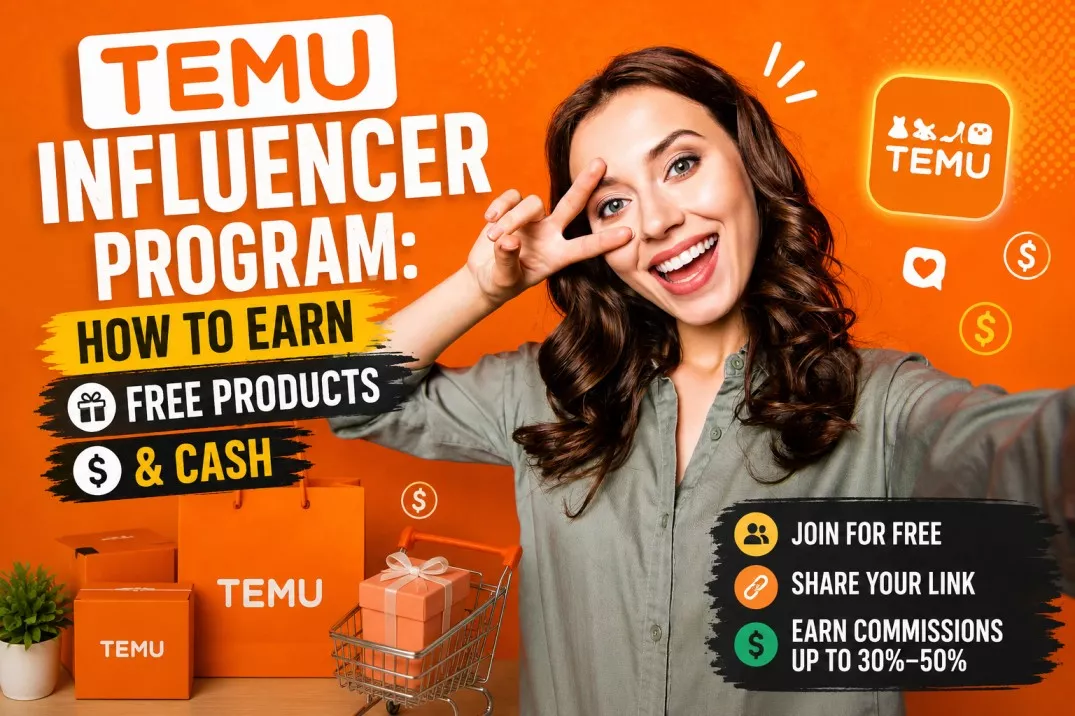
Creator marketing has exploded over the past few years. Brands now trust everyday people, not just celebrities, to sell products through honest reviews and short-form videos. As a result, affiliate programs have multiplied across nearly every platform.
Social commerce has also changed how people shop. Instead of searching for products, many buyers now discover them directly through TikTok videos, Instagram Reels, and YouTube Shorts. Because of this shift, Temu launched its own Influencer Program to tap into that discovery-driven shopping behavior.
So, thousands of creators have joined the program to earn free products and commissions. But how does it actually work, and is it worth your time? This guide answers every question beginners typically have, from eligibility to realistic earnings.
What Is the Temu Influencer Program?
The Temu Influencer Program connects content creators with Temu’s massive product catalog. In exchange for creating content, creators receive free products, commission on sales, or both.
Unlike regular shopping, participants get a personalized dashboard, trackable referral links, and sometimes unique promo codes. This setup lets Temu measure exactly how much traffic and revenue a creator generates.
The program serves several purposes at once:
- It gives creators a low-barrier way to monetize their audience.
- It gives Temu authentic, third-party content that feels more trustworthy than traditional ads.
- It expands Temu’s reach into niche communities that brand advertising alone can’t easily access.
Because the program blends free products with commission opportunities, it appeals to creators at every stage, from total beginners to established influencers.
How the Temu Influencer Program Works
Understanding the workflow helps you know what to expect before you apply. Here’s the general process, step by step:
- Apply through the official Temu Influencer Program page.
- Wait for approval, which typically involves a review of your social profiles.
- Access your dashboard once approved, where you’ll find products, links, and performance data.
- Generate referral links or promo codes for specific products.
- Share your links across your social platforms or blog.
- Earn commission whenever someone makes a purchase through your link.
- Receive free samples, when campaigns offer them, in exchange for content.
Here’s a simplified version of that workflow:
Apply → Get Approved → Access Dashboard → Choose Products →
Generate Links → Create Content → Share Content → Earn Commission
This cycle repeats continuously. As you post more content and build trust with your audience, your earning potential typically grows alongside it.
Who Can Join?
Temu designed this program to be accessible, so creators from many platforms can participate. That said, some platforms naturally convert better for shopping-related content.
Eligible creator types include:
- TikTok creators
- Instagram creators
- YouTube creators
- Facebook page owners
- Pinterest pinners
- X (formerly Twitter) users
- Bloggers and website owners
- Students building side income
- Beginners with small but engaged audiences
- Micro-influencers
Importantly, follower count isn’t always the deciding factor. Engagement quality often matters more than audience size. A micro-influencer with 3,000 loyal followers can outperform a larger account with passive, disengaged viewers.
Eligibility Requirements
Before applying, check whether you meet the basic requirements. While specifics can shift over time, most influencer programs like this one share similar standards.
Generally, you’ll need:
- To meet the minimum age requirement in your country (usually 18).
- An active social media account or website.
- Residency in a country where the program currently operates.
- Content that follows platform community guidelines.
- Reasonable engagement, even if your following is small.
Because Temu reviews applications individually, approval isn’t guaranteed just by meeting the minimum criteria. However, consistent posting and a clear content niche generally improve your chances.
How to Apply
Applying is straightforward. Follow these steps to get started:
- Visit the official Temu Influencer Program signup page.
- Create or log into your Temu account.
- Fill out your creator profile, including your niche and audience details.
- Link your social media accounts for verification purposes.
- Submit your application for review.
- Wait for an approval notification, which typically arrives within a few business days.
Once approved, you’ll gain access to your personal dashboard. From there, you can browse products, request samples, and generate your first referral links.
Free Products Explained
One of the biggest draws of this program is free product access. However, it’s worth understanding exactly how that works before you get too excited.
Temu typically offers free products through campaign-based promotions rather than as a blanket benefit. This means:
- Certain campaigns invite creators to select products in exchange for content.
- Selection often depends on your niche, audience size, or past performance.
- You’re generally expected to post a review or demonstration once you receive the item.
- Shipping times can vary depending on your location and the product source.
Common product categories include home goods, fashion accessories, beauty tools, electronics, and pet supplies. Because Temu’s catalog is enormous, most creators can find something relevant to their niche.
Keep in mind that free products usually come with content expectations attached. If you skip posting, you may become ineligible for future samples.
How Commissions Work
Commissions form the second, often more lucrative, half of the program. Here’s how the process typically unfolds.
When you generate a referral link or promo code, Temu tracks every click and purchase tied to it. Then, once a sale completes, you earn a percentage of that transaction.
Key points to understand:
- Referral links track clicks and conversions automatically.
- Promo codes give your audience a discount while crediting you for the sale.
- Conversion tracking happens through cookies or code attribution, depending on the platform.
- Payment processing occurs on a set schedule, often monthly.
- Payout methods may include direct deposit, PayPal, or account credit, depending on your region.
Commission rates aren’t fixed forever. They can fluctuate based on the product category, promotional campaigns, or your standing as a creator. Because of this, it’s smart to check your dashboard regularly rather than relying on rates you saw months ago.
How Much Can You Earn?
Realistic expectations matter here. While some creators do earn meaningful income, others earn very little, especially at the start. Your results depend heavily on audience size, engagement, and content quality.
| Creator Size | Monthly Clicks | Estimated Sales | Possible Earnings |
|---|---|---|---|
| Nano (under 5K followers) | 50–200 | 2–10 | $10–$50 |
| Micro (5K–50K followers) | 200–1,000 | 10–50 | $50–$300 |
| Mid-tier (50K–250K followers) | 1,000–5,000 | 50–250 | $300–$1,500 |
| Macro (250K+ followers) | 5,000+ | 250+ | $1,500+ |
These figures are illustrative estimates, not guarantees. Several factors influence real-world earnings, including:
- How well your content matches audience intent.
- Whether you post consistently or sporadically.
- The specific commission rate for each product category.
- Seasonal shopping trends, like holiday sales spikes.
- How much your audience trusts your recommendations.
Because these variables shift constantly, treat any income figure as a starting benchmark rather than a promise.
Best Social Media Platforms
Not every platform converts shopping content equally well. Choosing the right one for your style can significantly affect your results.
TikTok tends to perform strongly because of its algorithm-driven discovery and native shopping behavior. Short, entertaining product demos often go viral quickly.
Instagram Reels work similarly well, especially for visually appealing products like fashion or home decor. Stories also allow swipe-up links for followers.
YouTube Shorts combine discovery with searchability, giving your content a longer shelf life than most short-form platforms.
YouTube (long-form) suits detailed reviews and comparison videos. Because viewers actively search for buying advice here, conversion intent tends to run high.
Pinterest works well for evergreen content, since pins can drive traffic for months or even years after posting.
Facebook still holds value, particularly for reaching older demographics who shop through marketplace-style content.
Blogs offer long-term SEO value. A well-optimized blog post can generate passive traffic long after you publish it.
Telegram suits creators with dedicated deal-sharing channels, since subscribers often join specifically for promo codes and discounts.
Ultimately, the best platform is the one where your specific audience already trusts your recommendations.
Tips to Increase Earnings
Beyond simply posting links, a few strategic habits can meaningfully boost your results over time.
- Write honest reviews. Audiences quickly detect insincerity, so authentic feedback builds long-term trust.
- Show real product demonstrations. Viewers convert better when they see items in actual use rather than staged photos.
- Use trending audio and hashtags, but only when they genuinely fit your content.
- Optimize YouTube titles and descriptions with relevant keywords to improve discoverability.
- Post consistently. Algorithms tend to favor accounts that publish regularly rather than sporadically.
- Build audience trust over time, since repeat buyers often generate more value than one-time viewers.
- Time content around seasonal campaigns, like back-to-school or holiday sales.
- Highlight coupon codes clearly, since discount-driven urgency often increases click-through rates.
- Experiment with different short-form formats to see what resonates with your specific audience.
Experienced creators typically treat this program as one income stream among several, rather than their sole strategy. That diversified approach tends to produce steadier results.
Common Mistakes to Avoid
Even well-intentioned creators sometimes hurt their own performance. Watch out for these common pitfalls:
- Spamming links across unrelated posts or comment sections.
- Making misleading claims about product quality or effectiveness.
- Posting fake reviews without ever using the product.
- Ignoring proper disclosures, which can violate both platform rules and consumer protection laws.
- Posting inconsistently, which slows audience growth and algorithm favorability.
- Publishing low-quality content that doesn’t reflect your usual standard.
- Violating platform policies, which can lead to account restrictions or bans.
Avoiding these mistakes protects both your audience’s trust and your standing within the program itself.
Pros and Cons
| Pros | Cons |
|---|---|
| Low barrier to entry for beginners | Commission rates can fluctuate |
| Access to free products | Approval isn’t guaranteed |
| No large following required | Payouts may take time to process |
| Works across multiple platforms | Requires consistent content creation |
| Flexible, campaign-based structure | Earnings vary significantly by niche |
Temu Influencer Program vs Affiliate Program
| Category | Temu Influencer Program | Traditional Affiliate Program |
|---|---|---|
| Eligibility | Open to most creators, including beginners | Often requires an established audience |
| Free products | Available through select campaigns | Rarely offered |
| Commissions | Percentage-based, product-dependent | Percentage-based, often fixed |
| Creator tools | Built-in dashboard and link generator | Varies by network |
| Payouts | Scheduled, method varies by region | Scheduled, method varies by network |
| Ideal users | Beginners, micro-influencers, social-first creators | Bloggers, SEO-focused marketers |
Both models can work well together. Many creators combine Temu’s program with other affiliate partnerships to diversify their income sources.
Is the Temu Influencer Program Legit?
Yes, the program is a legitimate initiative run through Temu’s official platform. Creators do receive free products and commission payouts, and the dashboard tracking system operates transparently.
That said, legitimacy doesn’t mean the program is perfect. A few important cautions apply:
- Payment experiences can vary, and some creators report delays depending on their region.
- Commission rates aren’t guaranteed to stay the same over time.
- Scammers sometimes impersonate Temu’s influencer program to steal personal information.
Because of that last point, always apply through Temu’s official website rather than third-party links sent through direct messages or unsolicited emails. Legitimate brand programs never ask for banking passwords or upfront payments to join.
Who Should Join?
This program suits a wide range of people, though the ideal fit depends on your goals.
- Beginners benefit from the low entry barrier and immediate access to free products.
- Students can use it as a flexible side income source that fits around class schedules.
- Bloggers gain another monetization stream to complement existing ad revenue.
- Influencers with established audiences can scale commissions more quickly.
- Side hustlers appreciate the flexible, self-paced structure.
- Content creators exploring e-commerce partnerships get hands-on experience with affiliate systems.
However, if you’re not willing to post consistently or create authentic content, you likely won’t see meaningful results, regardless of your follower count.
Expert Insights
Social commerce is fundamentally reshaping how affiliate marketing works. Traditional affiliate marketing relied heavily on SEO-driven blog traffic. Today, however, algorithm-driven discovery on platforms like TikTok has shortened the path between discovery and purchase dramatically.
Because of this shift, authenticity now consistently outperforms raw follower count. Audiences increasingly favor creators who demonstrate genuine product use over polished, ad-like content. In fact, many mid-tier creators outperform larger accounts simply because their recommendations feel more trustworthy.
Short-form video platforms also influence conversion rates in a unique way. Since viewers make snap judgments within seconds, the first few frames of a video often determine whether a purchase decision even begins. Successful creators therefore front-load their most compelling product benefit immediately.
Long-term sustainability, though, requires more than viral moments. Creators who build recurring affiliate income typically focus on a specific niche rather than chasing every trending product. This consistency helps their audience associate them with a particular category, which increases both trust and repeat purchase behavior.
Finally, experienced creators often treat brand partnerships as relationships rather than transactions. They communicate regularly with brand contacts, request performance feedback, and adjust their content strategy based on what actually converts. That ongoing feedback loop tends to separate sustainable creator businesses from short-lived side hustles.
Frequently Asked Questions
Is the Temu Influencer Program free to join? Yes, joining doesn’t cost anything. Legitimate programs never charge creators an upfront fee.
How many followers do I need? There’s no strict minimum. Engagement quality often matters more than raw follower count.
Can beginners join? Yes, the program welcomes creators at every experience level, including those just starting out.
Can I receive free products? Yes, through select campaigns, though availability depends on your niche and account standing.
How are commissions paid? Payments typically process on a scheduled basis through methods like direct deposit or PayPal, depending on your region.
Is there an application review process? Yes, Temu reviews your social profiles and content before granting approval.
Can I promote products without showing my face? Yes, many creators succeed using voiceovers, text overlays, or product-only footage.
Can bloggers join? Yes, bloggers can use referral links and promo codes within their written content.
Can I use multiple platforms at once? Yes, many creators cross-post content across TikTok, Instagram, and YouTube simultaneously.
Is the program available worldwide? Availability varies by country, so check the official signup page for current regional support.
Can I combine it with other affiliate marketing programs? Yes, many creators run several affiliate partnerships alongside this one to diversify income.
What happens if someone uses my referral code? You typically earn commission credit once their purchase completes, based on the program’s tracking system.
Conclusion
The Temu Influencer Program offers a genuinely accessible entry point into affiliate marketing. Beginners, students, and micro-influencers can all benefit from free products and commission opportunities without needing a massive following first.
That said, success requires consistency, authenticity, and realistic expectations. Commission rates fluctuate, approval isn’t automatic, and meaningful income typically builds gradually rather than overnight.
For creators willing to post regularly and treat the program as one part of a broader content strategy, it can become a steady, worthwhile income stream. For those seeking instant, guaranteed profits, it’s better to approach the opportunity with tempered, realistic expectations instead.


