


What to Expect in Your First Couples Therapy Session (Step-by-Step)
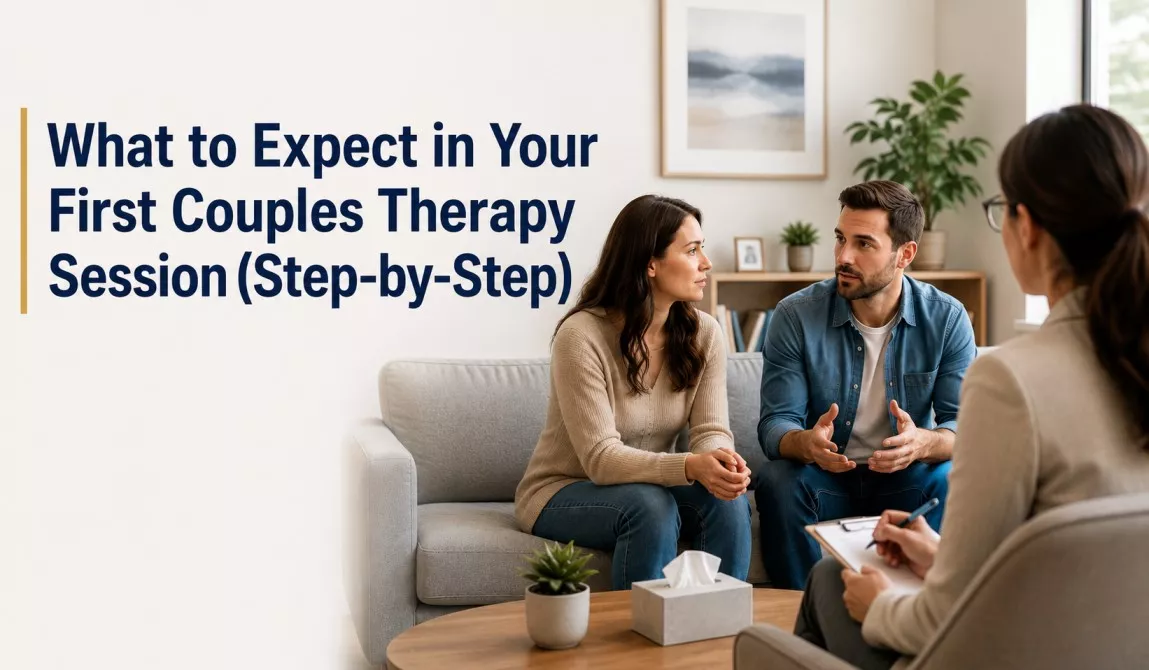
Walking into your first couples therapy session can feel intimidating, especially if neither of you has done this before. However, most first sessions follow a predictable pattern, and knowing that pattern in advance can ease a lot of that nervousness.
In short, a first couples therapy session typically lasts 50 to 90 minutes and moves through nine general steps, from intake paperwork to goal-setting. Both partners usually get equal time to speak, and the therapist stays neutral throughout. This guide breaks down each step so you can walk in feeling prepared instead of anxious.
Key Takeaways
- A first session usually lasts between 50 and 90 minutes.
- Expect paperwork, introductions, and a discussion of your relationship history.
- Both partners typically receive equal time to share their perspective.
- The therapist remains neutral and does not take sides.
- Most couples need several sessions, not just one, before they notice real progress.
Why Do Couples Attend Therapy Together?
Couples seek therapy for many different reasons. For instance, some want to strengthen communication, while others hope to rebuild trust after a breach. Additionally, many couples reach out during a major life transition, such as a new baby, a move, or a career change.
Regardless of the reason, therapy offers a structured, neutral space. A trained therapist guides the conversation so both partners feel heard. As a result, couples often walk away with tools they could not easily develop on their own.
How Long Does a First Couples Therapy Session Last?
Most first couples therapy sessions last between 50 and 90 minutes. However, the exact length depends on the therapist’s practice style and the complexity of the issues involved.
Some therapists schedule an extended first appointment, sometimes up to two hours, specifically for intake. Meanwhile, others keep the first meeting to a standard 50-minute hour and save deeper history-taking for session two. Either way, plan for the first meeting to run longer than a typical weekly check-in.
What to Expect in Your First Couples Therapy Session: A Step-by-Step Guide
Every therapist runs sessions a little differently. Still, most first appointments follow a similar structure. Below is exactly what typically happens, step by step.
Step 1: Complete Intake Paperwork
Before you even meet your therapist, you will likely fill out intake forms. These forms usually ask about your relationship history, individual mental health background, and current concerns.
Many practices now send this paperwork electronically before the appointment. Consequently, you can complete it at home instead of rushing through it in the waiting room. Either way, take your time with these forms, since accurate answers help your therapist prepare for the session.
Step 2: Meet Your Therapist and Build Initial Rapport
Once you finish the paperwork, your therapist will greet both of you and start building rapport. This part of the session feels more like a conversation than a formal evaluation.
Your therapist will likely ask a few light questions first. For example, they might ask how you met or what led you to seek therapy now. This approach helps ease any tension in the room.
Step 3: Review Confidentiality and Session Guidelines
Next, your therapist will explain confidentiality rules and ground rules for the session. They will clarify what stays private, along with the rare situations where they must break confidentiality, such as a safety concern.
Additionally, many therapists set expectations for respectful communication. For instance, they might ask you to avoid interrupting each other or raising your voice during the session.
Step 4: Discuss Your Relationship History
After the introductions, your therapist will ask about your relationship history. Typically, they want to know how you met, what attracted you to each other, and how your relationship has changed over time.
This step matters because it gives your therapist important context. Without this background, they cannot fully understand your current dynamic or the patterns that developed along the way.
Step 5: Identify the Core Issues
Once your therapist understands your history, they will ask what brought you to therapy specifically. Be ready to describe the issues that concern you most, whether that involves communication, trust, or intimacy.
Try to be as specific as possible during this step. Vague descriptions make it harder for your therapist to spot patterns, so concrete examples work much better.
Step 6: Share Individual Perspectives
Most therapists give each partner dedicated time to share their point of view. This step ensures that one partner does not dominate the conversation while the other stays quiet.
Your therapist may ask follow-up questions to clarify each perspective. Meanwhile, the other partner typically listens without interrupting. Often, this exercise alone reveals communication patterns that couples never noticed before.
Step 7: Learn About the Therapist’s Approach
Around this point, your therapist will likely explain their therapeutic approach. Some rely on the Gottman Method, while others use Emotionally Focused Therapy (EFT) or a more integrative style.
Understanding this approach helps you know what to expect in future sessions. Furthermore, it gives you a chance to ask questions if a particular method concerns you.
Step 8: Set Initial Goals Together
Toward the end of the session, your therapist will help you set clear goals for therapy. These goals might include improving communication, rebuilding trust, or simply learning to argue more productively.
Setting goals early gives your sessions direction. Otherwise, therapy can feel unfocused, and progress becomes harder to measure.
Step 9: Schedule Follow-Up Sessions
Finally, your therapist will discuss next steps and scheduling. Most couples therapy works best with consistent, weekly sessions, at least in the beginning.
Your therapist may also assign a small reflection exercise before your next appointment. This homework helps you carry the conversation forward between sessions.
What Should You Bring to Your First Session?
You do not need much for your first appointment. Still, a few items can make the experience smoother:
- Completed intake paperwork, if you did not submit it online
- A short list of specific concerns or examples you want to discuss
- Your insurance information or payment method
- An open mind and a genuine willingness to listen
How to Prepare Emotionally for Couples Therapy
Walking into therapy can feel vulnerable. However, a little preparation goes a long way toward easing that anxiety.
First, set realistic expectations together. One session will not resolve years of built-up tension, and that is completely normal. Second, agree with your partner beforehand that you will approach the session with curiosity instead of blame. Finally, remind yourself that seeking help is a sign of commitment, not failure.
Common First-Session Concerns (and How to Handle Them)
“What if my partner won’t open up?”
This concern comes up often, especially when one partner is naturally more reserved. Fortunately, skilled therapists know how to gently draw out quieter partners without forcing the issue.
“What if we start arguing during the session?”
Some tension during the first session is completely normal. If the conversation escalates, your therapist will step in and redirect you both toward productive dialogue instead of conflict.
“What if the therapist takes sides?”
Trained therapists remain neutral throughout treatment. Instead, their role involves facilitating understanding between partners, not assigning blame or declaring a winner.
Frequently Asked Questions
How long does the first couples therapy session last?
Most first sessions last between 50 and 90 minutes, depending on the therapist and the complexity of your situation.
Do both partners need to talk during the first session?
Yes, typically. Most therapists ensure both partners get roughly equal time to share their perspective, though the exact balance can vary by therapist.
Is what we say in couples therapy confidential?
Generally, yes. Therapists follow strict confidentiality guidelines, with rare exceptions for safety concerns, such as a risk of harm to yourself or someone else.
How soon will we notice progress?
Progress varies widely between couples. That said, many couples start noticing small shifts in communication within four to six sessions.
What if we have never been to therapy before?
That is completely normal — most couples enter therapy without any prior experience. Your therapist will guide you through the process step-by-step, so you do not need to prepare extensively beforehand.
Final Thoughts
Your first couples therapy session sets the foundation for the work ahead. Although it can feel nerve-wracking at first, most couples leave that initial meeting feeling more hopeful than when they walked in.
Therapy is a process, not a single fix. Still, with patience, honesty, and the right therapist, that first step often becomes the turning point your relationship needs.
This article is for general informational purposes only and does not replace personalized advice from a licensed therapist. If you and your partner are dealing with a safety concern, please contact a licensed professional or local crisis service right away.


