


How to Stay Safe From Rogue Waves at the Beach
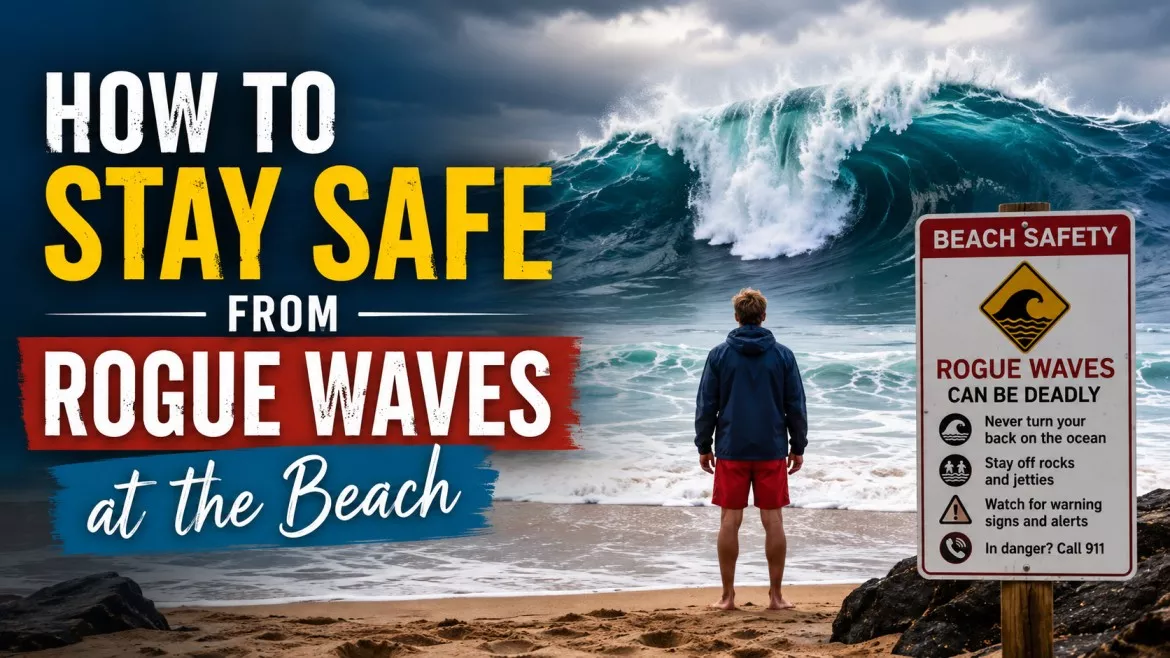
Rogue waves strike without warning, and they can turn a calm beach day into a crisis within seconds. In fact, these sudden, oversized waves injure and kill beachgoers every year along coastlines around the world. Fortunately, a few simple precautions dramatically lower your risk. This guide explains what causes rogue waves, how to spot the warning signs, and how to protect yourself and your family at the beach.
Quick Answer: Keep a safe distance from the waterline, and never turn your back on the ocean. Avoid rocks, jetties, and driftwood piles near the surf. Finally, watch the water for at least 20 minutes before you relax, and check local beach hazard alerts before you arrive.
What Is a Rogue Wave?
A rogue wave is an unusually large wave that towers over the surrounding surf. It often reaches more than twice the height of typical waves nearby. Scientists also call these waves “freak waves” or “killer waves” because they can appear suddenly and from an unexpected direction.
Most true rogue waves form far out at sea, where they threaten ships, oil rigs, and offshore platforms. In 1995, instruments off the coast of Norway recorded the first confirmed rogue wave: an 84-foot wall of water now known as the Draupner wave. That single measurement finally proved what sailors had reported for centuries. Researchers estimate that rogue waves contributed to 22 lost ships and 525 deaths in the Pacific and Atlantic between 1969 and 1994 alone.
Near the coastline, however, a closely related hazard poses the real threat to beachgoers: the sneaker wave.
Rogue Waves vs. Sneaker Waves: What’s the Difference?
People often use “rogue wave” as a catch-all term at the beach. However, meteorologists draw a clear line between the two. Understanding this distinction helps you know exactly what to watch for.
- Rogue waves form in open water, far from shore, and mainly threaten ships and offshore structures.
- Sneaker waves form near the coastline and specifically threaten people standing on the sand.
So when someone warns you about a “rogue wave at the beach,” they almost always mean a sneaker wave. This guide uses both terms interchangeably from here on, since that’s how most people search for and talk about the danger.
What Causes These Waves to Form?
Ocean waves don’t grow large by accident. Several natural forces combine to create rogue and sneaker waves, and none of them require a storm.
Constructive Interference
Multiple wave trains often travel at different speeds and from different directions. When their crests align, the waves combine and amplify each other. As a result, the ocean can produce a wave dramatically taller than everything around it.
Ocean Floor and Current Effects
Additionally, underwater topography, tidal forces, and the direction of incoming swells all influence how wave energy focuses near shore. Consequently, certain beaches and specific tide conditions produce oversized waves more often than others.
Calm Weather Can Still Be Dangerous
Importantly, sneaker waves often strike during calm weather rather than storms. There’s rarely an obvious warning sign, like dark clouds or high wind. As a result, this calm-weather danger is often harder to anticipate than a storm-driven one.
How Dangerous Are Rogue Waves at the Beach?
These waves are far more dangerous than most people realize. According to the National Weather Service, sneaker waves kill more people along the West Coast than every other weather hazard combined. In fact, meteorologists estimate that roughly five people die each year from sneaker waves between Central California and Oregon alone.
Moreover, the danger extends well beyond the Pacific Northwest. Sneaker waves happen most often along the rugged, cold-water coastlines of Oregon, Washington, and Northern California. Even so, they can strike almost any surf beach in the country.
A single wave can:
- Sweep an adult off their feet in an instant
- Pull victims into cold water, triggering hypothermia
- Lift and roll heavy logs or driftwood onto anyone caught underneath
- Drag people off jetties, rocks, or low cliffs
Cold water immersion deserves special attention here. Even strong swimmers can lose muscle control within minutes of sudden cold exposure. So the wave itself is often just the first danger in a chain of events.
Warning Signs of Rogue Wave Risk
You can’t predict exactly when a rogue or sneaker wave will strike. However, you can watch for conditions that raise the risk.
- A lull in wave activity. A ten-to-twenty-minute stretch of small, calm waves often comes right before a sneaker wave hits. Don’t mistake this quiet stretch for safety.
- Steep beach slopes. Steep sand lets waves surge higher and faster onto the beach.
- Recent storms offshore. Storms far out at sea can send powerful swells toward the coast, even when local weather looks calm and clear.
- Beach hazard statements. Local National Weather Service offices issue these alerts whenever conditions favor sneaker waves.
- Rocks, jetties, and outcroppings nearby. In fact, these structures don’t just look risky — they amplify wave impact and turn slippery the moment they get wet.
Essential Safety Tips to Avoid Rogue Waves
Follow these expert-backed tips every time you visit the beach.
- Never turn your back on the ocean. This is the most repeated piece of advice from lifeguards and meteorologists alike, and for good reason: a wave can arrive within seconds.
- Check the forecast before you leave home. Look specifically for beach hazard statements, high surf advisories, or sneaker wave warnings from your local National Weather Service office.
- Watch the water for at least 20 minutes. Experienced surfers and lifeguards study wave patterns before they ever get comfortable near the shoreline. Likewise, do the same before you sit down or let kids play near the water.
- Stay farther back than feels necessary. Give yourself extra distance from the waterline, especially on steep beaches or right after a lull in the surf.
- Avoid jetties, rocks, and low cliffs. These spots look like great viewing points, but they’re actually some of the deadliest places to stand near the ocean.
- Steer clear of logs and driftwood. A single wave can lift a log weighing hundreds of pounds and roll it straight into you.
- Keep children and pets within arm’s reach. Waves can sweep small bodies off their feet far more easily than adults, so never let kids wander toward the water alone.
- Swim near a lifeguard whenever possible. Trained lifeguards spot dangerous conditions long before most visitors even notice them.
- Wear a life jacket around rocky shorelines. If you plan to fish or explore rocky areas, a life jacket dramatically improves your odds if a wave knocks you in.
- Trust posted warning signs and flags. If a beach posts a hazard warning, don’t brush it off as an overreaction. Instead, take it seriously and adjust your plans.
What to Do If a Rogue Wave Catches You
Sometimes, even careful beachgoers misjudge a wave. Here’s exactly what to do if one knocks you down or pulls you into the water.
First, stay calm. Panic burns energy and oxygen you’ll need to get back to safety. Next, get your feet under you and stand up as soon as the water allows.
If the current pulls you out, don’t fight it head-on. Instead, swim parallel to the shore until you escape the pull, then angle back toward the beach. Meanwhile, if you can’t break free, float on your back to conserve energy and wave your arm to signal for help.
Finally, if waves push you near rocks or a jetty, protect your head first. Push away from the structure rather than let waves slam you against it. Once you reach shore, warn others nearby so they can move to safety too.
Keeping Kids Safe From Rogue Waves
Children face a higher risk from sudden waves simply because of their smaller size and lower body weight. As a result, a few extra precautions make a big difference for families.
- Set a clear “no closer than this” line in the sand, and enforce it consistently.
- Never let kids play directly in front of jetties, rocks, or driftwood piles.
- Assign one adult to actively watch the water at all times, rather than assuming someone else is watching.
- Dress young children in bright colors so you can spot them instantly if a wave scatters your group.
FAQs About Rogue Wave Safety
What is a rogue wave, exactly?
A rogue wave is an ocean wave that measures at least twice the height of the surrounding waves. It often appears suddenly, from an unexpected direction. At the beach, this danger usually takes the form of a sneaker wave, which forms much closer to shore.
Can rogue waves happen on a calm, sunny day?
Yes, and that’s exactly what makes them so dangerous. Sneaker waves often strike during calm weather precisely because there’s no storm to warn people ahead of time. A flat-looking ocean can still produce a wave that surges far up the beach without notice.
How far up the beach can a sneaker wave reach?
A sneaker wave can travel at least 150 feet onto dry sand, according to the National Weather Service. For context, that’s roughly the length of half a football field beyond where the water normally reaches.
What should I do if I see a beach hazard warning?
Take it seriously, even if the ocean looks calm when you arrive. Stay well back from the waterline, and avoid rocks and jetties entirely. If conditions seem risky, consider postponing water activities until the advisory expires.
Are rogue waves only a West Coast problem?
No, not entirely. Sneaker waves happen most frequently along the Pacific coastlines of Oregon, Washington, and Northern California because of the cold water and rugged terrain. However, similar sudden waves can occur on surf beaches nationwide. So the same precautions apply no matter where you visit the coast.
Final Thoughts
Rogue waves and sneaker waves earn their fearsome reputation because they strike exactly when people feel safest. Therefore, the best defense isn’t luck — it’s awareness. Watch the water, respect posted warnings, and keep your distance. Above all, never turn your back on the ocean.
With a little preparation, you can enjoy everything the beach offers while staying well out of harm’s way.
Sources: National Weather Service (weather.gov/safety/sneaker-waves), NOAA, and additional coastal safety research.


