


10 Things to Check When Choosing a Podcast Studio in Dubai
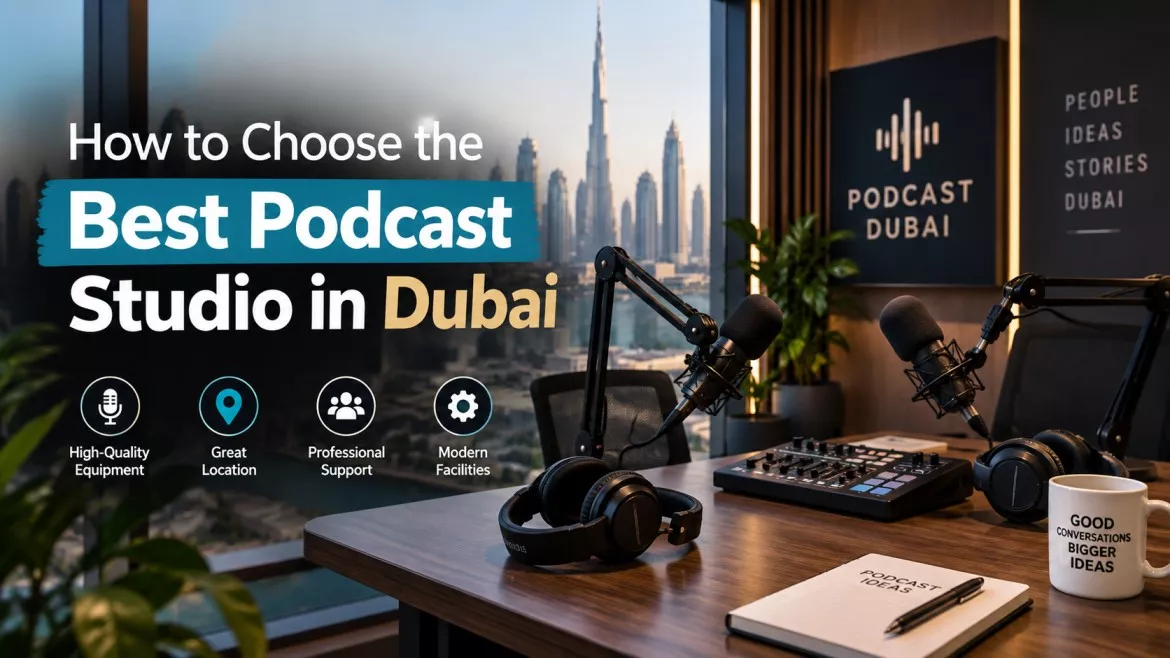
Dubai’s podcast scene has expanded fast, and studio options have multiplied right along with it. A rushed booking decision, however, can waste your budget and damage your show’s sound quality. This guide walks through the ten checks that matter most, so you can book a studio with real confidence.
Quick Answer
Choosing the right podcast studio in Dubai comes down to ten practical checks: acoustic treatment, recording equipment, location, video capability, transparent pricing, editing support, on-site technical expertise, room comfort, verified client reviews, and booking flexibility. Together, these factors separate a studio that serious creators can rely on from one that only looks impressive in photos.
1. Acoustic Treatment and Soundproofing Quality
Sound quality makes or breaks a podcast. Therefore, acoustic treatment deserves the top spot on your checklist.
Walk through the space and look for foam panels, bass traps, and diffusers across the walls and ceiling. Also, ask the studio manager how they handle outside noise, especially if the building sits near a busy road or a shared office floor. Many creative spaces in Dubai occupy mixed-use towers, so traffic and HVAC systems can easily leak into a poorly isolated room.
Request a short test recording before you commit. A five-minute sample reveals echo, hum, and background noise far better than a simple walkthrough. If a studio hesitates to offer this test, treat it as a warning sign.
2. Recording Equipment and Technology Standards
Outdated gear limits your output, no matter how skilled your host sounds on the mic. Consequently, equipment quality deserves close attention during your visit.
Check the microphone brand and model first, since studios that invest in names like Shure or Rode typically care about audio fidelity across the board. Next, ask about the audio interface, mixing console, and headphone monitoring setup. These components shape your final sound more than most first-time podcasters expect.
Beyond the obvious gear, confirm the studio keeps backup equipment on hand. Cables fail and mics drop mid-session more often than hosts anticipate. A studio with spares keeps your recording on schedule instead of losing an hour to a hardware fix.
3. Studio Location and Accessibility
Location affects both your guests and your production schedule. As a result, this factor matters more than many first-time creators assume.
Established hubs like Dubai Media City, Business Bay, Al Barsha, and Downtown Dubai host several podcast studios. These districts cater specifically to podcasters and other content creators, so guests find them easier to reach from across the city. Meanwhile, parking availability and proximity to a Metro station can determine whether a guest arrives relaxed or already frazzled.
Think about your typical recording schedule too. If you record during peak traffic hours, a studio near a major highway might actually work against you. So, ask previous clients about realistic travel times before you lock in a location.
4. Video Podcasting Capabilities
Video podcasts now dominate platforms like YouTube and Spotify. Because of this shift, your studio needs to support far more than audio alone.
Ask whether the studio provides multi-camera setups, proper lighting rigs, and a background that suits your brand. Several Dubai studios now advertise three- to five-camera live switching, along with same-day access to raw files. Additionally, confirm the studio can export video in formats ready for direct upload, since manual conversion adds unnecessary time to your workflow.
Some studios still treat video as an afterthought and focus purely on audio. If your content strategy leans heavily on video, prioritize a studio that treats cameras and lighting as core infrastructure, not an add-on service.
5. Pricing Transparency and Package Inclusions
Hidden fees can turn an affordable studio into an expensive mistake. For this reason, pricing clarity deserves its own conversation before you book anything.
Dubai podcast studios generally fall into three pricing tiers, as the table below shows.
| Studio Tier | Typical Price (per hour) | What’s Usually Included |
|---|---|---|
| Entry-level | AED 140–250 | Basic mics, treated room, self-operated setup |
| Mid-range | AED 300–450 | Premium mics, mixer, on-site operator, raw files |
| Premium | AED 450–600+ | Multi-camera video, lighting, editing, fast turnaround |
Ask for a full breakdown of what your quoted rate actually covers. Does the price include editing, or do you pay for that separately? Do multi-guest sessions cost more? Will video exports add an extra charge on top of audio? Get these answers in writing before you pay a deposit.
Compare hourly rates against bundle packages too. Most studios discount multi-session bundles for creators who record weekly or biweekly. If you plan to podcast long-term, a bundle can meaningfully lower your cost per episode.
6. Post-Production and Editing Support
Raw recordings rarely sound broadcast-ready on their own. Consequently, editing support becomes a major factor in your final decision.
Some studios bundle basic editing, noise reduction, and level balancing into their base rate. Others charge separately, or expect you to handle post-production yourself. Clarify this upfront, since editing fees can quickly outweigh the studio rental cost if you aren’t prepared for them.
Ask about turnaround time as well. A studio that promises a two- to three-day edit helps you maintain a steady publishing schedule. A multi-week wait, on the other hand, can throw off your entire content calendar.
7. On-Site Technical Expertise
Equipment alone doesn’t guarantee a smooth session. Instead, the person operating that equipment often makes the bigger difference.
Ask whether a trained operator sits in during your recording, or whether you’re expected to self-operate the booth. For first-time podcasters especially, an experienced engineer catches problems in real time. A loose cable or a clipping audio level gets fixed before it ruins the whole episode.
Furthermore, ask how familiar the staff are with your specific format. A studio that regularly hosts interview shows will likely set up mics and monitoring differently than a studio that mainly handles solo narration.
8. Studio Size, Layout, and Guest Comfort
Cramped studios create awkward energy, and that tension often carries straight into the recording. Therefore, physical comfort deserves real consideration, not just an afterthought.
Think about your typical guest count first. A single-host setup needs far less space than a roundtable with four panelists. Check the seating arrangement and table layout, and confirm the room allows natural eye contact between speakers, since this shapes on-air chemistry more than most hosts expect.
Also consider smaller details, like water availability, air conditioning control, and a private waiting area for guests. These touches seem minor at first. Over time, though, they shape how relaxed your guests feel once recording begins.
9. Portfolio, Reviews, and Client Testimonials
A studio’s past work tells you more than any sales pitch ever could. So, always request samples before signing a long-term contract.
Ask for links to podcasts the studio has produced, and listen closely to sound quality across different episodes. Consistent quality across multiple shows signals a reliable setup. Inconsistent results, meanwhile, suggest deeper equipment or staffing issues underneath the marketing.
In addition, search for independent reviews on Google or within local podcasting communities. Genuine client feedback often reveals details that a studio’s own marketing conveniently leaves out.
10. Booking Flexibility and Additional Amenities
Your recording schedule will shift eventually, whether a guest reschedules or an episode simply runs long. Thus, booking flexibility matters just as much as the studio itself.
Ask about cancellation policies, overtime rates, and how easily you can extend a session if the conversation runs past your booked slot. Rigid studios can penalize you for delays that sit completely outside your control.
Finally, factor in amenities like a lounge or green room, high-speed WiFi, and refreshments for guests. These extras won’t fix bad acoustics on their own. Still, they make repeat visits far more pleasant for you and everyone you invite onto the show.
Frequently Asked Questions
How much does it cost to rent a podcast studio in Dubai?
Hourly rates typically range from AED 140 to AED 600, depending on the equipment, video capability, and included support. Most creators end up booking mid-range studios at around AED 300 to AED 450 per hour.
Do I need to bring my own equipment to a podcast studio in Dubai?
No. Most professional studios supply microphones, headphones, an audio interface, and cameras for video episodes. Even so, confirm this in advance if you have specific gear preferences or brand requirements.
Which areas in Dubai have the most podcast studios?
Dubai Media City, Business Bay, and Al Barsha currently host some of the most established studios. These districts already cater to media and creative businesses, so the surrounding infrastructure supports podcasters well.
Can a podcast studio in Dubai handle video recording too?
Yes, many studios now offer multi-camera video alongside audio, since video podcasts have grown rapidly on platforms like YouTube and Spotify. That said, always confirm this capability directly before booking if video matters to your strategy.
How far in advance should I book a podcast studio?
Booking one to two weeks ahead is generally safe, though popular studios can fill up faster during busy seasons. For recurring shows, a standing weekly or biweekly slot helps you secure the same room and the same operator every time.
Final Checklist
Before you sign anything, run through this list one more time:
- Confirm professional-grade soundproofing and acoustic treatment
- Test the microphones and recording equipment yourself
- Verify whether pricing includes editing and post-production
- Check video capability if your show needs it
- Ask about on-site engineer or operator support
- Review the studio’s location and accessibility
- Read independent client reviews, not just on-site testimonials
- Clarify booking, overtime, and cancellation policies
- Assess guest comfort and available amenities
- Request sample recordings from past clients
Final Thoughts
Choosing the right podcast studio in Dubai ultimately comes down to matching your specific needs against what a space actually delivers, not just what it promises in a sales call. Take the time to test equipment, ask direct pricing questions, and listen to real client recordings before you commit. In the end, a well-chosen studio protects your budget, safeguards your audio quality, and lets you focus on what matters most: creating a show your audience genuinely wants to hear.


