


Will the Louvre Museum in Paris Be Affected by the Heat Wave?
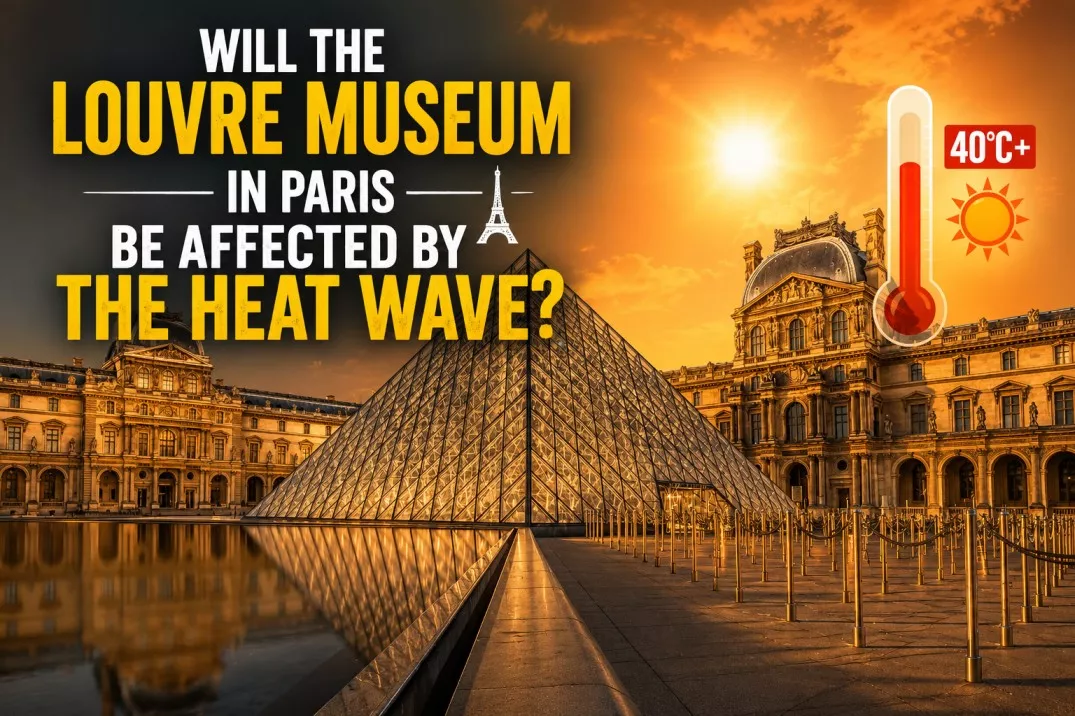
Paris just lived through one of its hottest stretches on record. In late June 2026, France recorded its hottest day ever, and the Louvre responded by closing its doors two hours early. So if you’re planning a trip and wondering whether the world’s most visited museum can handle extreme heat, the honest answer is: yes, it can be affected — but not in the way most travelers fear.
This guide covers exactly what happens to the Louvre during a heat wave, whether your artworks or your visit are actually at risk, and how to plan a smart trip even when temperatures spike. First, though, it helps to understand what triggered the closures in the first place.
Understanding the Current Paris Heat Wave
In late June 2026, a red heatwave alert covered more than half of France. Consequently, Météo-France recorded a national average temperature of 29.8°C (85.6°F), the highest ever logged since record-keeping began. Meanwhile, the southwestern region of Landes hit a scorching 44.3°C (111.7°F).
This wasn’t a typical Paris summer. Normally, the city’s warm months bring pleasant, dry heat with occasional spikes. This year, however, temperatures stayed dangerously high both day and night, which experts call a “plateau of severity.” As a result, the heat didn’t ease overnight the way it usually does, so buildings and bodies never got a chance to cool down.
Climate scientists tie this pattern directly to global warming. Additionally, UN climate agencies project that the next five years will likely bring even more record-breaking heat across Europe. Therefore, what happened in June 2026 may not be a one-off event — it could become the new normal for Paris summers.
Is the Louvre Museum Currently Open?
Yes, the Louvre stayed open throughout the heat wave, though it adjusted its hours. From June 24 through June 28, 2026, the museum closed at 4 p.m. instead of its usual 6 p.m., with last admission cut off at 2 p.m. Consequently, visitors with tickets for later time slots received automatic refunds.
Museum officials explained the reasoning plainly: heat builds up most by the end of the day, and large crowds make that worse. So, rather than risk visitor and staff safety during the hottest hours, the Louvre simply shortened its day.
Importantly, the museum didn’t shut down entirely — it adapted. This distinction matters for travelers. A closed museum ruins a trip; a museum with adjusted hours just requires a bit of planning. Beyond that, the Louvre now requires advance reservations for all visitors between July 1 and August 31, 2026, partly to help manage crowd levels during peak heat season.
Quick takeaway: Expect the Louvre to stay open during heat waves, but always check official hours before you go, since they can shift on short notice.
How Extreme Heat Can Affect the Louvre
The Louvre sits inside a former royal palace, and that history creates real challenges. Thick stone walls in older sections naturally stay cooler, so those galleries often remain comfortable even in extreme heat. Other areas, though, absorb sun and heat throughout the day, and temperatures there climb noticeably by late afternoon.
Because the building spans roughly 73,000 square meters, heat doesn’t spread evenly. Some wings feel manageable while others grow uncomfortably warm. Furthermore, with around nine million visitors a year — averaging 25,000 per day — crowd density adds even more heat to already-warm rooms.
Air conditioning isn’t as widespread in France as it is in many other countries, and the Louvre has struggled with modernizing its climate systems in recent years. As a result, during extreme heat events, the museum has to make real-time decisions about which galleries to limit and when to close early. Ultimately, this is a building infrastructure problem as much as a weather problem.
Quick takeaway: The Louvre’s mix of historic and modern architecture means comfort varies by gallery — plan to spend more time in naturally cooler wings during a heat wave.
Can Heat Damage the Artworks?
This is the question most visitors actually care about, and the reassuring news is that the Louvre takes preservation extremely seriously. Paintings, sculptures, textiles, and wooden artifacts all react differently to heat and humidity swings, so the museum’s conservation teams monitor environmental conditions constantly.
Sensitive materials pose the biggest challenge. For instance, oil paintings can develop cracks if humidity drops too quickly, while wooden objects and textiles are prone to warping or fiber damage under fluctuating conditions. Ancient sculptures generally tolerate heat better, since stone and marble are naturally more stable.
That said, climate control isn’t just about keeping galleries cool for visitors — it’s a scientific discipline built around protecting fragile materials long-term. Conservation laboratories inside the museum track temperature and humidity around the clock, and any unusual reading triggers a review. Because of this ongoing monitoring, sudden heat waves are far less likely to cause permanent damage than the slow, cumulative stress of consistently poor climate control.
Quick takeaway: Short-term heat waves rarely damage well-monitored collections; the real risk comes from long-term infrastructure gaps, which is exactly what the Louvre is now working to address.
How the Louvre Protects Its Collections During Heat Waves
Behind the scenes, the Louvre runs a layered defense system. HVAC systems handle climate control where installed, though coverage isn’t uniform across every gallery. Environmental sensors track temperature and humidity in real time, alerting conservation staff the moment readings drift outside safe ranges.
When conditions worsen, emergency protocols kick in. These can include relocating especially sensitive pieces, adjusting gallery access, or bringing in backup cooling equipment. Meanwhile, conservation teams work proactively rather than reactively — checking vulnerable pieces before problems develop, not just after.
This approach is often called preventive preservation, and it’s the same philosophy museums worldwide now rely on. Instead of waiting for damage, staff anticipate risk and intervene early. Given the Louvre’s scale and the age of its building, this proactive mindset has become essential rather than optional.
Quick takeaway: The Louvre relies on monitoring and rapid response rather than one single fail-safe system, so no gallery is ever left unchecked during extreme weather.
What Visitors Should Expect During a Heat Wave
Practically speaking, a heat wave changes the shape of your visit more than it changes access to the museum itself. Expect longer security lines, since queuing outdoors in extreme heat prompts staff to manage crowd flow more carefully. Similarly, peak visiting hours shift earlier in the day, as both tourists and the museum itself try to avoid the worst afternoon heat.
Indoor comfort varies by wing, so don’t be surprised if some galleries feel noticeably warmer than others. Water availability inside the museum tends to improve during heat alerts, though bringing your own bottle is still smart. Rest areas also see heavier use, so patience helps if you need a seat.
Accessibility concerns deserve mention too. Visitors with mobility issues, older travelers, and families with young children should build in extra breaks and avoid pushing through the hottest afternoon hours. Overall, crowd levels don’t necessarily drop during a heat wave — many tourists still show up, just earlier in the day.
Quick takeaway: Arrive early, expect shifted hours, and treat the visit as a morning activity rather than an all-day one during extreme heat.
Best Tips for Visiting the Louvre During Hot Weather
A little preparation goes a long way when temperatures spike. Here’s what actually helps:
- Book timed-entry tickets in advance. Reservations are mandatory from July through August 2026, so skipping this step isn’t an option anyway.
- Visit early morning. Arriving at opening avoids both the worst heat and the largest crowds.
- Stay hydrated throughout the day, not just while inside the museum.
- Wear lightweight, breathable clothing and comfortable shoes, since queuing outdoors adds up quickly.
- Carry a reusable water bottle — many attractions, including the Louvre, support refill stations.
- Plan indoor breaks in naturally cooler wings if you start to feel overheated.
- Use shaded areas near the Tuileries Garden or the Rivoli arcades before and after your visit.
- Check the Louvre’s official website or app the morning of your visit, since hours can change with little notice.
Together, these small habits make the difference between a miserable heat-wave visit and a smooth one.
Could Future Heat Waves Change How Major Museums Operate?
Almost certainly, yes. The Louvre itself has acknowledged that its historic building isn’t fully adapted to climate change, and that admission signals a broader shift happening across the museum world. As heat waves become more frequent, institutions can no longer treat them as rare emergencies — they have to plan for them as a recurring operational reality.
Expect to see infrastructure upgrades accelerate in the coming years, particularly around energy-efficient cooling technology that doesn’t compromise historic architecture. Green building techniques, better insulation, and smarter environmental monitoring are all becoming priorities rather than luxuries. Additionally, museums may start capping visitor numbers on the hottest days, both for comfort and for collection safety.
Longer term, this could reshape peak tourism seasons altogether. If summer heat waves keep intensifying, travelers may shift toward shoulder seasons like spring and early fall, and museums may adjust programming accordingly. In other words, climate adaptation isn’t just an operations issue anymore — it’s becoming a core part of how cultural tourism functions.
Quick takeaway: Heat-driven schedule changes are likely to become routine, not exceptional, so building flexibility into your travel plans is a smart long-term habit.
What This Means for Tourists Visiting Paris
If you already have a trip booked, there’s no need to panic or cancel. The Louvre remains open, and most visits proceed normally with a few adjusted hours. That said, building flexibility into your itinerary makes the experience far more enjoyable.
Consider pairing your Louvre visit with air-conditioned alternatives on the hottest days. For example, the Fondation Louis Vuitton stayed open throughout the June 2026 heat wave, and several other Paris institutions offered similar refuge. Meanwhile, outdoor attractions like garden visits or river walks work best in early morning or evening hours.
Transportation also deserves a second thought during extreme heat. Paris’s metro system isn’t uniformly air-conditioned, so factor in extra time and hydration breaks between stops. Overall, a flexible, heat-aware itinerary beats a rigid one every time.
Why Climate Resilience Is Becoming Essential for World-Class Museums
Here’s the bigger picture worth understanding: museums like the Louvre weren’t built with climate change in mind. Their architecture reflects centuries-old design priorities — grandeur, natural light, historic preservation — not modern energy efficiency or heat resilience. That gap is now becoming impossible to ignore.
As global temperatures keep climbing, institutions face a genuine tension between preserving historic architecture and modernizing infrastructure. You can’t simply retrofit a former royal palace the way you’d upgrade a contemporary building. Consequently, museums have to get creative, blending targeted technology upgrades with smarter operational practices like the ones the Louvre used in June 2026.
Visitor expectations are shifting too. Tourists increasingly expect real-time updates, flexible ticketing, and transparent communication about weather-related changes — and museums that deliver on this build more trust than those that stay silent. Meanwhile, sustainability investments aren’t just about cutting emissions anymore; they’re about long-term survival for institutions holding irreplaceable cultural heritage.
Ultimately, climate resilience isn’t a side project for major museums — it’s becoming central to their long-term mission. The institutions that adapt early will likely fare far better than those that wait for the next record-breaking summer to force their hand.
Myth vs Reality
| Myth | Reality |
|---|---|
| The Louvre closes every time temperatures rise | In practice, the museum stays open during most heat waves and simply adjusts closing times, as it did in June 2026. Full closures are rare. |
| Air conditioning protects everything automatically | Coverage isn’t uniform across the building. Older wings rely on natural insulation, while other areas depend on active cooling systems that the museum is still working to modernize. |
| Museums are unaffected by climate change | The Louvre has publicly acknowledged its own vulnerability, admitting its historic building isn’t fully adapted to intensifying heat. |
| Visiting during summer is always uncomfortable | Early mornings and naturally cooler galleries offer a genuinely pleasant experience, even during a heat wave, if you plan around peak heat hours. |
Quick Visitor Checklist
- Check the Louvre’s official website for current hours before you leave your hotel
- Reserve timed-entry tickets in advance (mandatory July–August 2026)
- Bring a reusable water bottle
- Dress in lightweight, breathable clothing
- Arrive at or near opening time
- Monitor Météo-France weather alerts during your trip
- Plan shaded routes for outdoor transitions
- Allow extra time for security lines and unexpected schedule changes
Frequently Asked Questions
Is the Louvre air-conditioned?
Partially. Some galleries have active climate control, while others rely on the natural insulation of the historic building’s thick stone walls. Coverage isn’t uniform throughout the museum.
Can extreme heat close the Louvre entirely?
It’s possible during severe conditions, but historically the museum has preferred adjusting hours over full closures. In June 2026, it shortened its day rather than shutting down.
Is summer still a good time to visit the Louvre?
Yes, especially if you visit early in the day. Just build flexibility into your schedule in case of heat-related hour changes.
Are the artworks safe during heat waves?
Generally, yes. Conservation teams monitor environmental conditions around the clock, and short-term heat events are far less risky than long-term climate control gaps.
What’s the coolest time of day to visit?
Morning, right at opening, is consistently the coolest and least crowded window.
Can visitors bring water inside the museum?
Yes, reusable water bottles are welcome, and refill stations are available inside.
Are there cooling or rest areas inside the Louvre?
Yes, though usage increases significantly during heat waves, so patience helps if seating is limited.
Should tourists postpone their visit because of heat?
Not necessarily. Most visits proceed normally with adjusted hours. Postponing only makes sense if extreme heat coincides with other travel disruptions.
Does the Louvre require reservations because of the heat?
Reservations became mandatory for all visitors from July 1 through August 31, 2026, partly to help manage crowd density during peak heat season.
Where can I check real-time updates on Louvre hours?
The museum’s official website posts heat-related schedule changes directly, and checking it the morning of your visit is the most reliable approach.
Conclusion
So, will the heat wave affect your Louvre visit? Likely yes, in small but manageable ways — shifted hours, mandatory reservations, and a bit more planning around peak heat. What it won’t do is shut the world’s most visited museum down or put its collections at serious risk, thanks to the conservation systems already in place.
The bigger story here goes beyond one summer. The Louvre’s own admission that it isn’t fully adapted to climate change reflects a challenge facing cultural institutions worldwide. Even so, the museum’s response to June 2026 — shortened hours, proactive monitoring, and clear public communication — shows a system built to adapt rather than simply absorb damage.
For travelers, the takeaway is straightforward: book ahead, plan around morning hours, and check official updates before you go. With that groundwork in place, you can enjoy the Louvre with confidence, heat wave or not.
This article reflects publicly reported operational updates as of late June 2026. Because heat-related schedule changes can shift quickly, always verify current hours directly through the Louvre’s official website before your visit.


