


Why Sydney Commercial Properties Need Three-Phase Power
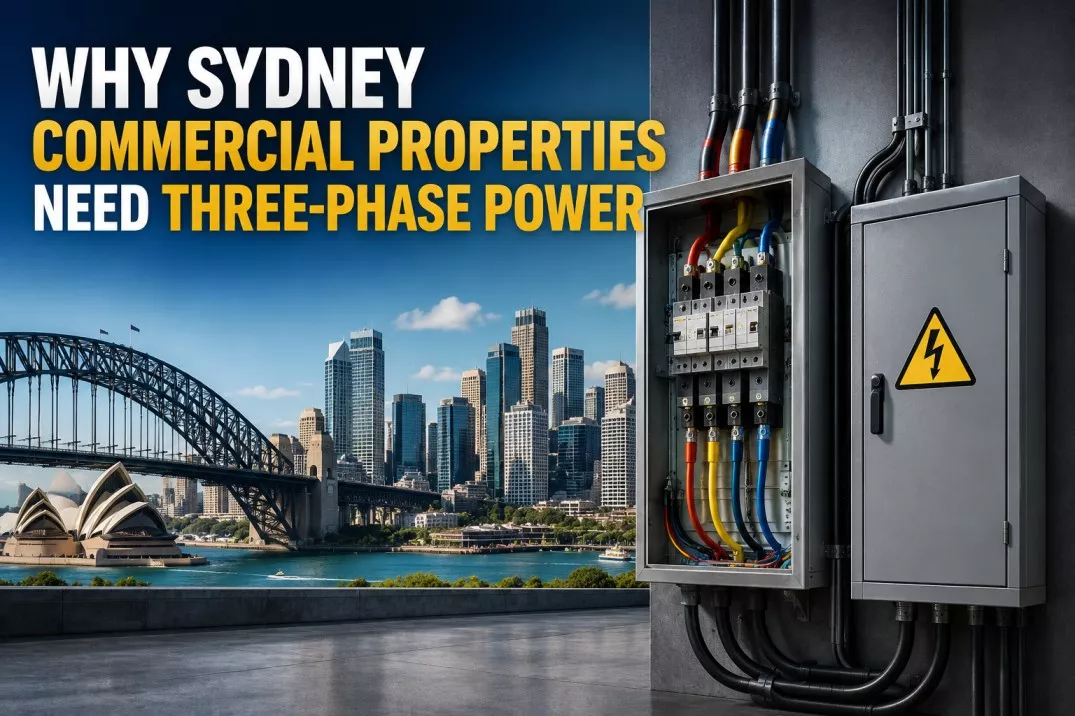
Sydney’s commercial sector runs on power, and demand keeps climbing. Restaurants, warehouses, offices, and factories all depend on a steady electricity supply to function every day. However, many older buildings across the city still run on single-phase power, and this outdated setup creates real problems for growing businesses.
Three-phase power solves these problems directly. It delivers more capacity, better efficiency, and a far more stable supply than single-phase systems can offer. As a result, three-phase power has become the standard choice for commercial properties across Sydney.
This guide explains what three-phase power is, why Sydney businesses need it, and how property owners can upgrade. Let’s start with the key facts.
Key Takeaways
- Three-phase power delivers roughly three times the capacity of single-phase power, so it easily handles heavy commercial equipment.
- It provides a smoother, more stable electricity supply, which reduces flickering lights, voltage drops, and equipment strain.
- Commercial kitchens, HVAC systems, lifts, and manufacturing equipment usually need three-phase power to run correctly.
- Three-phase power supports faster EV charging (up to 22kW) and larger solar exports (up to 30kW) compared with single-phase supply.
- Sydney upgrades must meet AS/NZS 3000:2018 and go through a Level 2 ASP electrician working with Ausgrid or Endeavour Energy.
What Is Three-Phase Power?
Three-phase power is an electricity supply system that uses three separate wires, or phases, to deliver current. Each phase carries power at a slightly different point in the cycle. Consequently, the combined output stays constant rather than pulsing on and off the way single-phase power does.
Australian three-phase systems typically run at 400 volts between phases. Single-phase power, by contrast, runs at 230 volts. As a result, this higher voltage lets three-phase systems carry far greater loads without overheating cables or tripping breakers.
Most homes and small offices across Sydney run comfortably on single-phase power. Meanwhile, larger commercial and industrial sites usually need three-phase power to operate safely and efficiently.
Single-Phase vs Three-Phase Power: Key Differences
Understanding the difference between these two systems helps explain why commercial properties eventually need the upgrade. Here’s a side-by-side comparison:
| Feature | Single-Phase Power | Three-Phase Power |
|---|---|---|
| Active wires | One | Three |
| Standard voltage | 230V | 400V |
| Typical use case | Homes, small offices | Commercial and industrial sites |
| Power delivery | Pulses in waves | Stays continuous |
| Motor performance | Higher starting current, less efficient | Smoother start, more efficient |
| Common equipment | Lighting, small appliances | HVAC, lifts, kitchens, machinery |
As the table shows, three-phase power offers clear advantages wherever heavy or continuous loads come into play. Therefore, most commercial buildings across Sydney eventually need it.
Why Sydney Commercial Properties Need Three-Phase Power
Several factors make three-phase power essential for commercial buildings across the city. Let’s break down the main reasons below.
It Delivers Higher Power Capacity
Commercial properties run demanding equipment every day. Combi ovens, walk-in coolers, industrial compressors, and large lift systems all draw heavy current. However, single-phase supply simply cannot handle these loads reliably.
Three-phase power spreads the load across three wires instead of one. Consequently, it supports far higher demand without overloading the system or tripping breakers constantly.
It Improves Energy Efficiency
Three-phase motors start more smoothly than single-phase motors of the same size. This smoother start reduces the current surge needed at startup, which in turn lowers strain on the whole electrical system.
Because of this efficient operation, three-phase equipment often runs cheaper over time. Lower running costs follow naturally from that improved efficiency.
It Provides a More Reliable, Stable Supply
Three-phase power delivers a constant, balanced flow of electricity around the clock. Single-phase power, on the other hand, pulses and can create voltage dips whenever heavy equipment starts up.
These dips cause flickering lights, equipment strain, and even premature failure of sensitive machinery. Fortunately, a three-phase supply avoids this problem almost entirely.
It Supports Business Growth
Businesses rarely stay the same size forever. A cafe might add a second oven. A warehouse might install an EV charging fleet. An office might expand its server room.
Three-phase power gives businesses room to grow without a costly rewire every time they add equipment. In other words, it future-proofs the property against rising power demands.
It Helps Properties Meet Electrical Standards
Licensed electricians must wire commercial properties to AS/NZS 3000:2018, the current wiring standard for Australia. Manufacturers also build many commercial-grade appliances and machines to run on three-phase power only.
Meeting these standards protects tenants, staff, and customers alike. It also protects the property owner from compliance headaches down the track.
It Powers EV Charging and Solar Systems
Sydney businesses increasingly want EV charging and solar power on-site. Three-phase chargers deliver up to 22kW, compared with just 7.4kW on single-phase supply. As a result, that difference cuts charging time dramatically.
Solar and battery systems benefit too. Ausgrid allows up to 10kW of solar export per phase, so a three-phase connection supports up to 30kW of solar generation overall. Single-phase supply, however, caps exports at just 10kW.
Which Sydney Businesses Need Three-Phase Power Most?
Some industries rely on three-phase power more heavily than others. Below are the sectors that benefit most from the upgrade.
Restaurants, Cafes and Hospitality Venues
Commercial kitchens run ovens, fryers, dishwashers, and refrigeration systems all at once. As a result, three-phase power keeps this equipment running smoothly, even during a busy dinner service.
Manufacturing and Industrial Facilities
Factories and workshops depend on motors, compressors, lathes, and production lines. In fact, manufacturers usually design these machines specifically for three-phase power, since single-phase versions struggle with the same workload.
Office Towers and Commercial Buildings
Lifts, large HVAC chillers, and server rooms all need consistent power. In turn, three-phase supply keeps these systems running smoothly without overloading the building’s electrical infrastructure.
Retail Stores and Shopping Centres
Large retail spaces need extensive lighting, climate control, and refrigeration for perishable goods. Consequently, three-phase power handles these combined loads far better than single-phase ever could.
Warehouses and Logistics Centres
Conveyor systems, cold storage, forklift charging stations, and loading equipment all draw serious power. As warehouses add automation and EV fleets, three-phase supply becomes even more important.
Signs Your Sydney Property May Need a Three-Phase Upgrade
Certain warning signs suggest a property has outgrown its single-phase supply. In particular, watch for the following:
- Circuit breakers trip often, especially when several appliances run together
- Lights flicker or dim whenever heavy equipment starts up
- The business can’t add new equipment without overloading the existing system
- Plans are underway to install EV chargers, solar panels, or battery storage
- The building still runs on outdated electrical infrastructure from decades ago
If any of these sound familiar, it’s worth arranging a proper assessment. In fact, early action often costs far less than fixing problems after equipment failure.
How to Upgrade to Three-Phase Power in Sydney
Upgrading a commercial property follows a fairly clear process. Here’s what it typically involves.
Step 1: Get an Assessment From a Licensed Electrician
A licensed electrician first reviews the property’s current wiring and load requirements. This step identifies exactly what the upgrade needs to achieve before any work begins.
Step 2: Apply Through a Level 2 ASP Electrician
Standard electrical licences don’t cover network connection work. Instead, a Level 2 Accredited Service Provider (ASP) electrician must submit the connection application to the local network distributor.
Step 3: Confirm the Network Distributor
Most of Sydney sits within Ausgrid’s network area, though some outer suburbs fall under Endeavour Energy instead. Either way, the ASP electrician handles this coordination directly on the property owner’s behalf.
Step 4: Install the New Switchboard and Wiring
Most properties need a new switchboard built specifically for three-phase power. Specifically, this includes safety switches, circuit breakers, and proper earthing that meets AS/NZS 3000:2018.
Step 5: Complete Testing and Certification
Once installation finishes, the electrician tests the whole system and issues a Certificate of Compliance for Electrical Work. Ultimately, this certificate confirms the property meets all required safety standards.
What Does a Three-Phase Upgrade Cost in Sydney?
Costs vary widely because every property is different. That said, a few factors consistently drive the price up or down.
Distance from the existing three-phase network matters a great deal. Properties close to existing three-phase infrastructure generally cost less to connect than those further away. Similarly, whether the connection runs overhead or underground changes the price significantly.
Switchboard complexity also plays a role in the final quote. A straightforward switchboard swap costs less than a full rebuild with extensive new circuits. Meanwhile, timing matters too, since upgrading during a renovation or new build almost always costs less than retrofitting a finished space.
Given these variables, quotes for Sydney properties vary widely. Small, straightforward commercial sites often see figures in the low thousands, while larger or more complex properties can cost significantly more. Pricing depends heavily on individual circumstances. For that reason, always get a detailed, itemised quote from a licensed electrician before starting any work.
Frequently Asked Questions
What’s the difference between single-phase and three-phase power?
Single-phase power uses one active wire and suits homes or small offices with light electrical loads. Three-phase power uses three active wires and delivers far more capacity, which makes it the standard choice for commercial and industrial properties.
Do all commercial properties in Sydney need three-phase power?
Not necessarily. Small offices or shops with light electrical loads can often run comfortably on single-phase power. However, any property running heavy equipment, HVAC systems, lifts, or commercial kitchens usually needs three-phase power instead.
How much does a three-phase upgrade cost in Sydney?
Costs depend on the property’s distance from existing infrastructure, switchboard requirements, and overall project complexity. Because of this variation, it’s best to request a detailed quote from a licensed Level 2 ASP electrician.
How long does a three-phase upgrade take?
Simple upgrades can finish within a few days once the network distributor approves the application. Larger commercial projects, on the other hand, may take several weeks, especially when the project requires network infrastructure upgrades too.
Can I run three-phase equipment on a single-phase supply?
Generally, no. Three-phase equipment needs a genuine three-phase connection to run safely. A property can add a phase converter instead, but this workaround usually isn’t cost-effective for commercial use.
Who do I contact to upgrade to three-phase power in Sydney?
Property owners should contact a licensed Level 2 ASP electrician directly. This electrician can assess the property and manage the entire application process with Ausgrid or Endeavour Energy.
Final Thoughts
Sydney’s commercial properties depend on power that can genuinely keep up with demand. In fact, three-phase power delivers the capacity, efficiency, and reliability that modern businesses need, from busy restaurant kitchens to sprawling logistics warehouses.
As Sydney’s commercial sector continues to grow, more properties will need this upgrade to stay competitive. For that reason, it makes sense to plan ahead rather than wait for equipment failures or tripped breakers to force the issue.
If you’re unsure whether your property needs three-phase power, a licensed electrician can assess your setup and outline the best path forward. That first conversation costs nothing, but it could save significant money and downtime later.


