


How Airlines Handle Emergency Exits for Larger Passengers
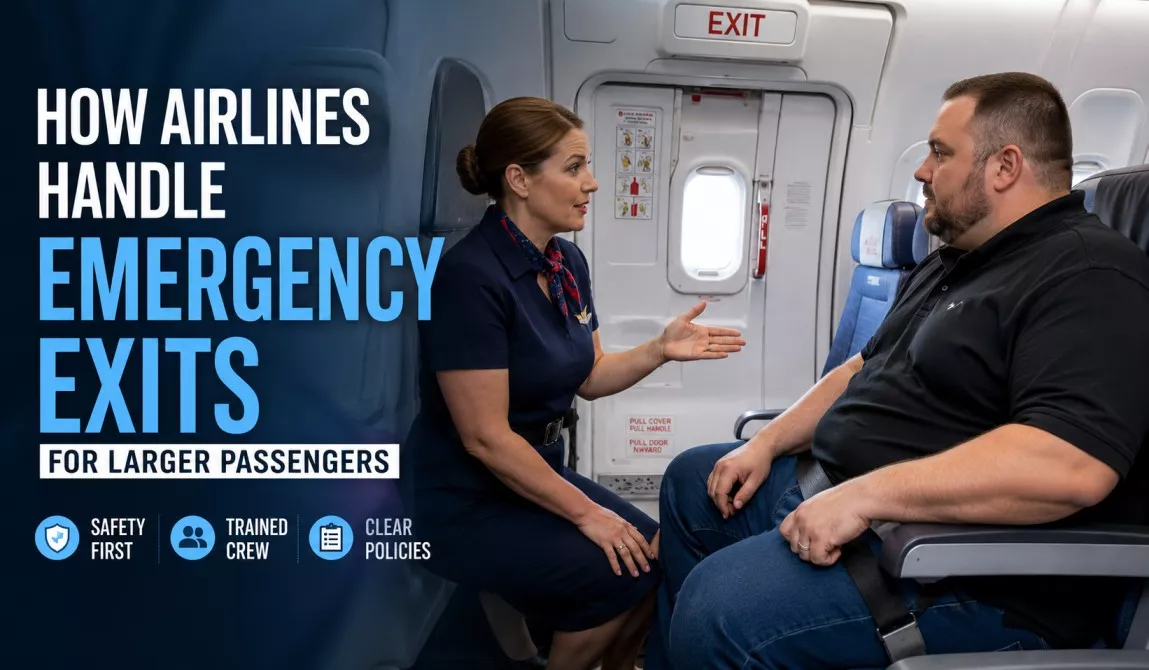
The emergency exit row is one of the most talked-about sections of a commercial aircraft cabin. Offering significant legroom, these rows are highly coveted by tall travelers, frequent flyers, and passengers seeking a more spacious flight experience. However, this extra space is not a standard comfort upgrade. It is a critical piece of safety infrastructure regulated by strict international aviation laws.
For plus-size or larger passengers, navigating the rules surrounding exit row seating can be complex and sometimes stressful. Misconceptions abound, with some believing that body weight alone triggers an automatic ban, while others are unaware of the specific functional requirements demanded by aviation authorities.
This comprehensive guide clarifies how global airlines and aviation regulatory bodies evaluate emergency exit row eligibility. By focusing on physical capability, safety mandates, and passenger rights, we look at the reality of exit row assignments without bias or stigma.
What Happens During an Aircraft Emergency?
To understand why exit row rules are so rigid, it helps to look at the mechanics of an aircraft evacuation. In aviation safety, every second is a factor in passenger survival.
Types of Emergencies and the Evacuation Timeline
Aircraft evacuations typically occur during ground incidents, rejected takeoffs, or post-landing emergencies (such as cabin smoke or engine anomalies). When the captain or lead flight attendant initiates an evacuation, the cabin environment transitions instantly into a highly managed safety operation.
The 90-Second Evacuation Certification Standard
Before any commercial aircraft model can be certified to fly by authorities like the Federal Aviation Administration (FAA) or the European Union Aviation Safety Agency (EASA), the manufacturer must prove that the aircraft can be completely evacuated in 90 seconds or less.
This test is conducted in total darkness, with half of the available emergency exits intentionally blocked. Every exit that is functional must operate flawlessly, and the flow of passengers through those exits must remain continuous and unobstructed.
[Emergency Signaled] ➔ [Crew Assesses Hazards] ➔ [Exit Doors/Hatches Opened] ➔ [Slides Deploy] ➔ [90-Sec Continuous Passenger Flow]
The Importance of Unobstructed Exits
An evacuation is only as fast as its narrowest bottleneck. A single passenger who struggles to open a door, gets wedged in an exit framework, or slows down the movement toward an escape slide can compromise the safety of the entire cabin. Because of this, the physical spaces directly adjacent to emergency exits are managed with zero margin for error.
Why Exit Row Seating Has Special Requirements
Airplanes are designed to be self-sufficient during an evacuation, but flight attendants cannot be at every door simultaneously. Passengers seated in the exit rows act as designated, un-uniformed safety assistants.
When you sit in an exit row, you are legally agreeing to perform specific physical duties if called upon. Under regulations such as 14 CFR § 121.585 in the United States, an exit row passenger must have the capability to:
- Locate and evaluate the emergency exit window or door.
- Recognize hand signals and oral commands given by the flight crew.
- Manipulate mechanisms including heavy rotary handles, slide-release triggers, and pull-tabs.
- Lift, maneuver, and discard an over-wing window hatch, which can weigh anywhere from 30 to 60 pounds (13 to 27 kg).
- Pass expeditiously through the exit opening to avoid blocking others.
- Stabilize an escape slide or assist others off the slide on the ground.
These responsibilities require a combination of strength, rapid mobility, and high physical flexibility. The restrictions placed on these seats are not rewards or punishments; they are operational assignments designed for emergency response.
Can Larger Passengers Sit in Exit Rows?
The short answer is yes, but it depends entirely on functional capability rather than size alone.
A common point of confusion is whether airlines have a hard weight limit for exit rows. They do not. No commercial airline forces passengers onto a scale at the gate to determine if they can sit in an exit row. Instead, aviation crew members assess specific operational markers to ensure a passenger can safely execute emergency procedures.
The Seat Belt Extender Rule
The most definitive, objective boundary for larger passengers in the exit row involves the use of a seat belt extender.
Across almost all global airlines, if a passenger requires a seat belt extender, they are legally barred from sitting in an exit row. This rule is not arbitrary; it is rooted in two critical safety considerations:
- Entanglement Hazard: An extra length of heavy nylon strapping and a metal buckle dangling in an exit pathway poses a major tripping risk during a rapid, dark, or smoky evacuation.
- Abdominal Freedom and Mobility: If a passenger’s body mass requires an extension to fasten the seat belt, it indicates that their physical frame fills the seat tightly. This tight fit often limits the rapid twisting, bending, and lifting motions required to pull an emergency hatch inward and throw it outside the aircraft.
Width and Armrest Limitations
Exit row seats are physically different from standard cabin seats. On many aircraft, the tray tables or inflight entertainment screens are housed inside the armrests rather than on the seatback in front. This makes the armrests immovable and solid, slightly narrowing the usable seat width.
If a passenger cannot comfortably fit between these fixed armrests, they will experience reduced physical leverage, making it difficult to stand up quickly or maneuver a heavy door hatch.
FAA and International Aviation Rules
Aviation safety is governed by a tightly synchronized network of international regulatory bodies. While regional differences exist, the core philosophy regarding emergency exit row management remains identical worldwide.
Regulatory Matrix: Global Exit Row Standards
| Regulatory Body | Key Regulation / Document | Primary Focus | Seat Belt Extender Policy |
| FAA (United States) | 14 CFR § 121.585 | Physical strength, dexterity, and age (15+). | Strict prohibition if extender is needed. |
| EASA (Europe) | CAT.OP.MPA.165 | Rapid cabin egress, comprehension of languages. | Prohibited; passenger must not require physical adjustments. |
| ICAO (International) | Doc 10086 (Cabin Safety) | Global alignment on non-disabled, fully capable occupants. | Recommends restriction if mobility/space is compromised. |
| CASA (Australia) | CASR Part 121 | Functional performance and clear pathway maintenance. | Prohibited if extender is used. |
These agencies grant flight crews the ultimate legal authority to determine whether a passenger meets these criteria on a flight-by-flight basis.
How Airlines Assess Exit Row Eligibility
Determining whether a passenger can safely occupy an exit row seat is a multi-layered process that begins during booking and continues right up until the aircraft pushes back from the gate.
[Online Booking Self-Declaration] ➔ [Gate Agent Visual Check] ➔ [Flight Attendant In-Person Briefing] ➔ [Final Verification]
- The Booking Phase: Passengers must check a box confirming they meet the age, language, and physical criteria to sit in an exit row.
- The Check-In and Gate Assessment: Airline agents observe passengers as they drop bags or board the aircraft. If an agent notices visible mobility challenges (such as a limp, a cast, or severe shortness of breath), they will proactively reassign the seat.
- The Cabin Crew In-Person Briefing: This is the most crucial checkpoint. Flight attendants are trained in “passive profiling”—observing body language, spatial awareness, and physical responsiveness. When the flight attendant conducts the verbal exit row briefing, they require a clear, audible “yes” or “no” response from each passenger.
- Passenger Self-Declaration: Passengers are encouraged to self-declare if they feel uncomfortable with the physical responsibilities. If a passenger realizes the seat is too tight or that they cannot lift the door weight, they can discreetly request a seat change.
How Flight Attendants Handle Emergency Situations
During an emergency, flight attendants pivot from hospitality managers to tactical evacuation leaders. They are trained to handle extreme stress, and their instructions must be followed instantly.
Under Pressure: The Briefing and Command Structure
If an evacuation is ordered, flight attendants shout loud, repetitive, monosyllabic commands (e.g., “Open door! Look outside! Step out!”). The exit row passengers must follow these commands immediately. If a larger passenger has been permitted to sit in the exit row but freezes or experiences a physical limitation under stress, the flight attendant is trained to immediately pull that passenger out of the way and assign another flyer to operate the exit.
Passenger Size vs. Mobility
Aviation safety professionals place great emphasis on distinguishing between a passenger’s body size and their functional mobility.
An individual can be tall, broad, or carry significant weight while maintaining excellent physical strength, stamina, and agility. Conversely, a smaller, petite passenger might lack the muscular arm strength required to lift a 50-pound window exit hatch and throw it clear of the wing.
Airlines do not exclude passengers based on aesthetics or appearance. The assessment is purely focused on functional capability:
- Flexibility: Can the passenger bend completely over to reach the lower door tracks?
- Reach: Can they extend their arms upward to grasp overhead release levers?
- Speed: Can they move out of the row within a couple of seconds to let the line of passengers behind them pass?
When cabin crew members make seat reassignment decisions, they are evaluating these physical capabilities, not making a judgment on a passenger’s body shape.
Rights of Larger Passengers
Traveling as a larger individual involves navigating a complex landscape of safety mandates and personal dignity. It is essential to know your rights and responsibilities when booking travel.
The Universal Safety Mandate: Under international aviation law, an airline’s primary legal obligation is the safety of the flight. Safety regulations always override standard passenger seating preferences.
Anti-Discrimination vs. Safety Infrastructure
Airlines are legally bound by anti-discrimination laws, such as the Air Carrier Access Act (ACAA) in the United States. These laws state that carriers cannot discriminate against individuals based on physical characteristics or disabilities.
However, the ACAA explicitly contains a safety carve-out: if an FAA flight safety regulation contradicts a passenger’s seating desire, the safety regulation must be followed. Denying an exit row seat to a passenger who requires a seat belt extender is a legal safety requirement, not an act of illegal discrimination.
Maintaining Passenger Dignity
Flight crews are trained to handle exit row seat reassignments discreetly and respectfully. If a seat change is necessary, it should be handled quietly, without drawing unnecessary attention to the passenger.
Common Myths vs. Medical & Legal Realities
- Myth: Larger passengers are automatically banned from all exit rows.
- Reality: Many large, tall, or broad passengers sit in exit rows on every flight. Eligibility is based on whether you can perform safety duties and whether you need a seat belt extender.
- Myth: Airlines use weight limits to discriminate against plus-size travelers.
- Reality: There is no weight limit listed in airline manuals. The rules are focused on cabin clearances, escape path sizes, and mechanical operation.
- Myth: The exit row is the safest place on the plane.
- Reality: No single row is universally “safer.” In an accident, the safest row depends entirely on the nature and location of the incident.
- Myth: Every airline globally uses identical rules for exit rows.
- Reality: While the foundational safety goals are shared worldwide, specific elements—such as minimum age requirements (12 in some countries, 15 in others) or language options—vary across international carriers.
Tips for Larger Passengers Before Flying
To ensure a smooth, stress-free travel day, consider these proactive steps when preparing for a flight:
- Review Seat Dimensions Early: Use aircraft seat-mapping tools online to look up the exact width and pitch of your specific flight’s exit rows. Remember that exit rows often have fixed, narrower armrests.
- Avoid the Exit Row if You Use an Extender: If you know your physical frame requires a seat belt extender for comfort, select a standard row or a premium economy/business class seat instead of an exit row. This helps prevent a stressful, last-minute seat reassignment during boarding.
- Be Mindful of the Bulkhead Row Alternative: If you are looking for extra legroom without the strict physical requirements of an exit row, look for a bulkhead row (the front row of a cabin section facing a wall). Note that these rows also have fixed armrests, but they do not carry the same physical safety obligations.
- Communicate Early and Respectfully: If you are unsure whether your seat choice complies with safety rules, speak with a gate agent before boarding begins. They can adjust your seating arrangement quietly before the cabin fills up.
Frequently Asked Questions (FAQ)
Can an airline legally refuse to let me sit in an exit row?
Yes. Airlines are legally required by federal and international aviation authorities to deny exit row seating to any passenger who does not meet all safety eligibility criteria. The final decision rests with the flight’s cabin crew.
Is there a specific weight limit for exit row passengers?
No, there is no official weight limit. The assessment is based on physical mobility, spatial clearance, and whether you can fasten the seat belt without an extender.
Why are seat belt extenders banned in the exit row?
Extenders create a tripping and entanglement hazard in a key evacuation pathway. They also indicate that a passenger’s physical fit in the seat may restrict the rapid, flexible movements required to operate a heavy emergency exit hatch.
What happens if a flight attendant asks me to move?
You must comply with the crew member’s instruction. Under aviation law, failing to follow crew commands regarding safety seating configurations can result in federal penalties or removal from the aircraft.
Are exit row seats narrower than normal seats?
Yes, frequently. Because emergency exit rows often house tray tables or entertainment video screens inside the armrests, the armrests are solid and unmovable, which reduces the total seat width by up to an inch.
Can I sit in an exit row if I am tall and broad but physically fit?
Yes. If you possess the strength, flexibility, and dexterity to operate the emergency exit, move quickly, and do not require a seat belt extender, your height and broad build will not disqualify you.
What if I cannot lift the over-wing exit door?
If you cannot lift an object weighing between 30 and 60 pounds, or if you feel uncomfortable doing so, you must inform a flight attendant. They will move you to a standard seat without penalty.
Do international airlines follow the exact same rules as US carriers?
The core safety logic is identical, but minor details vary. For example, some non-US airlines allow passengers aged 12 and older to sit in exit rows, whereas US carriers enforce a strict minimum age of 15.
Can I sit in an exit row if I am traveling with a service animal or pet?
No. Passengers traveling with service animals, emotional support animals, or in-cabin pets are prohibited from sitting in exit rows, as the animal can block the evacuation path.
What should I do if a seat reassignment splits up my family?
Speak with the gate agent or lead flight attendant immediately. They will work to re-seat your family members together in a non-exit row configuration, depending on seat availability.
Expert Insights on Cabin Risk Management
Aviation safety design focuses entirely on predictable human performance under stress. In an emergency, adrenaline spikes, cognitive function narrows, and people fall back on basic physical instincts.
Because of this predictable human behavior, cabin risk management requires exit row occupants to function as predictable safety components. Airplanes are engineered around human dimensions and evacuation dynamics. If an exit row occupant takes even an extra 10 to 15 seconds to squeeze past an opened door frame or struggle with a heavy hatch latch, the delay ripples backward through the cabin line.
By centering exit row criteria entirely on functional mobility and clear physical boundaries, international aviation authorities protect everyone on board—ensuring a safe, accessible environment for all passengers while maintaining a robust, rapid line of defense if an emergency arises.
Key Takeaways
- Safety Infrastructure: Exit row seats are designated emergency evacuation zones, not standard comfort upgrades.
- The Extender Rule: Requiring a seat belt extender is a standard, cross-airline disqualifier for exit row seating due to pathway safety.
- Function Over Appearance: Crew assessments are based entirely on physical capability, flexibility, and speed, never on aesthetic judgment.
- Crew Authority: Flight attendants hold final legal authority over exit row seat assignments to ensure compliance with aviation law.
- Proactive Planning: Reviewing seat dimensions and communicating with gate staff early helps ensure a comfortable, surprise-free travel experience.
For further official information on flight safety standards, passenger responsibilities, and cabin rules, you can review the FAA Exit Seating Regulations (14 CFR § 121.585) or consult your specific air carrier’s passenger accessibility and safety guidelines.


