


Why Garage Door Openers Fail More in Coastal Areas Like Long Beach
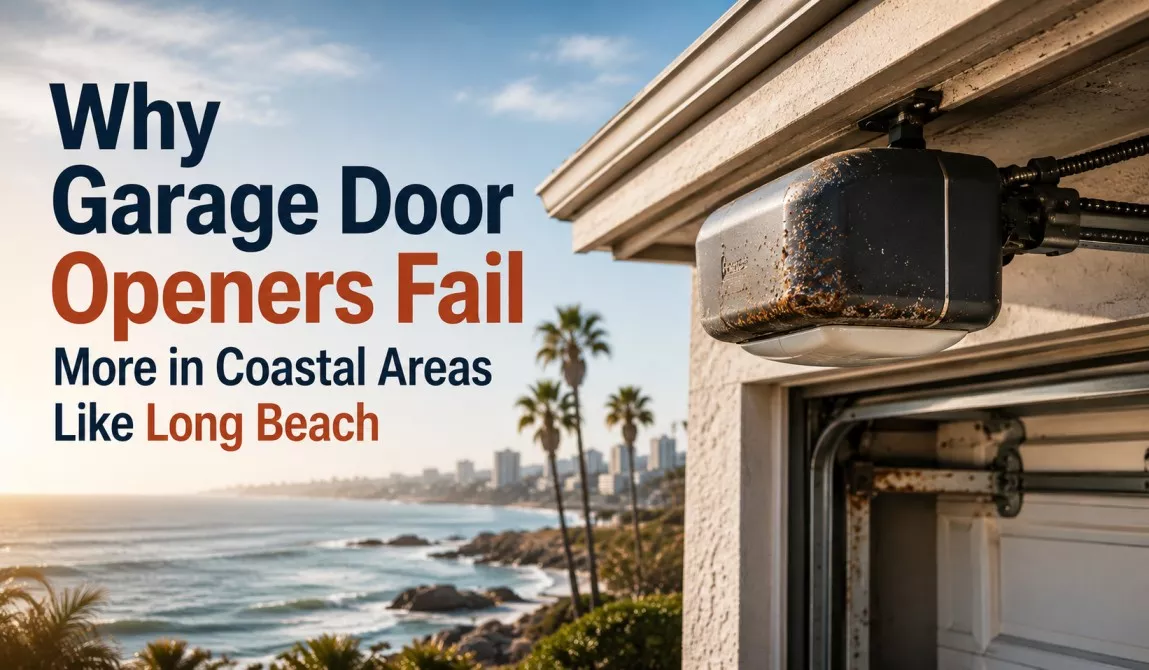
Garage door openers in coastal cities like Long Beach fail faster than openers in inland areas. Salt air, ocean humidity, and daily temperature swings attack the metal and electrical parts inside every unit.
Because of this constant exposure, coastal homeowners often replace their openers years before inland homeowners do. This guide explains why coastal weather breaks garage door openers down faster. It also shows you how to protect yours.
Quick Answer: Salt, Moisture, and Temperature Swings Cause the Damage
Ocean air carries microscopic salt particles that settle on every exposed metal surface. As a result, springs, tracks, and hardware rust much faster than they would inland.
Meanwhile, coastal humidity seeps into circuit boards and motors, causing electrical faults over time. On top of that, Long Beach has a daily swing between cool marine mornings and warm afternoons. This swing creates condensation inside the opener housing.
In short, three coastal conditions drive most garage door opener failures in Long Beach:
- Salt air – corrodes metal springs, tracks, and hardware
- Humidity – damages circuit boards and motors
- Temperature swings – create daily condensation inside the unit
Together, these three forces cut years off a garage door opener’s lifespan compared to units used further inland.
1. Salt Air Speeds Up Corrosion on Metal Parts
Ocean breezes carry fine salt particles for miles inland. These particles settle on your garage, your driveway, and every exposed part of your garage door opener. Over time, salt reacts with metal and creates rust.
How Salt Damages Springs, Cables, and Tracks
Torsion springs, lift cables, and metal tracks sit closest to the door, so they absorb the most exposure. Rust weakens these parts little by little.
Eventually, a corroded spring can snap without warning, or a rusted cable can fray and break. Because these parts hold serious tension, sudden failure can also create a real safety hazard.
Why Standard Hardware Rusts Faster Near the Ocean
Chrome bolts, steel brackets, and standard mounting hardware corrode faster in coastal neighborhoods like Belmont Shore and Naples. Inland cities such as Riverside see far less of this damage. Consequently, hardware that lasts a decade inland often shows visible rust within just two or three years near the water.
2. High Humidity Damages Electrical Components
Garage door openers depend on circuit boards, sensors, and small motors to work correctly. Unfortunately, humidity threatens every one of these parts.
Moisture Causes Circuit Board Failures
Water vapor in coastal air condenses inside the opener’s housing, especially overnight. This moisture can short-circuit sensitive electronics without any obvious warning sign. As a result, openers in Long Beach experience more circuit board failures than openers in drier, inland areas.
Motors Wear Out Faster in Damp Conditions
Constant dampness also affects the motor itself. Moisture reduces lubrication effectiveness and encourages internal rust. Therefore, the motor works harder to lift the same door, and that extra strain shortens its lifespan.
3. Daily Temperature Swings Create Condensation
Long Beach mornings often start with cool marine fog, then warm up quickly by afternoon. This daily swing causes condensation to form inside the garage and inside the opener unit itself.
Condensation causes serious damage because it forms directly on metal and electrical parts. Since this cycle repeats almost every day near the coast, the damage adds up fast. In fact, over just a few years, this daily condensation cycle can cause more wear than an occasional heavy rainstorm.
4. Salty Wind and Airborne Grit Wear Down Moving Parts
Wind off the ocean carries more than salt. It also carries fine sand, dust, and other debris. This grit works its way into tracks, hinges, and rollers.
Sand and Grit Increase Friction
Once grit enters the tracks, it grinds against metal every time the door opens or closes. This friction wears down rollers faster and forces the motor to work harder than it should. Additionally, dirty tracks can cause the door to move unevenly, which puts extra strain on the entire opener system.
Signs Your Garage Door Opener Is Struggling With Coastal Wear
Watch for these warning signs, especially if you live within a few miles of the water:
- Grinding or squealing noises during operation
- Slower response time between the remote signal and door movement
- The door reverses unexpectedly while closing
- Visible rust on springs, tracks, or mounting brackets
- The remote or keypad works inconsistently
If you notice any of these signs, address them quickly. Otherwise, a small issue can turn into a complete opener failure within months.
How to Protect Your Garage Door Opener in Long Beach
Schedule Maintenance Every Three Months
Inspect and lubricate moving parts every three months instead of the standard six-month schedule. Because coastal wear happens faster, this extra attention prevents small problems from becoming expensive repairs.
Choose Corrosion-Resistant Hardware
Stainless steel and galvanized components resist rust far better than standard steel parts. Consequently, upgrading to coastal-rated hardware during your next repair can add years to your opener’s lifespan.
Improve Garage Ventilation
Good airflow reduces humidity buildup inside the garage. Adding a vent or a small dehumidifier, therefore, helps protect the opener, the springs, the tracks, and the door panels.
Book Professional Inspections Once a Year
A professional technician can spot early corrosion and electrical issues before they cause a full breakdown. As a result, one annual inspection often costs far less than an emergency repair call.
Frequently Asked Questions
How Often Should I Service a Garage Door Opener in a Coastal City Like Long Beach?
Service your opener every three to four months. Inland homeowners can usually wait six months between inspections, but coastal salt and moisture require more frequent attention.
Can Salt Air Really Damage a Garage Door Opener?
Yes, it can. Salt air speeds up rust on metal parts, and it also damages electrical components through humidity-related condensation. Homes within a few miles of the coast face the highest risk.
How Long Do Garage Door Openers Last in Long Beach Compared to Inland Areas?
Most garage door openers last 10 to 15 years in dry, inland climates. Near the coast, however, that lifespan often drops to 7 to 10 years without proactive maintenance.
Should Coastal Homeowners Choose a Specific Type of Garage Door Opener?
Yes. Belt-drive openers with sealed circuit boards and corrosion-resistant hardware perform better in coastal climates than standard chain-drive models. Additionally, weatherproof housings offer extra protection against humidity.
Final Thoughts
Coastal weather in Long Beach creates a genuinely tough environment for garage door openers. Salt air, humidity, temperature swings, and airborne grit all combine to speed up wear on metal and electrical parts.
Fortunately, regular maintenance, corrosion-resistant hardware, and yearly professional inspections can extend your opener’s lifespan significantly. If your opener already shows signs of coastal wear, address the problem early. That way, you save money, and you keep your garage door working safely for years to come.


