


Can You Tattoo Over a Burn After 20 Days? What to Know
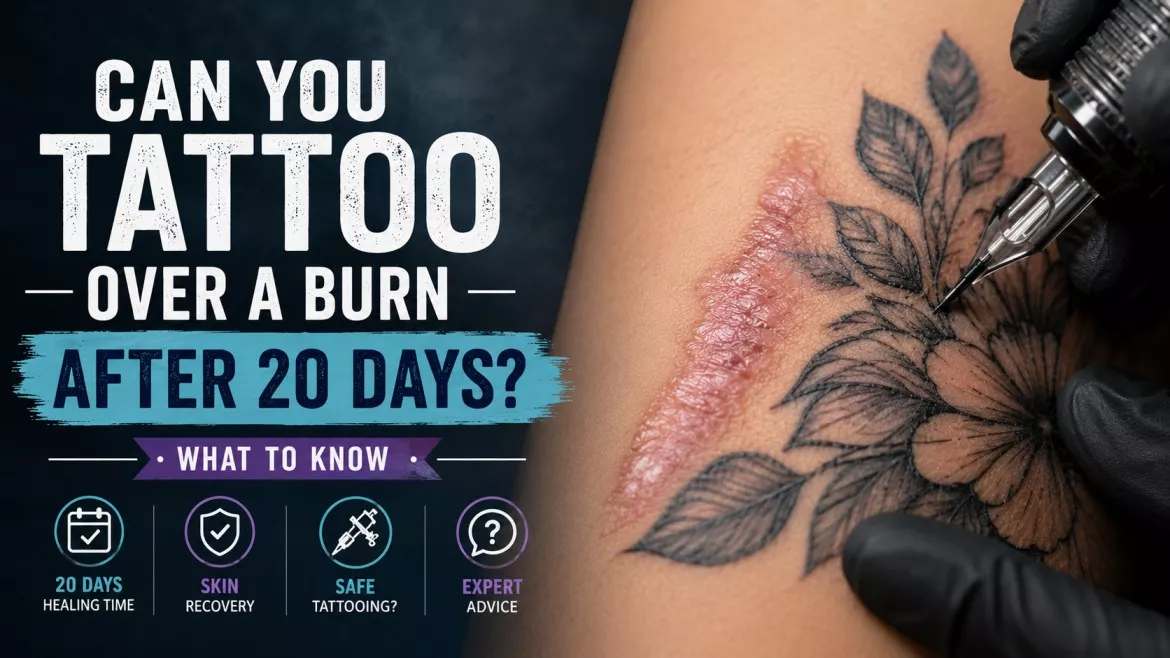
Twenty days feels like a long wait when you’re staring at healing skin. However, in the world of wound care, three weeks barely counts as a head start.
So, can you tattoo over a burn after 20 days? The short answer is no. Most burns need several months, and sometimes over a year, before the skin can safely handle a tattoo needle. Below, you’ll find the healing science, the real risks, and the timeline you should actually follow.
Quick Answer: Why 20 Days Isn’t Enough
Quick answer: No — 20 days isn’t long enough. Most burns need several months, and sometimes over a year, to heal fully. Tattooing too soon raises the risk of infection, poor ink retention, and worse scarring.
Dermatologists and tattoo artists both agree on this point: fresh burn skin isn’t ready for a needle. Even a mild first-degree burn takes one to two weeks just to close over. After that, the new skin still stays fragile for weeks or months.
Deeper burns take even longer. Second-degree burns often need three to six weeks to heal on the surface alone. Meanwhile, third-degree burns may require skin grafts and months of medical care before they even start to stabilize.
On top of that, scar tissue keeps changing underneath the surface. In fact, it can continue to remodel for up to two years after the original injury. Because of this, 20 days only marks the beginning of the healing process, not the end.
Key Takeaways
- Surface healing alone can take anywhere from two weeks to several months, depending on the burn’s depth.
- Scar tissue continues to change for up to two years after the injury.
- Tattooing too early raises the risk of infection, poor ink retention, and worse scarring.
- Most professionals recommend waiting at least 12 months, and often longer, before tattooing over a burn.
- A dermatologist should confirm the scar is stable before any tattoo artist gets started.
How Burns Heal, Degree by Degree
Before you judge whether skin is tattoo-ready, it helps to understand how burns actually heal. Doctors sort burns into three main categories, and each one follows a different timeline.
First-Degree Burns
First-degree burns only damage the epidermis, which is the skin’s outer layer. A mild sunburn is a good example: the skin turns red and feels sore, but it doesn’t blister.
Typically, these burns close within one to two weeks. Still, “closed” doesn’t mean “tattoo-ready,” since the new skin cells need extra time to strengthen and settle.
Second-Degree Burns
Second-degree burns reach deeper, damaging the epidermis and part of the dermis underneath. As a result, they often cause blisters, swelling, and real pain.
Depending on depth, these burns can take two to six weeks to close. After that point, the skin generally needs several more months to rebuild its normal strength and flexibility.
Third-Degree Burns
Third-degree burns destroy the epidermis and the full dermis, and sometimes reach even deeper tissue. Because the skin often can’t regenerate on its own at this depth, many third-degree burns require skin grafts.
Consequently, healing time varies widely. Typically, full scar maturation takes a year or longer. Plus, grafted skin behaves differently from natural skin — and that matters a lot to tattoo artists.
Why Fresh Burn Skin Can’t Handle a Tattoo Yet
Even when a burn looks closed at 20 days, plenty is still happening underneath the surface.
First, new skin cells stay fragile during this stage. Since a tattoo needle punctures the skin repeatedly, the skin needs real strength and elasticity to handle that trauma well.
Second, infection risk stays elevated. Even a small break in the skin barrier, like one from a needle, lets bacteria in more easily. This matters most while the area keeps healing.
Third, ink doesn’t settle evenly into immature scar tissue. Instead, it can cause blotchy color, ink migration (artists often use the term “blowout”), or patches where the ink simply doesn’t hold.
Finally, tattooing too soon can make the scar itself worse. It can trigger extra collagen production, which raises the odds of a thickened, raised scar. Doctors call this a keloid or hypertrophic scar.
How Long You Should Actually Wait
No single number fits every burn, since severity, location, and individual healing all play a role. That said, most tattoo artists and dermatologists point toward a similar general range.
| Burn Type | Layer Affected | Typical Surface Healing | Recommended Wait Before Tattooing |
|---|---|---|---|
| First-degree | Epidermis only | 1–2 weeks | At least 3–6 months |
| Second-degree | Epidermis + partial dermis | 2–6 weeks | At least 12 months |
| Third-degree | Full dermis, sometimes deeper tissue | Months, often with grafts | 18–24 months or longer |
Even after the surface heals, scar tissue keeps remodeling underneath. Meanwhile, collagen fibers reorganize, blood vessels shift, and the scar gradually fades from red or purple to a paler, flatter version of itself.
Because of this ongoing process, most tattoo artists want a scar that has:
- Fully closed skin, with no open areas or scabbing
- A flat, stable shape, rather than raised or actively changing
- A consistent, settled color instead of red or purple
- No pain, itching, or unusual sensitivity
- Enough flexibility to stretch slightly without cracking
Until a scar checks all five boxes, most responsible tattoo artists will hold off, and for good reason.
What Can Go Wrong If You Tattoo Too Soon
Rushing the process can lead to several unwanted outcomes.
- Infection: Immature skin has a weaker barrier, so bacteria can slip in more easily.
- Poor ink retention: Ink may fade unevenly or fail to hold in certain spots, leaving patchy results.
- Worse scarring: Trauma to healing tissue can trigger extra collagen buildup, which thickens the scar further.
- More pain: Tattooing over sensitive, still-healing nerves often hurts more than tattooing regular skin.
- Wasted money: If a tattoo heals poorly, it may need costly touch-ups or even laser removal later.
Because of these risks, most licensed artists ask about a scar’s age and cause before agreeing to work on it. If a scar is only 20 days old, a responsible artist will almost always say not yet.
What to Do While Your Skin Heals
Waiting doesn’t mean doing nothing. In fact, this stretch of time is a great chance to set your skin up for the best possible result later on.
- Follow your burn care plan. Keep the area clean and moisturized, and protect it from the sun, since UV exposure can darken and thicken developing scar tissue.
- Try proven scar treatments. Silicone sheets, gentle massage, and dermatologist-approved creams can all improve texture over time.
- Track your progress. Take photos every few weeks so you and your dermatologist can watch how the scar matures.
- Book an early consultation. Some tattoo artists specialize in scar and paramedical work, so planning ahead can help later.
- Consider temporary coverage. Scar-camouflage makeup can offer short-term coverage for events or photos without any risk to healing skin.
Ultimately, patience now can make a real difference in how the finished tattoo looks later.
Frequently Asked Questions
Can you tattoo over a burn scar at all?
Yes, in many cases a fully healed and mature burn scar can handle a tattoo. However, the scar needs to be flat, stable, and past the active healing stage first. Severe scars or skin grafts may still limit certain designs or techniques.
How long does a burn scar need to heal before getting a tattoo?
Generally, most professionals suggest at least 12 months for moderate burns, and 18 to 24 months for severe burns or grafted skin. First-degree burns may be ready sooner, but a dermatologist should confirm the skin has fully settled first either way.
Does tattooing over a burn scar hurt more than tattooing regular skin?
Sometimes. Burn scars can alter nearby nerve endings, so some spots feel numb while others feel extra sensitive. Because of this, a skilled artist usually adjusts technique and pace based on how the scar responds.
Will a tattoo look different on burn scar tissue compared to regular skin?
Often, yes. Scar tissue tends to absorb ink less evenly than regular skin, so colors might turn out softer or slightly different than you’d expect. For this reason, many artists recommend bold linework or specific styles that suit textured skin well.
Can a dermatologist tell me when my scar is ready for a tattoo?
Absolutely, and it’s a smart step to take first. A dermatologist can assess healing progress, rule out complications, and give you a clearer timeline based on your specific burn.
Final Thoughts
Getting a tattoo over a burn can feel like reclaiming your skin, and that motivation makes complete sense. Still, patience matters here more than almost anywhere else in the tattoo process.
Twenty days simply isn’t enough time for skin to heal, settle, and prepare for a needle. Instead, give your body the months it actually needs. Stay in touch with your dermatologist, and consult an experienced tattoo artist once your scar looks stable and mature. In the end, the wait pays off with a safer process and a much better-looking result.
This article offers general information and doesn’t replace professional medical advice. Please consult a licensed dermatologist and a professional tattoo artist before making any decisions about tattooing over a burn or scar.


