


Zane Corvina Explained: Is the Chase Method Legit?
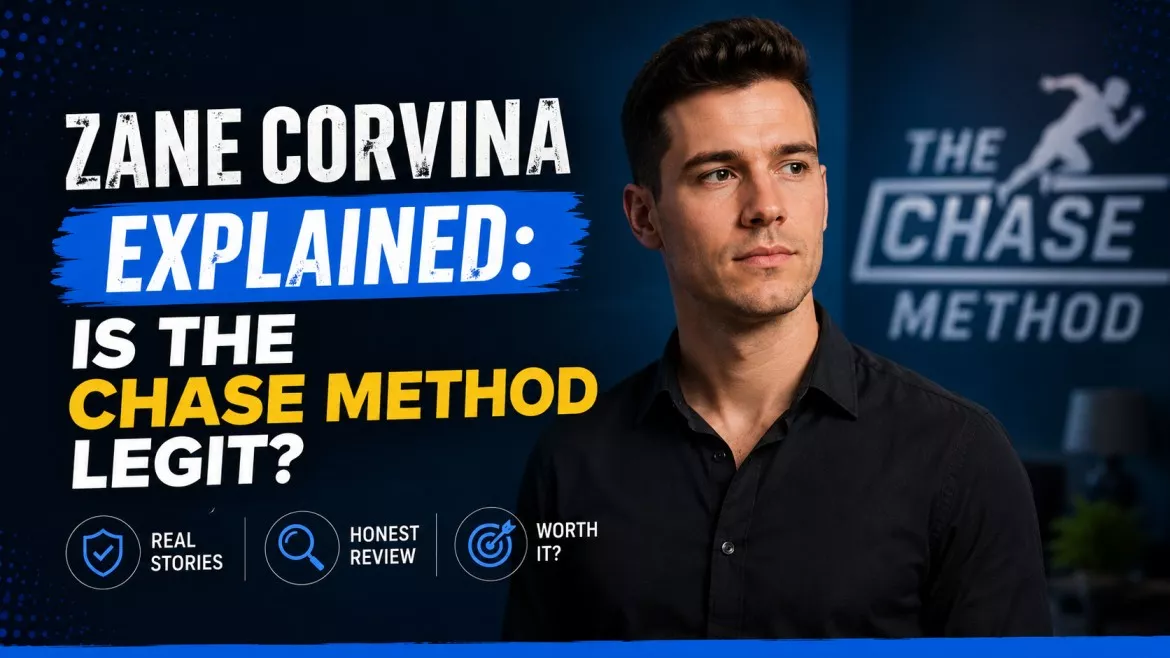
Quick answer: No independent source verifies that Zane Corvina is a real, documented person. His entire story traces back to a single advertorial-style article that also sells the Chase Method as a paid product. That combination is a hallmark of a marketing funnel, not a verified news report. This article breaks down the claims, checks them against available evidence, and shows you how to protect yourself before spending money on similar products.
Who Is Zane Corvina?
Online stories describe Zane Corvina as an average-looking man who frequented South Beach nightclubs in the early 2000s. According to these accounts, several club owners banned him from their venues. However, the reason had nothing to do with violence or misconduct.
Instead, the story claims Corvina repeatedly left clubs with women who had arrived alongside big-spending men. As a result, venue staff reportedly saw him as bad for business and blacklisted him from multiple locations. This setup introduces the rest of the narrative, which eventually leads to a product called the Chase Method.
The Origin Story Behind the Chase Method
From Nightclub Legend to Private Notebook
Before he died, Corvina supposedly recorded his personal views on dating in a private notebook meant only for his son. That detail matters, because it shifts the story from a nightclub anecdote into something far more personal and much harder to verify.
From Notebook to Published Book
Years later, according to the account, his son decided to publish those notes independently. He named the resulting book the Chase Method and framed it as a way to honor his father’s wishes.
The site behind this story, Behavioral Science Daily, adds a disclaimer alongside the pitch. It states that the team doesn’t agree with everything in the book and doesn’t endorse every idea in it, even while presenting the material as a fascinating case study. This mix of hesitation and hype is a common storytelling device. It builds curiosity while still appearing balanced and credible.
What Does the Chase Method Claim to Teach?
Based on the marketing around it, the Chase Method presents itself as a guide to male attraction built on Corvina’s personal philosophy. The promotional article ties this idea to a bold claim: it says biology itself pushes 73.4% of women to reject conventionally nice, agreeable men.
That number sounds precise, so it feels scientific at first glance. Yet the article never names a study, a researcher, or a publication behind it. Consequently, the statistic works better as a marketing hook than as a verifiable fact.
Is Zane Corvina a Real Person? Fact-Checking the Claims
This is where the story starts to fall apart. A search across news archives, business records, and social platforms turns up no independent trace of Zane Corvina anywhere in the South Beach club scene. The story names no specific venue. No date, court record, or additional witness beyond a vague reference to a few unnamed club owners appears anywhere else online.
In other words, every detail about Corvina traces back to one source: the same article that sells his book. Genuine investigative journalism usually names sources, cites verifiable records, and gets confirmation from more than one outlet. This piece skips all of that.
Red Flags That Point to a Marketing Funnel
Several elements in this story match a familiar pattern common across the online dating-advice industry. Learning to spot these patterns can help you evaluate similar content in the future.
- An oddly specific, unsourced statistic. A number like 73.4% sounds scientific, but it creates false authority without any citation behind it.
- Anonymous sourcing. Reports from club owners add color to the story, yet the article never identifies them by name or makes them available for outside verification.
- A sympathetic backstory. A dying father, a private notebook, and a devoted son all add emotional weight, so readers become less likely to question the underlying facts.
- A built-in disclaimer. Lines that distance the publisher from the content create an illusion of journalistic balance, even while the page still promotes the product underneath.
- A call to action. The article closes by inviting readers to sign up for more content, a standard move in a sales funnel rather than a standalone news report.
Together, these elements suggest the piece functions as an advertorial. In short, it resembles editorial content on the surface, but it actually drives traffic toward a sale underneath.
Is the Chase Method Legit? What the Evidence Shows
Based on everything above, the honest answer lands somewhere between “unproven” and “misleading.” Nothing confirms that Zane Corvina existed the way the story describes him. Likewise, nothing confirms the statistic that promotes his story. Therefore, the Chase Method doesn’t qualify as “legit” in the sense of resting on a verified person or real research.
That said, an unverifiable backstory doesn’t automatically mean the book itself has zero value. Plenty of dating guides wrap generic, decades-old advice inside a dramatic new story to stand out in a crowded market. The real problem isn’t necessarily the advice inside the book; instead, misleading marketing sells it.
How This Fits a Bigger Pattern in Online Dating Advice
The dating-advice-for-men niche has leaned on this formula for years. A quick search for similar titles turns up dozens of “chase” and “attraction method” products. Many feature a mysterious male figure, a secret technique, and a promise that women respond almost automatically.
This pattern shows up so often because it simply works as a sales tool. Mystery creates curiosity. A pseudo-scientific statistic creates false credibility. Meanwhile, charged language like “banned” and “controversial” creates urgency and a fear of missing out. None of that proves the product itself is harmful, but it does mean you should treat the surrounding story as marketing copy first and verified fact second.
Should You Buy the Chase Method?
That decision ultimately comes down to your own risk tolerance and expectations, since this article can’t verify the book’s contents firsthand. Before paying for it, or any similar guide, walk through a few practical questions first.
- Can you find the seller’s real identity, refund policy, and contact information? Legitimate sellers usually make this easy to locate.
- Does the price match what similar, well-reviewed dating guides charge? If it doesn’t, that gap is worth investigating.
- Do independent reviews exist outside the seller’s own website? Check forums, Reddit threads, or review platforms the seller doesn’t control.
- Does the sales page lean on urgency or scarcity? Phrases like “limited copies” or “price increases soon” often signal a marketing-first approach rather than a research-first one.
If clear answers to these questions don’t exist, that absence tells you something useful on its own.
How to Vet Any Dating or Relationship Program Before You Pay
Whether or not the Chase Method specifically interests you, this general checklist applies to any similar purchase:
- Search for the author outside the sales page. A real public figure usually leaves some independent footprint, such as interviews, social media history, or news coverage.
- Verify the statistics. If a claim cites a percentage or study, look up the original source. If none exists, treat the number as a marketing device rather than a fact.
- Look for a clear refund policy and transparent pricing. Reputable sellers state these terms upfront instead of revealing them only after checkout.
- Read reviews on neutral platforms. Testimonials on a seller’s own site carry far less weight than independent reviews on Trustpilot, Reddit, or the Better Business Bureau.
- Watch for manipulation framing. Be cautious of any program that tries to bypass someone’s genuine interest or consent rather than build real attraction and connection.
Frequently Asked Questions
Is Zane Corvina a real person?
No independent evidence confirms this. His story appears only in one advertorial-style article that also sells a related product, and no outside source verifies any of the details.
What is the Chase Method?
It’s a book that presents itself as Zane Corvina’s personal dating philosophy. According to the story, he passed it down through a notebook to his son, who later published it for other men to read.
Is the 73.4% statistic about women real?
No cited study or named source backs this number up. It only appears in the marketing article that promotes the Chase Method.
Is the Chase Method a scam?
The available evidence doesn’t let anyone call it a proven scam outright, since nobody has verified the book’s actual content or refund practices firsthand. However, the surrounding marketing story shows several classic hallmarks of an advertorial funnel rather than verified journalism, so healthy skepticism makes sense here.
How do I check if a dating guide like this is worth buying?
Look for independent reviews, a transparent refund policy, and a verifiable identity behind the author. If a claim relies on a dramatic, unverifiable backstory instead of real evidence, treat it as marketing rather than fact.
Final Verdict
Ultimately, the story of Zane Corvina reads like a well-crafted marketing narrative rather than a documented biography. The notebook, the son, and the ban from South Beach clubs all fail to hold up under outside verification. Meanwhile, the specific statistic that hooks readers has no visible source behind it at all.
None of this proves bad intent on its own. Still, before spending money on the Chase Method or any similar product, take time to research the seller, check independent reviews, and question any story or number that sounds too dramatic to verify. That approach protects you far better than trusting a compelling story alone.


