


How to Attract Birds to Your Yard: 17 Easy Tricks That Work Fast
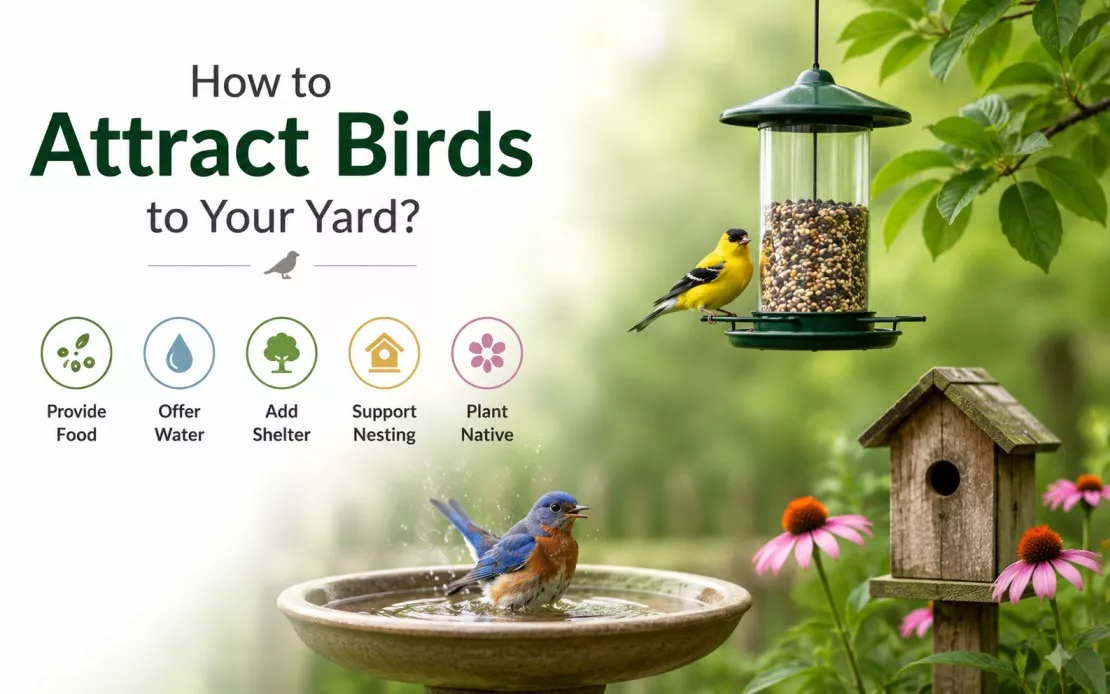
Imagine sitting on your porch with a morning cup of coffee, surrounded by the cheerful melodies of goldfinches, the vibrant flash of a Northern Cardinal, and the acrobatic antics of chickadees. For many homeowners and gardeners, turning a backyard into a bustling wildlife haven is the ultimate dream. Yet, many set out a plastic feeder filled with generic grocery-store seed, only to wonder why the skies remain empty.
Attracting birds to your yard isn’t about luck; it’s about ecosystem design. Birds are driven by survival instincts. When you understand how to meet their foundational needs—food, water, shelter, and safety—you can transform a quiet lawn into a thriving sanctuary almost overnight. Beyond the sheer joy of backyard bird watching, welcoming these feathered visitors provides natural pest control, aids in pollination, and offers a profound connection to the rhythms of nature right outside your window.
If your yard is currently a bird-free zone, don’t worry. Transitioning your outdoor space into an inviting backyard wildlife habitat is easier than you think. By implementing a few targeted, expert-backed strategies, you can fast-track their arrival and enjoy a diverse array of species in no time.
Why Birds Aren’t Visiting Your Yard Yet
Before you can invite birds in, you need to understand what might be keeping them away. If your garden feels like a ghost town, it is usually due to one of these common environmental deterrents:
- Lack of Quality Food Sources: Cheap, filler-heavy birdseed mixes (often packed with milo, wheat, and red millet) are ignored by most desirable songbirds. If there is nothing nutritious to eat, birds will fly right past.
- No Reliable Water Availability: Birds need water not just for drinking, but for maintaining their feathers for insulation and flight. A yard without a clean water source is a major missed opportunity.
- Insufficient Shelter and Nesting Cover: Massive, wide-open lawns offer zero protection. Birds feel incredibly vulnerable to elements and predators without nearby trees, dense thickets, or brush piles.
- Excessive Disturbance: High-traffic outdoor areas with loud noises, frequent construction, or heavy foot traffic can terrify sensitive species.
- Predator Risks: The visible presence of outdoor cats, birds of prey, or roaming neighborhood pets will cause wild birds to flag your yard as a high-risk zone.
- Poor Plant Diversity (Monocultures): A pristine, chemically treated green lawn offers no ecological value. Without native plants, there are no native insects, berries, or seeds for birds to forage.
How to Attract Birds to Your Yard Fast: 17 Proven Tricks
1. Offer High-Quality Bird Seed
The fastest way to a bird’s heart is through its metabolic needs. Ditch the bargain-bin seed blends. The single most universally loved food source you can offer is black oil sunflower seed. Its thin shell is easy for small birds to crack open, and the kernel inside is packed with essential fats and proteins.
- Implementation: Fill a sturdy feeder with pure black oil sunflower seed or hulled sunflower chips (which eliminate messy shells on your lawn). To target specific species, offer shelled peanuts for jays and nuthatches, nyjer (thistle) seed for finches, and high-quality beef suet for woodpeckers.
- Target Species: Cardinals, chickadees, tufted titmice, goldfinches, nuthatches, and grosbeaks.
2. Install Multiple Feeders
A single feeder creates a competitive bottleneck where larger, more aggressive birds (like starlings or grackles) bully smaller songbirds away. To maximize your yard’s bird capacity, build a multi-station feeding zone.
- Implementation: Position different feeder types at varying heights and locations. Place a tube feeder for finches in one corner, a platform or hopper feeder for cardinals in another, and a suet cage directly on a tree trunk for clinging birds.
- Target Species: House finches, downy woodpeckers, blue jays, and mourning doves.
3. Add a Fresh Bird Bath
Water is often a more powerful magnet than food because it is harder to find in industrialized or residential areas. A great bird bath doesn’t need to be an expensive stone sculpture; it just needs to be functional.
- Implementation: Choose a shallow basin with a textured surface so birds don’t slip. The water depth should slope gently from 0.5 inches to no more than 2 inches. Scrub the bath with a stiff brush and fresh water every 2 to 3 days to prevent algae buildup and mosquito larvae.
- Target Species: Bluebirds, robins, thrushes, warblers, and tanagers (including species that rarely visit seed feeders).
4. Keep Water Moving
Birds hear water long before they see it. The sight and sound of ripples, splashes, and drips are irresistible to migrating and local birds alike. Moving water also prevents mosquitoes from laying eggs and keeps the surface from freezing as quickly in the winter.
- Implementation: Add a solar-powered fountain insert, a battery-operated “water wiggler,” or a simple drip system over your existing bird bath. The constant motion creates acoustic triggers that draw traveling flocks down from the canopy.
- Target Species: Ruby-throated hummingbirds, cedar waxwings, and a wide variety of migratory warblers.
[Moving Water Component] ➔ Creates Ripples/Sound ➔ Triggers Visual/Acoustic Instincts ➔ Attracts Diverse Species
5. Plant Native Trees and Shrubs
If you want to create a sustainable, self-sustaining bird-friendly backyard, native flora is your foundation. Native plants have co-evolved with local insect populations, providing the exact food sources that native birds need to survive and raise their young.
- Implementation: Replace a portion of your lawn with native keystone species like Oaks (Quercus), Maples (Acer), or Birches (Betula). A single native oak tree can support over 500 species of caterpillars—the primary food source for nesting songbirds.
- Target Species: Warblers, vireos, orioles, and tanagers.
6. Grow Berry-Producing Plants
Artificial feeders provide supplementary food, but natural forage sustains bird populations through tough seasons. Shrubs and small trees that bear fruit offer critical energy reserves, particularly during fall migration and harsh winter months.
- Implementation: Mix berry-producing shrubs into your landscaping perimeter. Excellent choices include Serviceberry, Elderberry, Winterberry Holly, and Beautyberry. Plant them in clusters so birds can forage safely in groups.
- Target Species: American Robins, Cedar Waxwings, Eastern Bluebirds, and Gray Catbirds.
7. Create Layered Vegetation
In nature, birds occupy distinct ecological niches. Some forage in the high canopy, some hide in dense mid-story brush, and others hunt along the forest floor. By mimicking this structural diversity, you can accommodate multiple species simultaneously.
- Implementation: Design a multi-tiered landscape layout:
- Overstory: Large canopy trees (Oak, Pine).
- Understory: Small ornamental trees (Dogwood, Redbud).
- Shrub Layer: Dense bushes (Viburnum, Spicebush).
- Ground Cover: Native perennial flowers, grasses, and leaf litter.
- Target Species: Ground-dwellers (Towhees, Sparrows) utilize the lower layers, while Tanagers and Orioles claim the high canopy.
8. Leave Some Leaf Litter
A pristine, vacuumed lawn is a biological desert. Allowing fallen leaves to accumulate in your garden beds creates a rich organic layer that acts as a natural buffet for ground-foraging birds.
- Implementation: Instead of bagging and throwing away autumn leaves, rake them into your flower beds and beneath shrubs to serve as mulch. As the leaves decompose, they harbor a massive population of beetles, spiders, pupae, and worms.
- Target Species: Fox Sparrows, Brown Thrashers, Hermit Thrushes, and Eastern Towhees.
9. Provide Nesting Materials
When spring arrives, birds expend massive amounts of energy searching for materials to build secure nests. You can draw breeding pairs to nest directly in your yard by making their construction hunt much easier.
- Implementation: Fill an empty wire suet cage with safe nesting supplies: snips of dried grass, small twigs, moss, plant down, and short pieces of undyed cotton string (under 3 inches to prevent entanglement).
Safety Warning: Never offer dryer lint, cat/dog hair treated with flea medication, or synthetic yarn, as these hold moisture and contain chemicals harmful to nestlings.
- Target Species: Chickadees, Titmice, House Wrens, and Baltimore Orioles.
10. Install Birdhouses
Natural tree cavities are increasingly rare due to urban development and aggressive tree pruning. Providing species-specific nest boxes gives cavity-nesting birds a safe, predator-proof environment to raise their broods.
- Implementation: Choose or build birdhouses made of untreated wood with proper ventilation holes and drainage slots. Mount them securely on poles with predator baffles rather than nailing them directly to trees. Ensure the entrance hole matches your target bird exactly (e.g., 1.5 inches for Eastern Bluebirds) to keep larger, invasive species out.
- Target Species: Eastern and Western Bluebirds, Tree Swallows, House Wrens, and Purple Martins.
11. Reduce Pesticide Use
Ninety-six percent of all terrestrial North American birds feed insects to their nestlings. If you eliminate insects with broad-spectrum chemical pesticides, you eliminate the foundational food supply for baby birds.
- Implementation: Embrace a zero-pesticide or highly reduced integrated pest management (IPM) strategy. Let birds act as your natural exterminators. A single pair of nesting chickadees will catch thousands of caterpillars to raise a single clutch of eggs.
- Target Species: House Wrens, Bluebirds, Nuthatches, and Flycatchers.
12. Add Flowering Plants
Bright, nectar-rich blooms serve a dual purpose: they directly feed specialized nectar-drinkers like hummingbirds, and they draw in a wide array of small insects and pollinators for insectivorous songbirds.
- Implementation: Plant native perennials with tubular shapes or broad landing pads. Excellent choices include Bee Balm (Monarda), Purple Coneflower, Columbine, and Salvia. Grouping flowers by color creates a powerful visual signal for low-flying birds.
- Target Species: Ruby-throated, Anna’s, and Rufous Hummingbirds, as well as American Goldfinches (who love feeding on dried flower seed heads).
13. Create Safe Perching Areas
Birds rarely fly directly from wide-open airspace straight onto a feeder. They prefer to land on a nearby staging perch first to look over the area, scan for predators, and ensure the coast is clear.
- Implementation: Position your feeders within 10 to 15 feet of a structural shrub, small tree, or trellis. If your yard lacks mature plants, you can secure a large, fallen dead tree branch in the ground near your feeding station to act as a natural, temporary perching post.
- Target Species: Song Sparrows, Phoebes, Northern Cardinals, and Goldfinches.
14. Minimize Outdoor Cat Access
Free-roaming domestic cats are the number-one human-caused threat to wild birds, accounting for billions of avian mortalities every year. Even a well-fed domestic cat will hunt out of pure instinct.
- Implementation: Keep domestic cats indoors, or build an enclosed outdoor “catio.” If neighborhood cats frequent your yard, place your bird feeders and baths at least 10 to 12 feet away from low-lying brush where a cat could easily hide and spring an ambush. Install smooth metal predator baffles on all mounting poles.
- Target Species: Ground-feeding doves, juncos, towhees, and thrushes.
15. Prevent Window Collisions
Reflective glass windows are a silent hazard. Birds cannot perceive glass; instead, they see a perfect reflection of the surrounding trees and open sky, leading to high-speed, fatal impacts.
- Implementation: Apply high-density decals, UV-reflective stickers, or external Zen curtains (hanging paracords) to large windows. Space patterns no wider than 2 inches by 2 inches apart. Alternatively, place your bird feeders either within 3 feet of your windows (so birds don’t have enough flying room to build up fatal momentum if startled) or more than 30 feet away.
- Target Species: Migrating warblers, thrushes, finches, and grosbeaks.
16. Maintain Consistency
Birds run on tight energy budgets, especially during extreme heat or freezing cold winter storms. If they discover your yard has a reliable, daily supply of clean water and high-energy food, they will integrate your property into their regular daily foraging route.
- Implementation: Check and refill your feeders and water sources on a set schedule. If you go on vacation during mid-winter, ask a neighbor to top off your feeders, or use high-capacity hopper feeders to ensure the food supply doesn’t suddenly vanish when birds need it most.
- Target Species: Year-round residents like Tufted Titmice, Black-capped Chickadees, and Downy Woodpeckers.
17. Be Patient and Observe
When you first set out feeders or install a bird bath, do not expect an immediate swarm of birds within the first hour. Local bird populations need time to spot changes in their home range.
- Implementation: Give your new setups 2 to 3 weeks to show results. Avoid constantly shifting the feeders around, as this confuses scouting birds. Sit quietly inside near a window or out on your patio with a field guide and pair of binoculars, and let nature take its course.
- Target Species: All local, regional, and migratory avian species.
Best Foods for Different Backyard Birds
Offering a broad, targeted menu is the best way to diversify the species visiting your garden. Use this quick-reference chart to match the right food and feeder setup to the specific birds you want to attract:
| Bird Species | Preferred Food | Recommended Feeder Type |
| Cardinals | Black oil sunflower seed, safflower seed, striped sunflower | Platform feeder, wide-tray hopper feeder |
| Finches | Nyjer (thistle) seed, hulled sunflower chips | Fine-mesh sock feeder, specialized tube feeder |
| Chickadees & Titmice | Sunflower seeds, shelled peanuts, suet cakes | Tube feeder, hopper feeder, clinging mesh cup |
| Blue Jays | Whole in-shell peanuts, corn kernels, sunflower seed | Large platform tray, open fly-through feeder |
| Woodpeckers | High-grade beef suet, peanuts, mealworms | Tail-prop suet cage, tree-trunk mounted feeder |
| Hummingbirds | Homemade sugar water nectar (4:1 water-to-sugar ratio) | Specialized red glass inverted bottle or saucer feeder |
| Sparrows & Juncos | White millet, cracked corn, sunflower chips | Ground feeding tray, scattering directly on soil/snow |
Plants That Attract Birds Naturally
Integrating bird-friendly landscaping creates a permanent ecosystem that provides food and shelter year after year without regular maintenance refills.
| Plant Name | Benefits | Birds Attracted | Growing Notes |
| Sunflower (Helianthus) | High-fat seeds for fall/winter fueling | Goldfinches, Nuthatches, Grosbeaks | Full sun; easy to grow from seed annually. |
| Serviceberry (Amelanchier) | Early summer sweet berries, nesting structure | Robins, Cedar Waxwings, Bluebirds | Small native tree; tolerates partial shade. |
| Elderberry (Sambucus) | Massive clusters of high-antioxidant fall berries | Catbirds, Mockingbirds, Tanagers | Prefers moist soil; fast-growing shrub. |
| Coneflower (Echinacea) | Seeds found in dried seed heads throughout winter | Goldfinches, Pine Siskins, Sparrows | Hard, drought-tolerant perennial; full sun. |
| Holly (Ilex) | Late-winter emergency berries, dense evergreen shelter | Bluebirds, Robins, Mockingbirds | Needs both male and female plants for berry production. |
| Dogwood (Cornus) | High-lipid autumn berries, excellent perching | Woodpeckers, Thrushes, Kingbirds | Prefers rich, well-drained soil; partial shade. |
| Native Grasses (e.g., Switchgrass) | Abundant seed heads, cover from winter winds | Juncos, Towhees, Native Sparrows | Leave un-pruned until early spring for best results. |
Common Mistakes That Drive Birds Away
Sometimes, what we don’t do matters just as much as what we do. Avoid these common missteps to ensure your sanctuary remains safe and welcoming:
- Neglecting Dirty Feeders: Wet seed clumps can foster deadly fungal spores and dangerous bacteria like Salmonella. Clean feeders once every two weeks using a 1:9 bleach-to-water solution.
- Leaving Stagnant Water: A dirty, warm, motionless bird bath turns into a breeding ground for mosquitoes and avian diseases. Rinse and replace the water every few days.
- Over-Pruning the Landscape: Hyper-manicured yards with perfectly square hedges and zero dead branches remove natural nesting cavities and cover. Leave a little wildness around the edges.
- Using Excessive Chemical Pesticides: Eliminating insects starves nesting birds and can lead to secondary chemical poisoning if a bird ingests contaminated prey.
- Poor Feeder Placement: Placing feeders right next to dense ground brush gives outdoor cats a perfect hiding spot to catch unsuspecting birds. Keep feeders 10–12 feet away from thick brush.
- Frequent Household Disturbances: Leaving barking dogs unattended near feeding zones or keeping high-traffic patio setups right next to sensitive nesting sites will drive birds away.
- Leaving Windows Unprotected: Setting up highly attractive feeding stations near large, reflective sliding doors without installing protective decals creates a dangerous window-strike hazard.
Seasonal Bird Attraction Tips
The needs of your local bird population shift dramatically with the changing seasons. Adjusting your strategy throughout the year keeps your yard relevant year-round.
SPRING: Nesting Materials & High-Protein Suet ➔ SUMMER: Fresh, Cool Water & Fresh Fruit ➔ FALL: High-Fat Seeds for Migration ➔ WINTER: High-Calorie Suet & Heated Bird Baths
Spring
- Focus: High-protein nutrition and nesting infrastructure.
- Food Preferences: High-quality suet, mealworms, and sunflower seeds to support territory defense and egg production.
- Nesting Behavior: Clean out old nests from birdhouses from the previous year. Offer safe nesting materials like short twigs, dried moss, and plant down.
- Maintenance: Wash away winter grime from feeders and sanitize nesting boxes before new residents move in.
Summer
- Focus: Hydration, cooling down, and feeding fledglings.
- Food Preferences: Fresh sugar-water nectar for hummingbirds, fresh fruit slices, and high-quality seed mixes. Remove heavy suet, which melts quickly in hot summer sun and can foul feathers.
- Behavior: Fledglings will follow parents to your feeding stations to learn how to forage.
- Maintenance: Water evaporates quickly and grows bacteria fast in summer heat. Check and clean your bird baths daily.
Fall
- Focus: High-energy fuel reserves for long-distance migrations.
- Food Preferences: High-lipid foods like shelled peanuts, sunflower chips, and suet cakes.
- Migration Needs: Keep feeders full to assist long-distance travelers passing through your region.
- Maintenance: Do not prune dead flower stalks or native grasses; leave them standing so birds can forage for seeds naturally all winter.
Winter
- Focus: Crucial calorie intake and access to unfrozen water.
- Food Preferences: High-fat suet, peanut butter blends, and black oil sunflower seeds to help birds maintain their body temperature overnight.
- Seasonal Maintenance: Install a safe, low-wattage bird bath heater or de-icer to provide open drinking water when local ponds and puddles freeze over solid.
How Long Does It Take to Attract Birds?
When you update your yard, you might wonder how quickly you will see results. While timelines vary based on your location and neighborhood environment, you can generally expect a predictable progression:
- Days 1 to 3: Aerial foragers like goldfinches, chickadees, and titmice often notice fresh food or moving water within a few days. They are curious scouts that track changing conditions closely.
- Weeks 2 to 3: Shy or ground-feeding birds (like Northern Cardinals, Eastern Bluebirds, and various native sparrows) will usually follow once they see other species feeding safely.
- Months 1 to 3: Local breeding pairs will begin mapping your yard into their daily nesting and foraging routes.
Your success timeline depends heavily on your local habitat. If your property is surrounded by mature woods, results will be almost instantaneous. If you live in a brand-new housing development with small trees and wide lawns, it may take a little longer for birds to find you. The key indicator of progress is diversity: you will notice an initial wave of common backyard species, followed over time by rarer, more specialized visitors as your native plants and trees grow.
Frequently Asked Questions
What attracts birds the fastest?
The single fastest way to attract birds to a new yard is moving water combined with a fresh tray of black oil sunflower seed. The sound of a water dripper or fountain can attract passing birds within hours, while the high-fat seed keeps them coming back.
Which bird seed attracts the most species?
Black oil sunflower seed is the undisputed champion of backyard birding. It has a high meat-to-shell ratio, is rich in fat and protein, and features a thin shell that small songbirds can easily crack open.
Why won’t birds use my feeder?
If birds are ignoring your feeder, it is usually because the seed is old or wet, the feeder is too close to a predator hiding spot, or it is placed in an area with high human and pet activity. Try refreshing the seed and moving the station to a quieter, safer spot.
Does a bird bath attract more birds?
Yes! A clean bird bath often attracts species that never visit seed feeders, such as insect-eating warblers, thrushes, orioles, and cedar waxwings. Adding a moving water element increases its effectiveness significantly.
What colors attract birds?
Birds have exceptional color vision. Bright red and pink attract hummingbirds; yellow draws in goldfinches; and blue can catch the eye of bluebirds. However, camouflaged earth tones (greens, browns) are best for birdhouses to keep nesting sites low-profile and safe from predators.
How often should feeders be cleaned?
Feeders should be thoroughly cleaned at least once every two weeks to prevent the spread of avian diseases. Scrub them with hot water and soap, soak them in a 1:9 bleach-to-water solution, rinse completely, and let them air dry fully before refilling.
Can birds smell food?
With a few exceptions (like vultures and certain seabirds), most songbirds have a poor sense of smell. They find food almost entirely through their highly developed vision and hearing.
Do birds remember feeding locations?
Yes. Birds have excellent spatial memory. Migrating species can remember exact backyard feeding setups and water sources along their flight paths, returning to the exact same properties year after year.
Final Thoughts
Creating a vibrant, bustling bird sanctuary right at home doesn’t require a master’s degree in ecology or an expensive landscaping overhaul. At its core, successful bird attraction comes down to a simple formula: provide high-quality food, ensure water is clean and accessible, and build a safe environment free from chemical hazards and predators.
You don’t have to implement all 17 tricks today to see a difference. Start small: put out a single feeder filled with fresh black oil sunflower seed, or set up a simple bird bath with a solar fountain. As you watch your first visitors arrive, you can gradually expand your habitat with native plants and nesting boxes. Over time, these small improvements will yield big results, turning your yard into a safe haven for local wildlife and a beautiful space for you and your family to enjoy for years to come.


