


How HopTravellers Are Redefining Experiential Travel in 2026
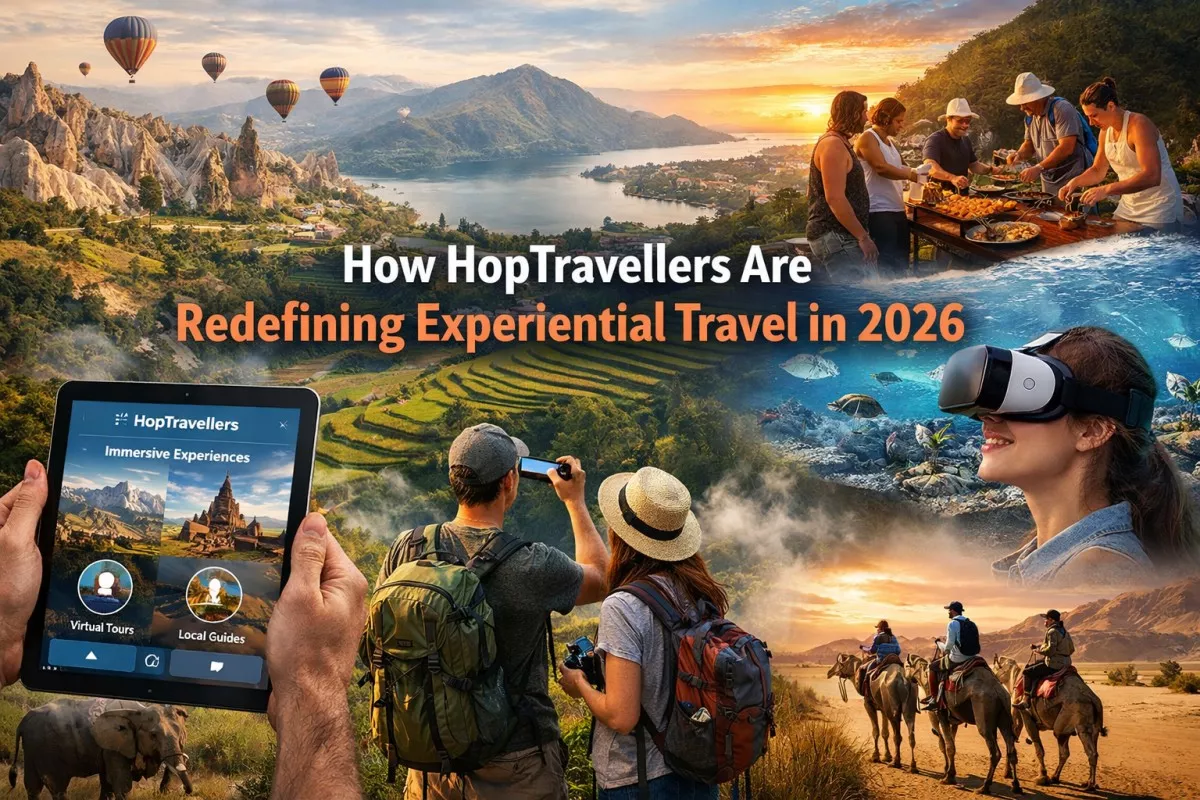
HopTravellers are a new breed of explorers emerging in 2026 who reject static, single-destination vacations in favor of dynamic, multi-stop itineraries that “hop” between diverse micro-experiences, blending work, deep cultural immersion, and passion-driven activities into one extended journey. Unlike traditional tourists who tick off landmarks, HopTravellers prioritize flexibility and “trip stacking”—combining events like weddings or concerts with slow-travel stays in secondary cities—leveraging AI to curate hyper-personalized routes that maximize emotional connection rather than just sightseeing.
The Evolution of the Journey: From Sightseeing to “Life-Seeing”
By 2026, the era of the frantic “five cities in five days” bus tour is effectively over. In its place, a more thoughtful, rhythm-based style of travel has taken root. The travel landscape has shifted from consumption (buying souvenirs and taking selfies) to connection (learning skills and building relationships).
HopTravellers are at the forefront of this shift. They don’t just visit a country; they “try on” different lives. One week might be spent working remotely from a cliffside villa in Madeira, followed immediately by a “hop” to a rural “runcation” (running vacation) in the Scottish Highlands, and capping off with a grocery-tourism deep dive in a small Italian village. The common thread is intentionality—every stop serves a specific emotional or intellectual purpose.
Who is the HopTraveller?
The HopTraveller isn’t defined by age, but by mindset. They are the evolution of the digital nomad, but with more structure and purpose.
- The “Trip Stacker”: They maximize carbon footprints and flight costs by combining multiple trips into one long haul. A friend’s wedding in Bangkok becomes the anchor for a six-week exploration of Southeast Asia’s hidden rail networks.
- The Passion-Led Pilgrim: Their itinerary is dictated by hobbies, not guidebooks. They travel specifically for “Noctourism” (stargazing and night markets to avoid daytime heat) or to visit literary settings from their favorite novels.
- The Value Seeker: They use “hopping” to arbitrage costs, staying in affordable, emerging destinations (like Albania or Vietnam) to offset shorter splurges in expensive hubs (like Tokyo or Paris).
Key Trends Driving the HopTraveller Movement in 2026
1. The Rise of “Passion-Cations”
In 2026, general leisure is out; specific interests are in. HopTravellers are redefining itineraries around niche passions.
- Grocery Tourism: Instead of Michelin stars, travelers are hopping between local supermarkets and convenience stores (like Japanese konbinis) to understand everyday culture through shelf-browsing.
- Runcations & Active Rest: Wellness has moved beyond the spa. Travelers are booking trips centered around rural trail running, cycling tours, or “cool-cationing”—seeking colder climates to escape the rising global temperatures and refresh the mind.
2. AI as the Ultimate Travel Agent
You cannot “hop” complex routes without help. Artificial Intelligence has become the HopTraveller’s co-pilot. In 2026, travelers don’t just ask AI for flight deals; they ask for vibe matching.
“Find me a route from Lisbon to split that includes three cities with thriving jazz scenes, reliable Wi-Fi for video calls, and temperatures under 25°C.”
AI manages the logistics of these multi-leg journeys, re-booking missed connections instantly and suggesting “hidden gem” stops that human agents might overlook, making complex hopping accessible to everyone.
3. Community Over Comfort
HopTravellers are trading five-star isolation for three-star connection. They prefer “dispersed hotels”—accommodations spread across a village where you sleep in one building, eat in another, and check in at the local pub. This forces interaction with the community. The goal is to combat “authenticity fatigue” by engaging in genuine, unscripted moments rather than curated “local experiences” sold in brochures.6
Top Destinations for HopTravellers in 2026
The HopTraveller avoids the “tourist traps” in favor of secondary cities and regions that offer culture without the crowds.
| Region | The “Hop” Strategy | Why It’s Trending |
| Northern Thailand (Chiang Rai to Nan) | The Culture Hop | Moving beyond Chiang Mai to quieter, art-filled towns. Perfect for slow travel and digital work. |
| Central Europe (Slovenia & Austria) | The Rail Hop | High-speed, eco-friendly train connections allow travelers to breakfast in Ljubljana and dine in Graz. |
| India (Jorhat & The Northeast) | The Nature Hop | Escaping the Golden Triangle for tea estates and river islands. A major hub for wellness and immersive nature retreats. |
| Japan (Setouchi Region) | The Island Hop | Ferrying between art islands like Naoshima instead of sticking to the Tokyo-Kyoto bullet train route. |
The Impact on the Future of Travel
The rise of the HopTraveller is forcing the industry to adapt. Hotels are offering “subscription” models where one fee covers stays across multiple locations. Airlines are bringing back “stopover programs,” encouraging passengers to spend a few days in a connecting city rather than just passing through.
Ultimately, this movement is a rebellion against the commodification of travel. It is a declaration that the journey shouldn’t just look good on Instagram—it should feel good for the soul. By hopping from experience to experience, travelers in 2026 are stitching together a tapestry of memories that are uniquely, undeniably their own.
The Economic Ripple: Why “Hopping” Saves Communities
Perhaps the most human aspect of this trend is its economic impact. Traditional tourism concentrates wealth in a few square miles of a city center (think Time Square or Las Vegas Strip). HopTravellers disperse it.
By “stacking” their trips and moving to secondary and tertiary cities, they spread tourism dollars to communities that desperately need them but rarely get them. When a traveler hops from a major hub to a rural village for a “Silence Retreat,” they are funding a local family-run guesthouse rather than a multinational hotel chain.
This is Regenerative Travel in action. It’s not just about “leaving no trace”; it’s about leaving a positive footprint. In 2026, the ultimate flex isn’t how much you spent on a bottle of champagne, but how deeply you integrated into the local fabric.
Conclusion: The Art of the “Life-Seeing” Journey
As we look at the travel landscape of 2026, one thing is clear: we are done with “sightseeing.” We are now in the era of “life-seeing.”
The HopTraveller understands that a vacation isn’t an escape from life; it’s an experiment in living. By hopping between environments, passions, and paces, they are reclaiming the sense of wonder that mass tourism tried to commodify. They are proving that the world is not a list of places to check off, but a playground of experiences to try on.


