


Why EO Pis Is Becoming a Hot Topic in Tech and Marketing
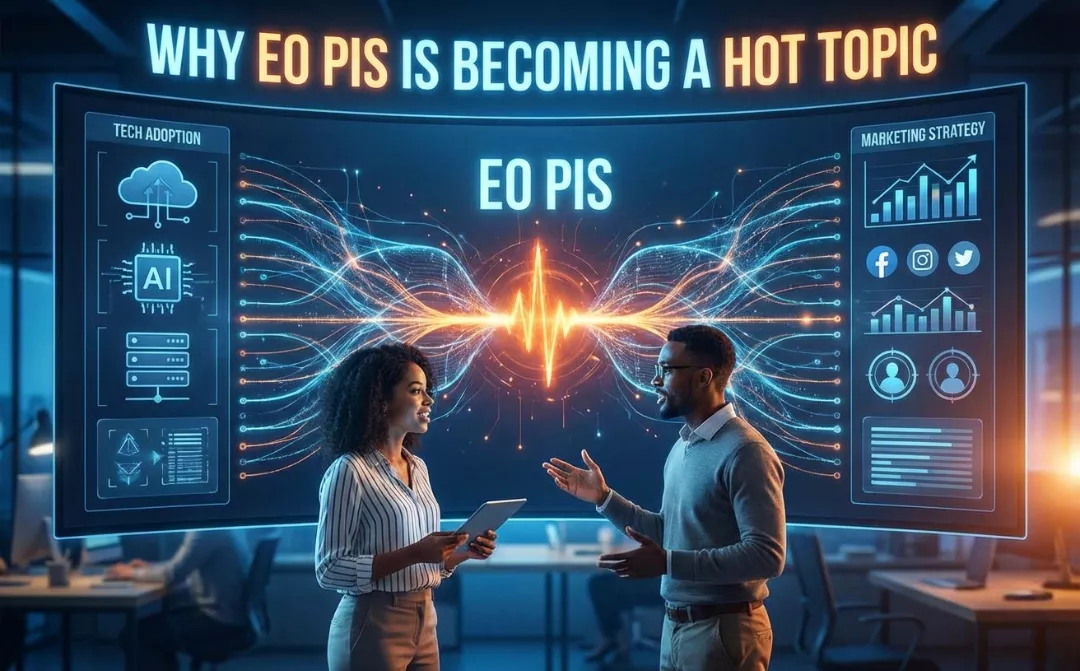
EO Pis (short for Executive Operations Performance Information Systems or Indicators) is rapidly becoming a hot topic in tech and marketing because it represents the next evolution of business intelligence—moving beyond static historical data (KPIs) to dynamic, AI-driven, real-time insights designed specifically for high-level decision-making. Unlike traditional metrics that tell you what happened last month, EO Pis function as a central nervous system for organizations, integrating data from marketing, supply chain, and sales into a single “master dashboard” that predicts outcomes and prescribes immediate actions. For tech leaders and marketers, this means the ability to pivot strategies instantly based on live consumer behavior and operational reality, effectively closing the gap between raw data and executive strategy.
Beyond the Buzzword: What Is EO Pis?
If you have spent any time in the corporate world, you are intimately familiar with KPIs (Key Performance Indicators). They are the yardsticks we use to measure success. However, as technology has accelerated, KPIs have started to show their age. They are often retrospective—looking in the rearview mirror to see how the quarter went.
EO Pis enters the chat as the futuristic upgrade.
While definitions can vary slightly across different tech circles, the consensus is that EO Pis stands for Executive Operations Performance Indicators (or Systems). Think of it as the “God Mode” for business operations. It isn’t just about tracking a click-through rate or a shipping time; it is about synthesizing those distinct data points into a holistic view of the company’s health.
For example, a traditional KPI might tell a Marketing Director that ad spend is up. An EO Pis system would tell them that ad spend is up, but inventory for that specific product is critically low in the Northeast region due to a weather event, and therefore, the system has automatically paused the ads to prevent wasted budget. It is intelligent, connected, and deeply integrated.
The Core Components of EO Pis
To understand why this is trending, we have to look under the hood. An EO Pis framework typically relies on three pillars:
- Real-Time Data Integration: Pulling live feeds from CRM, ERP, and social listening tools.
- AI & Predictive Analytics: Using machine learning to forecast what will happen next week, not just report on last week.
- Executive Actionability: Presenting data in a way that allows C-suite leaders (CEOs, CMOs, CTOs) to make “one-click” decisions.
Why Tech Leaders Are Obsessed with EO Pis
In the technology sector, the race is always about speed and efficiency. The adoption of EO Pis is being driven by the need to manage increasingly complex tech stacks.
1. The End of Data Silos
For years, the biggest headache in tech has been “siloed data.” The sales team has one set of numbers, the product team has another, and marketing is looking at a third. EO Pis acts as a unifying layer. It sits on top of these disparate systems (using advanced APIs) and forces them to speak the same language. For a CTO, this is the holy grail: a single source of truth that doesn’t require five different login credentials to access.
2. AI Finally Finding its Home
We have spent the last two years hyped about Generative AI. Now, the conversation is shifting to Operational AI. Tech leaders are using EO Pis to deploy AI agents that don’t just chat, but monitor. Imagine an AI that watches your server load and your marketing traffic simultaneously. If a marketing campaign goes viral, the EO Pis system predicts the server crash before it happens and auto-scales the infrastructure. That is the power of this new framework.
3. Reducing “Alert Fatigue”
Engineers and IT managers are drowning in notifications. EO Pis systems are designed to filter noise. Instead of alerting a human for every minor anomaly, the system handles the small stuff and only elevates critical strategic issues to the “Executive” level. This improves focus and burnout rates in tech teams.
The Marketing Revolution: Why Marketers Are Buying In
If tech leaders love the efficiency, marketers love the agility. The marketing landscape has become volatile. Algorithms change daily, and consumer sentiment shifts hourly. Relying on a monthly report is no longer viable.
From “Reactive” to “Proactive” Marketing
The biggest shift EO Pis brings to marketing is predictive capability.
- Old Way (KPIs): “Our churn rate increased by 5% last month. We should send an email.”
- New Way (EO Pis): “The system detects a usage pattern in 2,000 users that correlates with churn risks next week. It has already triggered a retention offer to their mobile apps.”
Marketers are using EO Pis to anticipate customer needs before the customer even realizes them. This is the ultimate form of personalization.
The “Truth” About ROI
Attribution (knowing which ad caused a sale) has become a nightmare with privacy changes like the death of third-party cookies. EO Pis approaches this differently by looking at operational correlation rather than just digital tracking. It looks at the whole business health. Did that influencer campaign actually drive profitable revenue, or did it just clog up customer support with low-quality leads? EO Pis connects marketing activity directly to operational costs, giving a “true” ROI that CFOs actually respect.
Implementing EO Pis: The Human Challenge
While the tech is exciting, the “Human Touch” aspect of this article is crucial. Moving to an EO Pis model isn’t just a software update; it is a culture shock.
The Fear of “Big Brother”
When you introduce a system that monitors everything in real-time, employees can get nervous. There is a fear that EO Pis will be used to micromanage.
- The Fix: Smart leaders are framing EO Pis not as a surveillance tool, but as a “co-pilot.” It is there to remove roadblocks, not to grade homework. It automates the boring reporting tasks so humans can focus on creativity and strategy.
The Skill Gap
To run an EO Pis strategy, you need people who understand both business and data. We are seeing a rise in hybrid roles—marketers who can code, and developers who understand sales funnels. Companies are scrambling to upskill their workforce to interpret these complex dashboards.
The Future: Where Does EO Pis Go From Here?
We are arguably in the “Early Adopter” phase of EO Pis. Right now, it is mostly large enterprises and agile tech startups using these systems. However, as SaaS tools become cheaper, we will see EO Pis trickle down to mid-sized businesses.
Integration with Voice and Spatial Computing
Imagine a CMO walking into their office, putting on a headset (like the Vision Pro), and asking, “How is the Asia-Pacific launch going?” The EO Pis system visualizes the data in 3D floating charts, highlighting supply chain bottlenecks in red and sales spikes in green. This isn’t science fiction; it is the logical next step of the Executive Operations interface.
Autonomous Business Operations
The eventual goal of EO Pis is “Autonomous Business.” This is where the system doesn’t just recommend an action but executes it.
- Inventory low? The system orders more.
- Ad creative fatiguing? The system swaps it for a fresh variant.
- Server capacity reached? The system buys more space. The role of the human executive shifts from “operator” to “architect”—designing the rules of the system rather than pulling the levers every day.
Summary: Why You Should Care
Whether you are a developer, a marketing manager, or a CEO, EO Pis is a term you need to know. It signals a shift away from “vanity metrics” (likes, views, raw traffic) toward “vitality metrics” (profitability, operational health, predictive growth).
It is becoming a hot topic because it promises to solve the biggest problem of the modern digital age: We have too much data and not enough clarity. EO Pis offers a lens to focus that data into a single, sharp beam of insight.
If you are looking to future-proof your career or your company, start asking: Are we just tracking KPIs, or are we building an EO Pis?


